
Journey with/of Stone 石(と)の旅
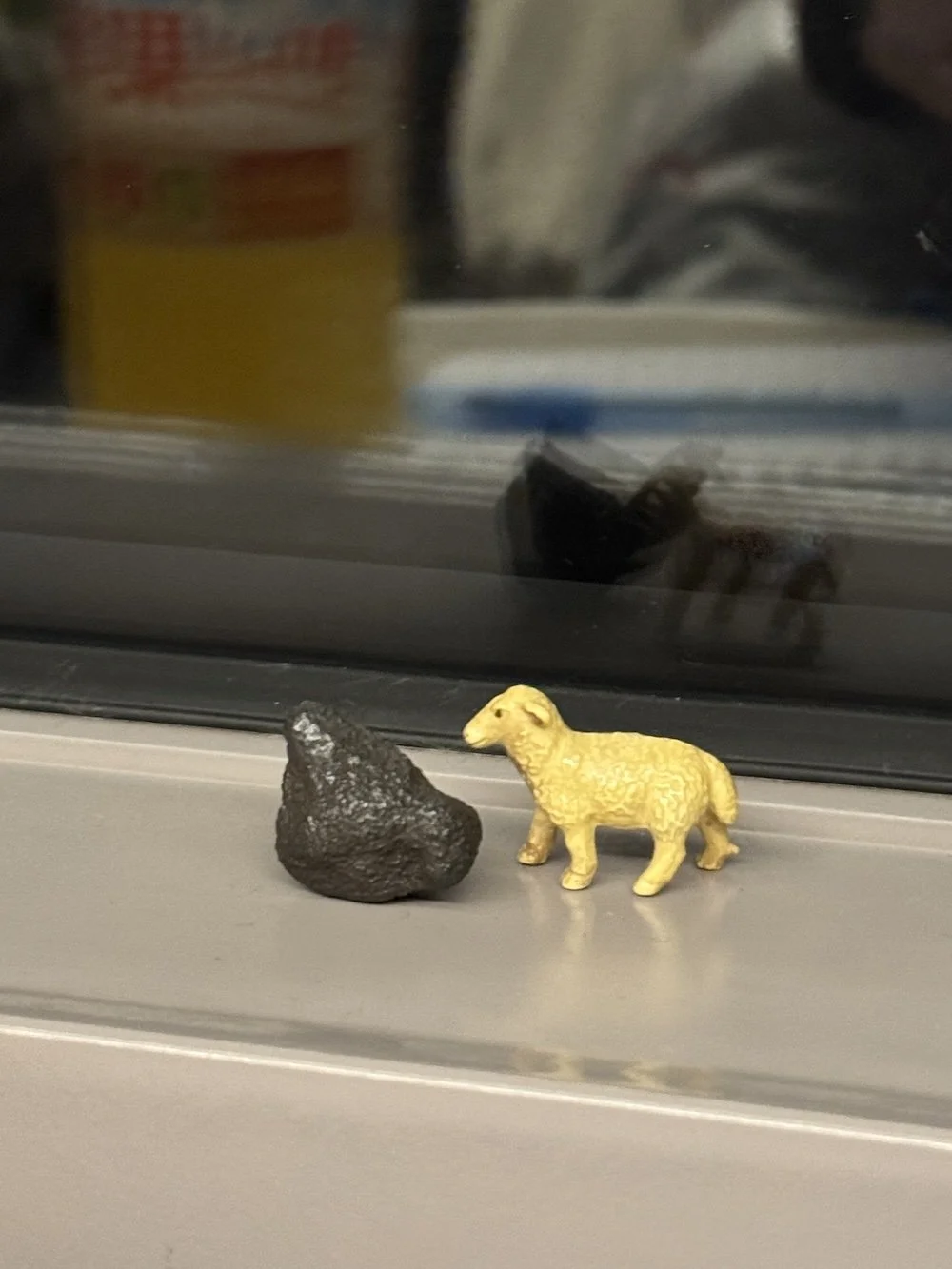
03.23.2026 - HAKONE 22 (EXE6) はこね22号
Met “stone”on the Romance Car back from Hakone. Filip from Small Things Travel Agency matched me up with this special guide. Journey with/of Stone is beginning.
「石」と出会った。箱根帰りのロマンスカーの中で。ちっちゃいモノ旅行社(Small Things Travel Agency)のフィリップが、この特別なガイドを私のために選んでくれたってわけ。石(と)の旅が始まった。
03.23.2026 - On my way home 帰り道 (Somewhere in Tokyo)
On my way home, walking from the station, I felt some strange excitement.
”I am walking around with stone and no one knows it!”
Yes, I was not alone. I was with stone. A small secret.
駅からの帰り道、不思議なワクワク感が湧き上がってきた。
「今、私は実は石と一緒に歩いているけど、そのことを誰も知らない」
そう、私は一人ではなかった。石と一緒。小さな秘密。
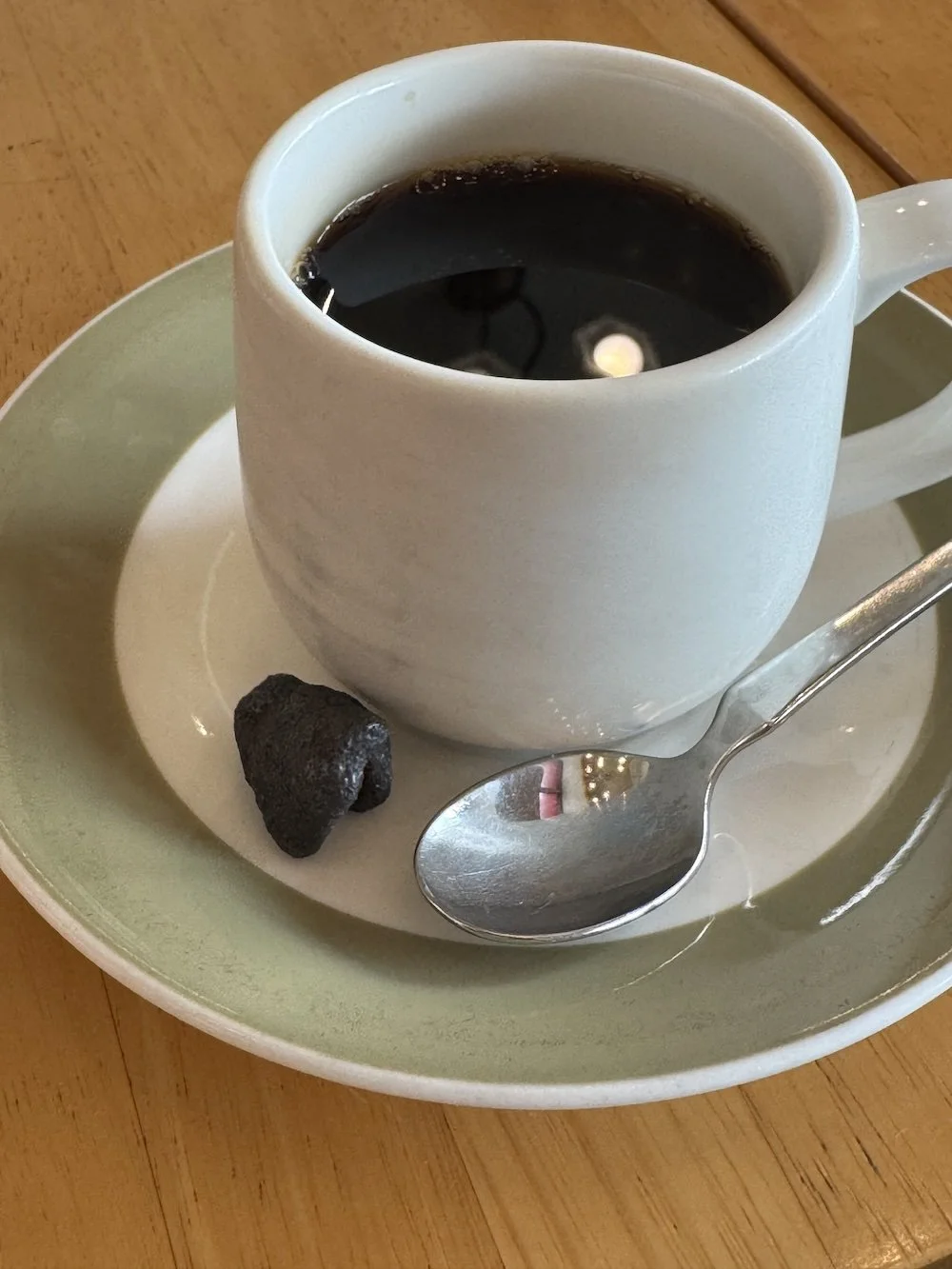
03.24.2026 - A Coffee Shop ある喫茶店 (Asakusabashi, Tokyo)
Japanese retro coffee shop (kissaten) usually serve a sort of generic “blend” coffee. Each shop has slightly different blend, but always dark roast. The same color of “stone”. You don’t want to have too much of “speciality” stuff here. Genericness is the beauty. Everyday. Simple. A piece of peace. “Morning Set” came with buttered toast, some egg, some ham, some very small salad. This place used to be smoking place, but not anymore. Under the train track. Another journey is about to start.
日本のレトロな喫茶店には大抵、普遍的な「ブレンド」がある。それぞれのお店でブレンドの味には少し違いがあるけれど、大抵は深煎り系。「石」と同じ色。スペシャリティーなコーヒーなんぞは、ここで求めてはいけない。普遍性、というか普通であることがこの場所の美なのだから。日々。シンプルさ。平和の欠片。「モーニングセット」はバター塗りのトースト、卵すこし、ハムすこし、とても小さなサラダがついている。このお店は前は喫煙可だったが、今は禁煙。電車の高架下にある。次の旅がもうすぐ始まる。
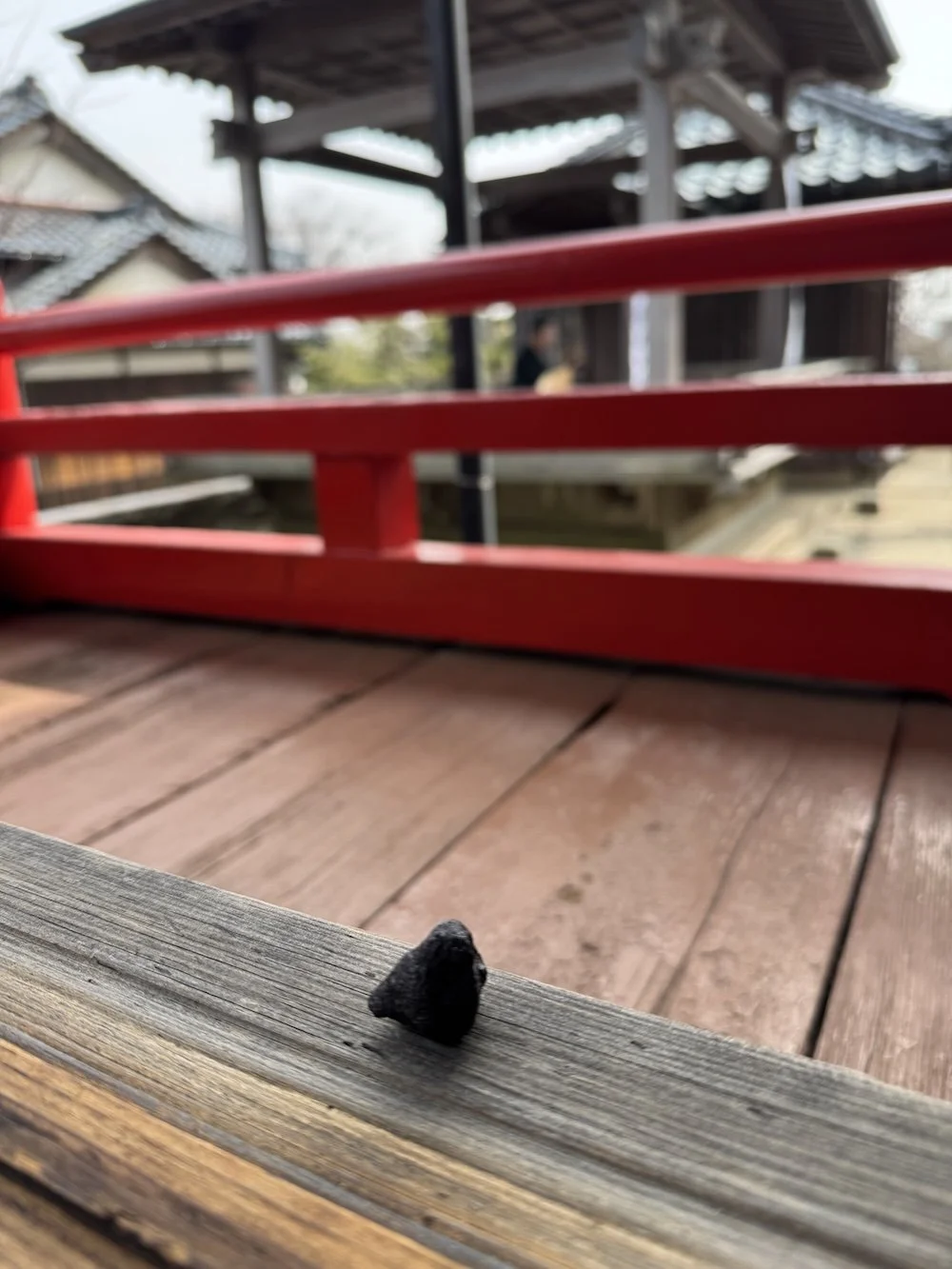
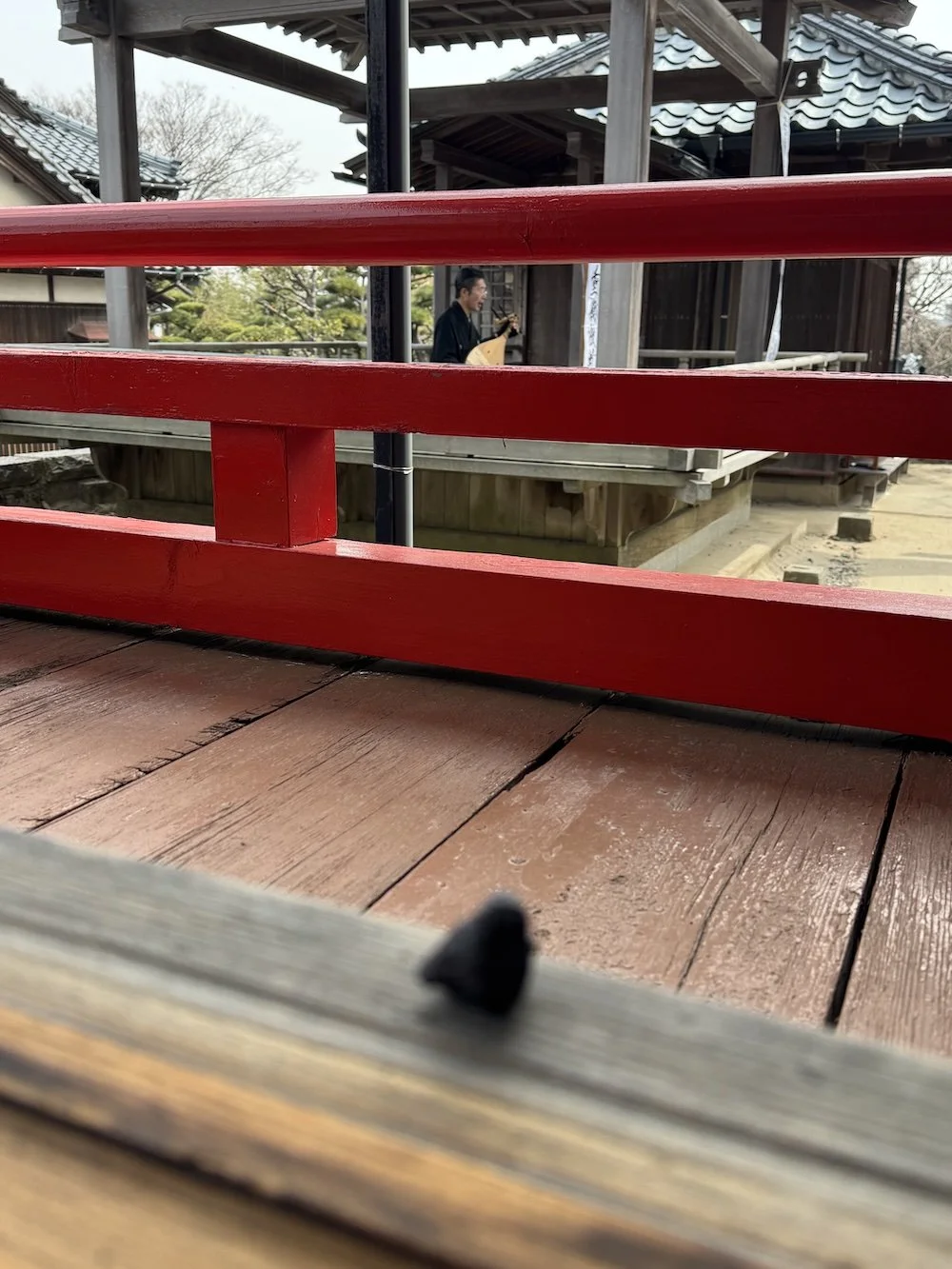
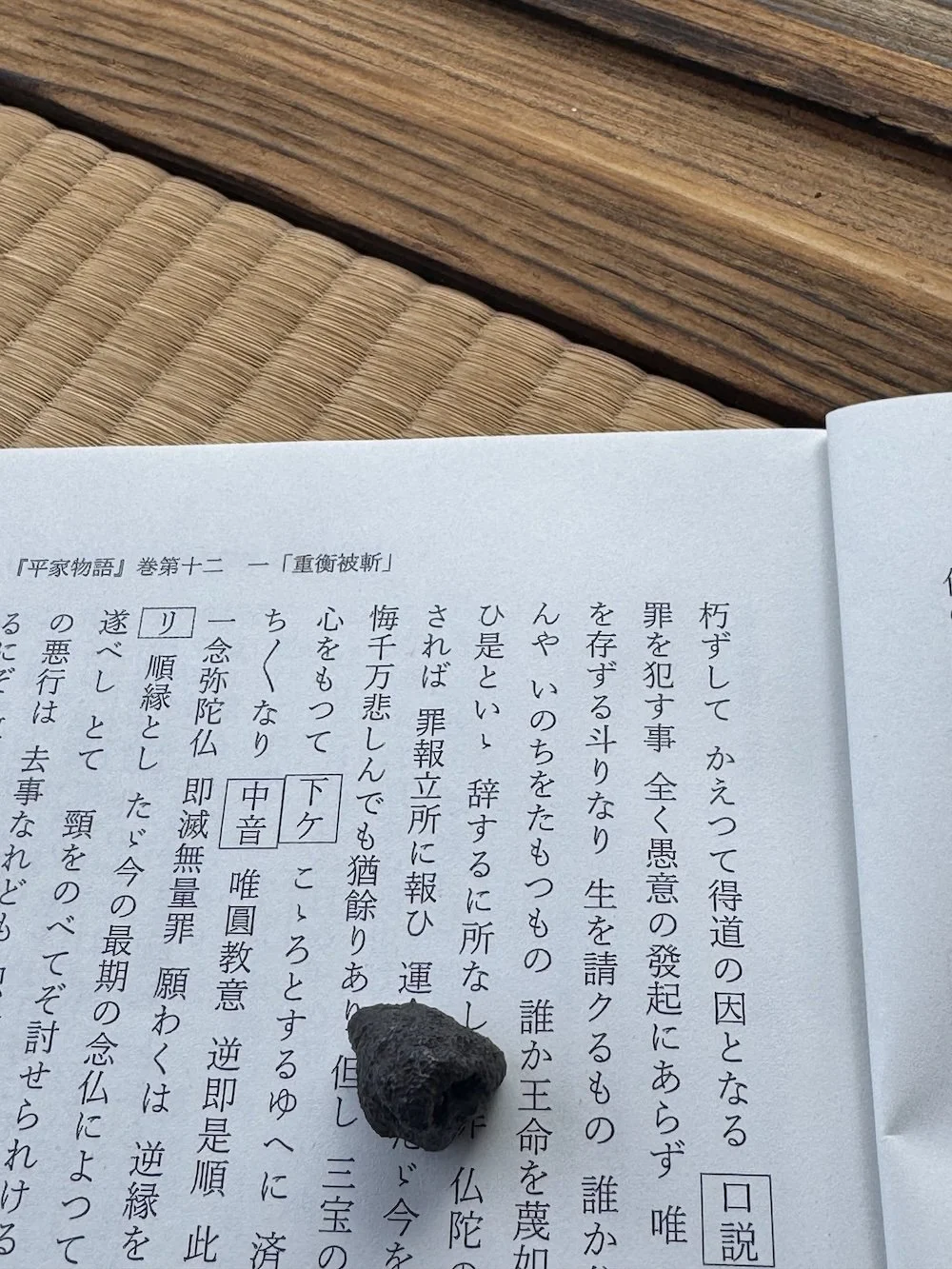
03.25.2026 - The Tale of the Heike 平家物語(Niigata, Japan)
We went to listen to the Tale of the Heike performance in a shrine in Niigata. We sat in the main building of shrine. The voice was deep and beautiful with the sound of Biwa. The early spring wind was still cold in this northern city. Birds came to join the sound while he was singing the decline of Heike clan. All things are impermanent.
新潟の神社。平家物語を聴きにいった。神社の社殿の中に座って。琵琶の音とともに、声は深く美しく響く。この北の街の早春の風はまだ冷たい。平家の滅亡を語る声に小鳥たちの鳴き声が混ざる。諸行無常。
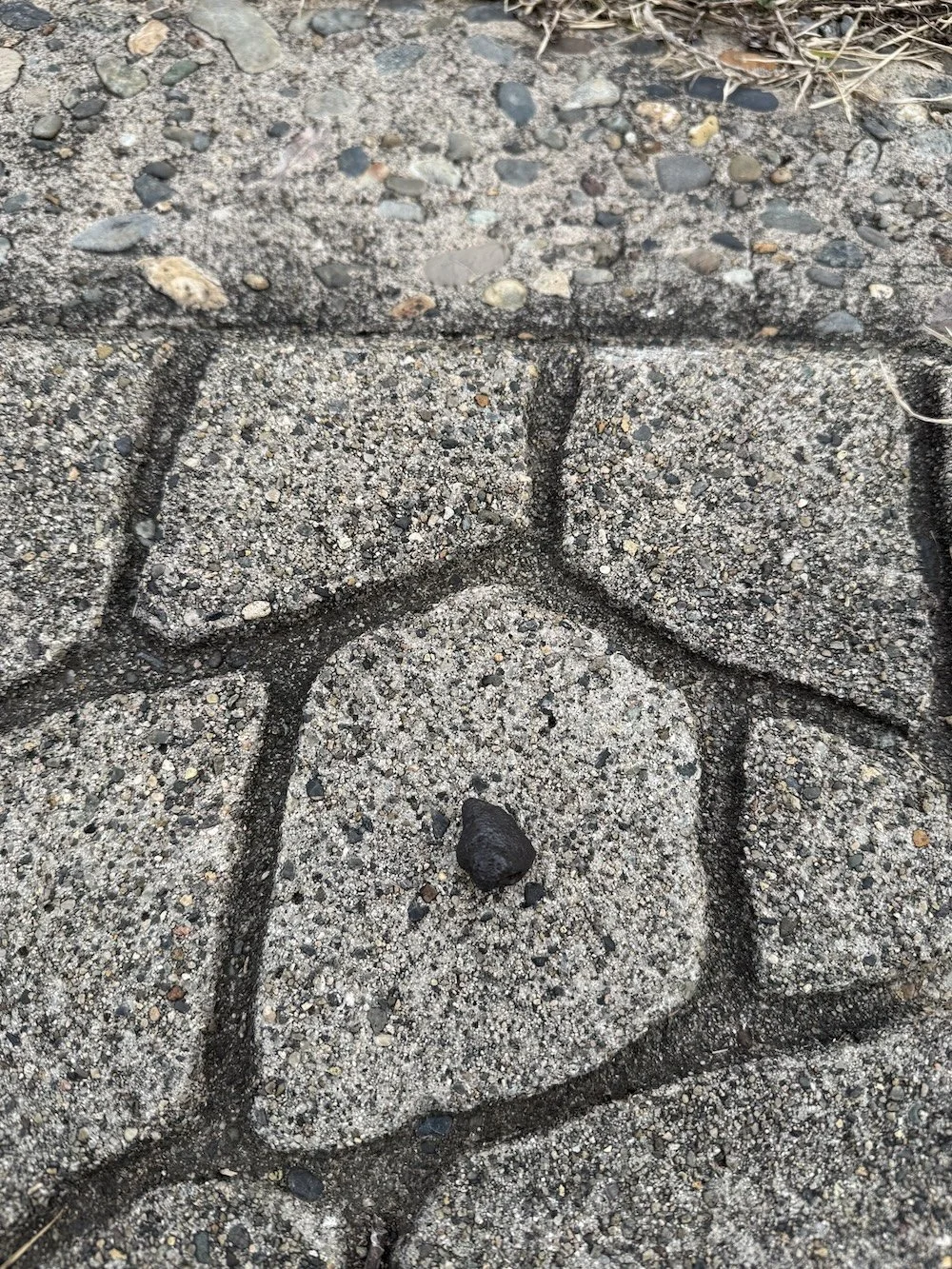
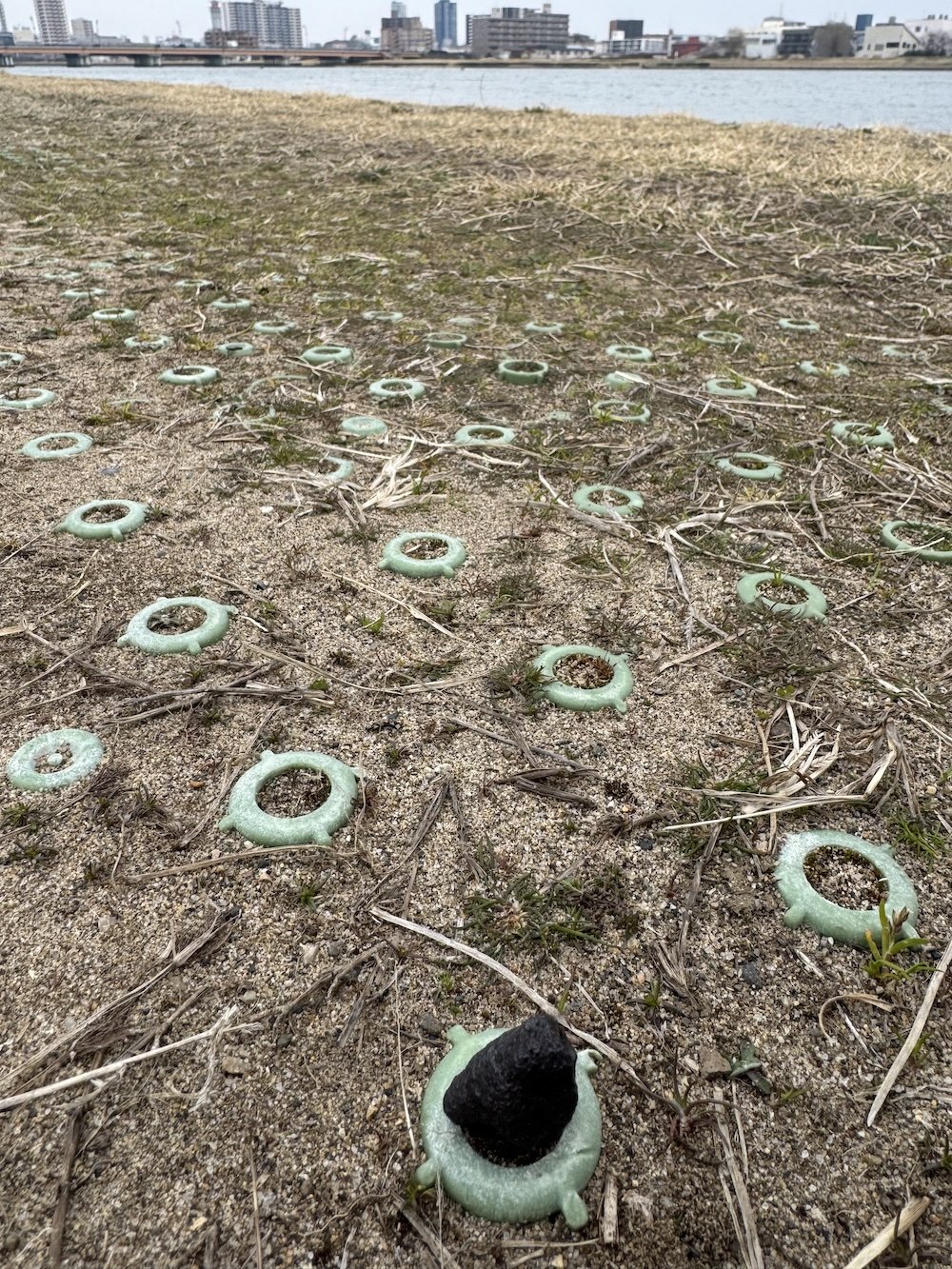
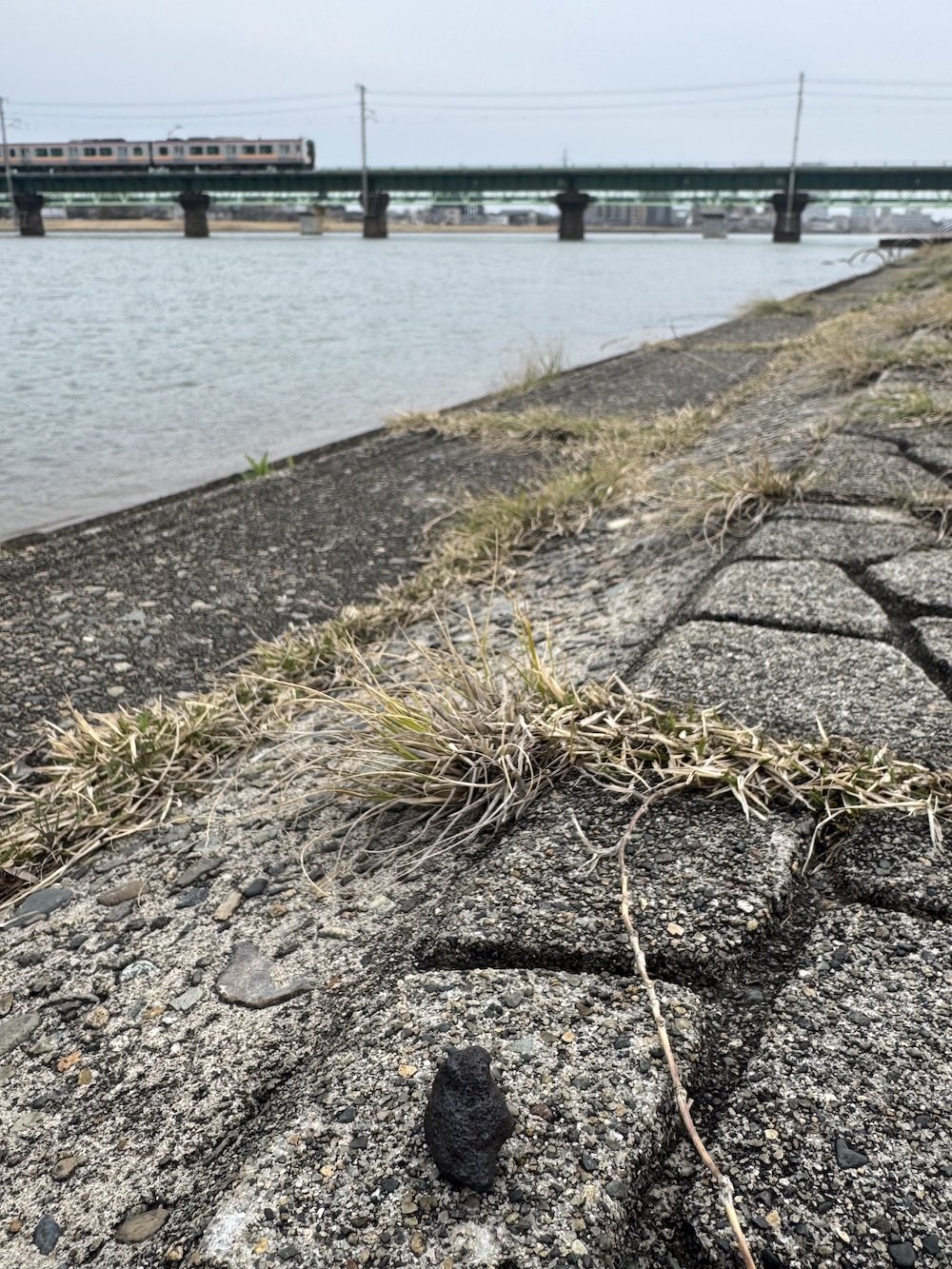
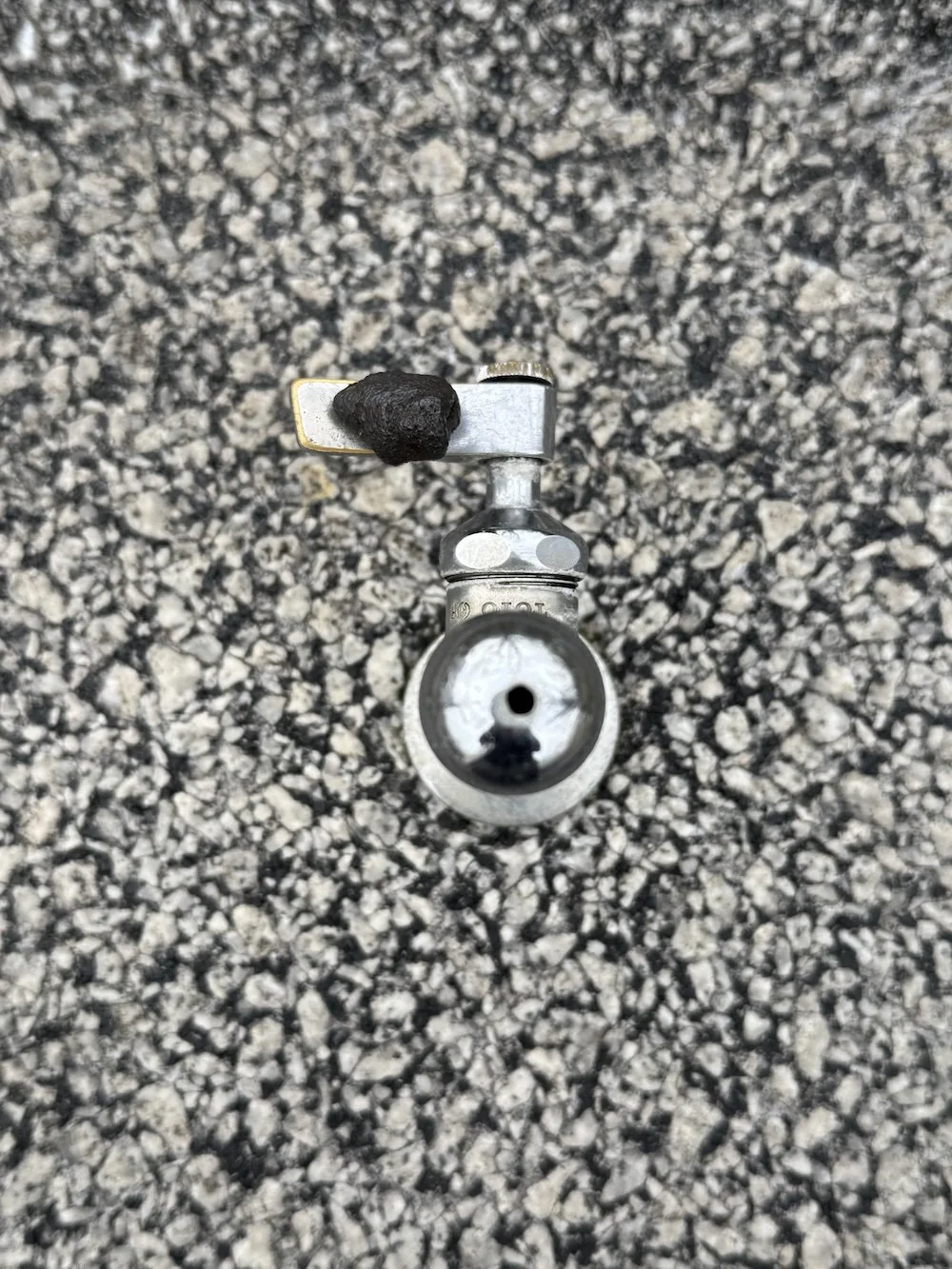
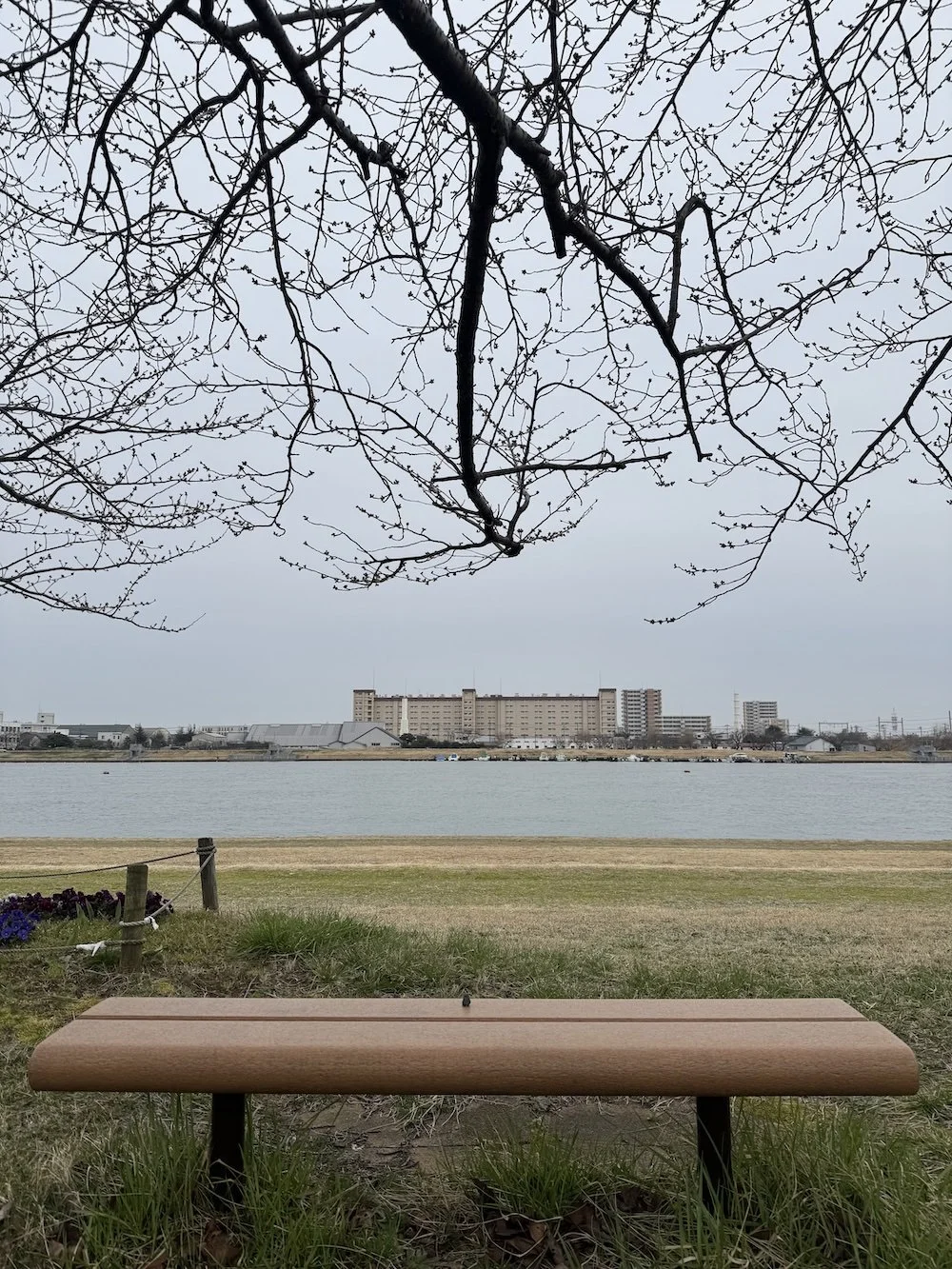
03.25.2026 - Yasuragi-tei やすらぎ堤 (Niigata, Japan)
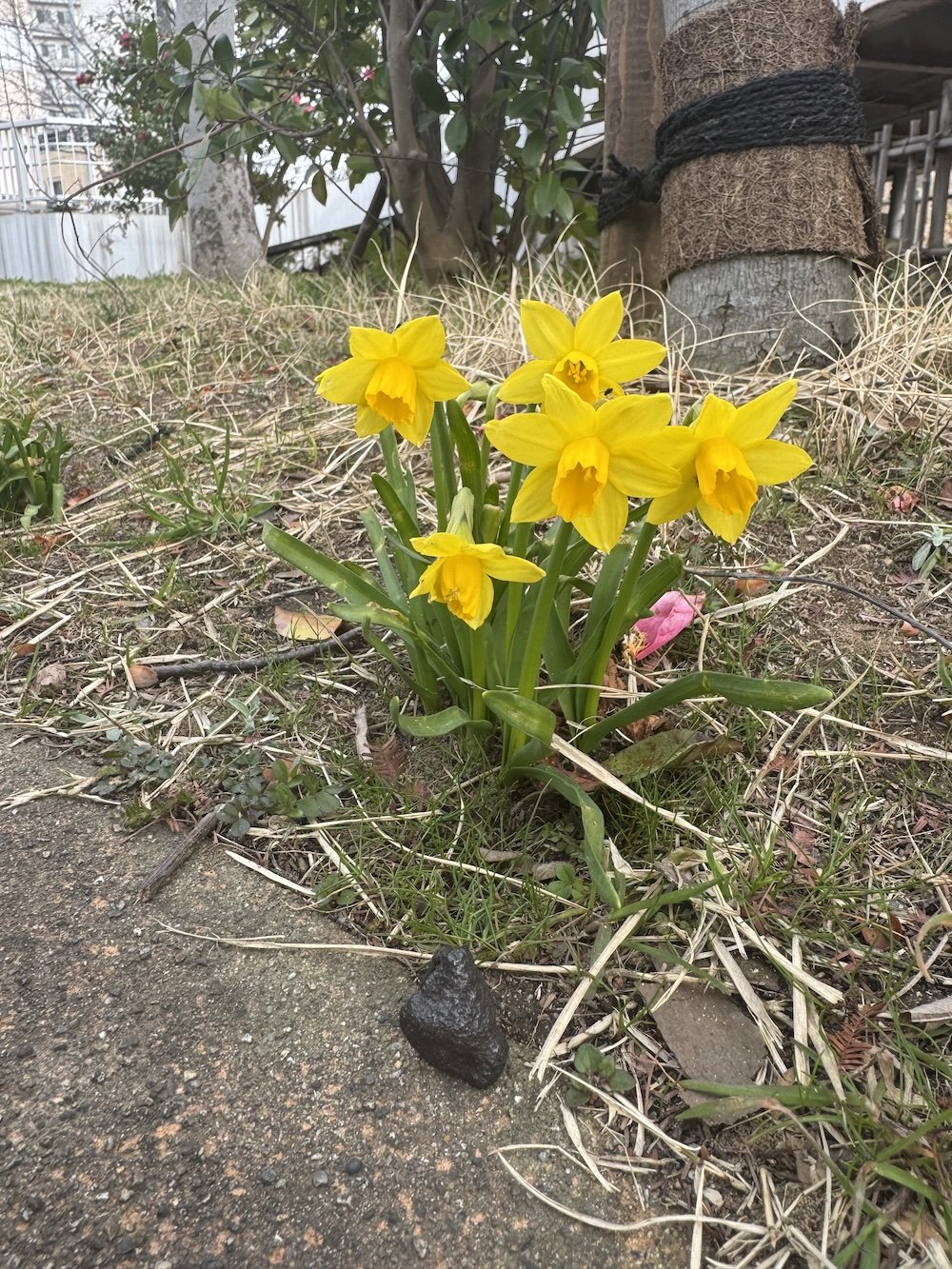
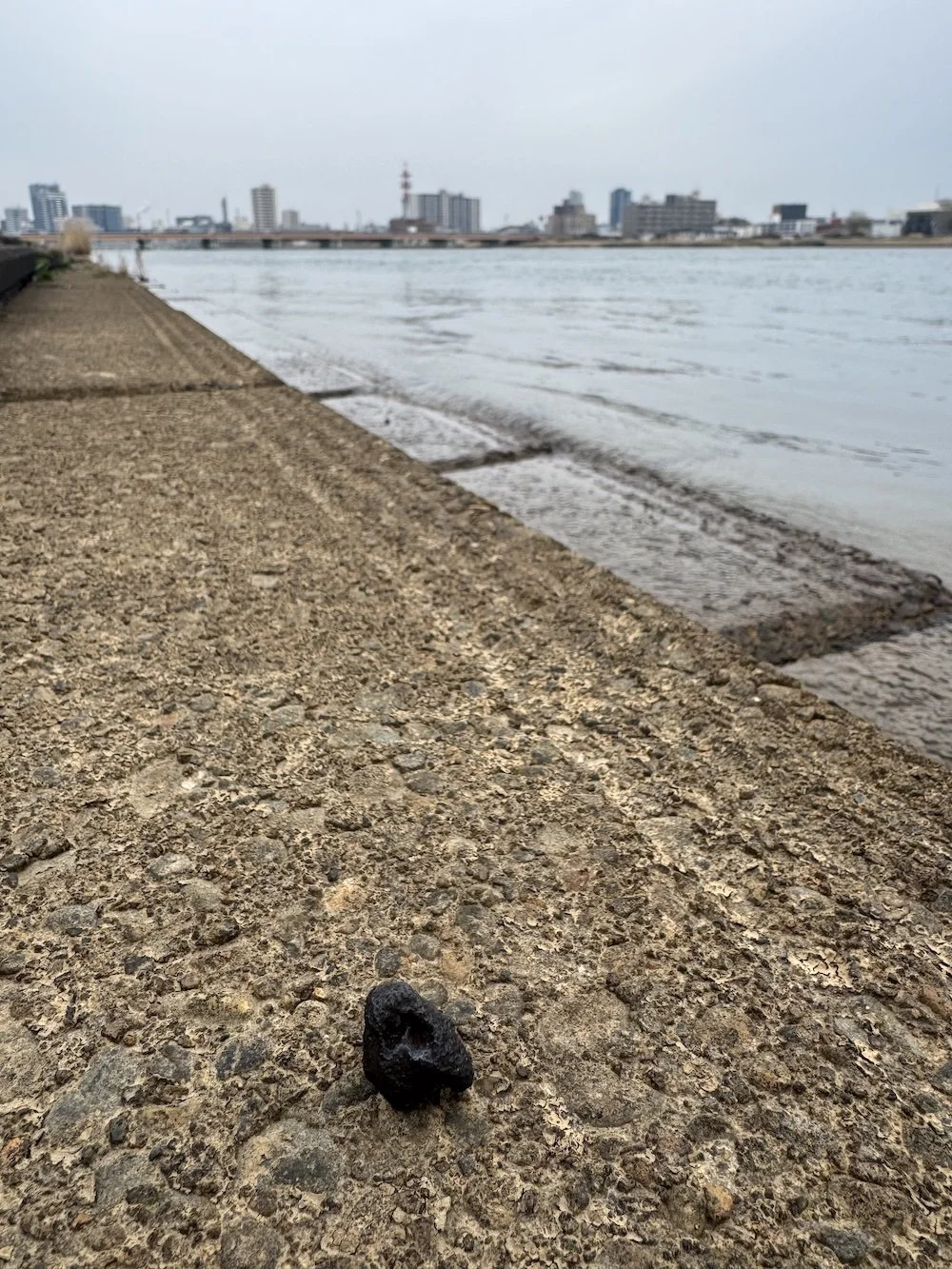
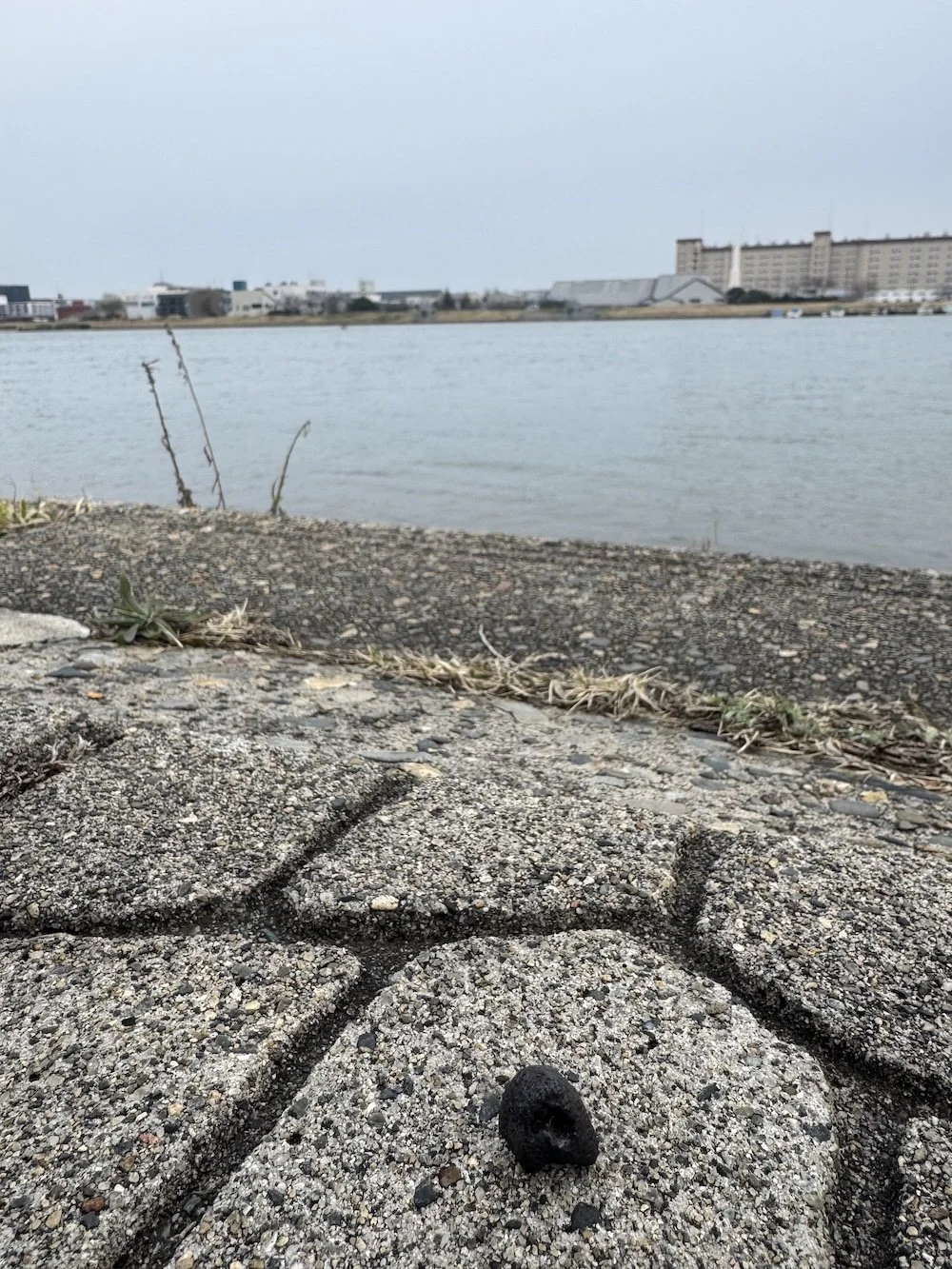
We decided to stroll around Yasuragi-tei, the river-side park by the Shinano-river. (Yasuragi means “peace of mind” or “tranquility” in Japanese. Tei means “river bank”) We spent long time playing around. I went there many times, but this time with Stone, I noticed more details of this place. We waited for a while so that Stone could see the train passing the bridge. Many water birds were there. Not so many people. Only a few people passed by, running. It was too early for the cherry blossoms, but I think Stone got the idea of the essence of this city. Niigata is not a place for flashy attraction. It is a town to BE. As a northern town, the sky is a lot of times gray. So as the air. The tone of this town is a kind of muted color. A town to merge with the tranquil nothingness. Stone seems to fit in this town well.
一緒にやすらぎ堤に行ってみることにした。信濃川の土手に造られた公園みたいなやつ。この街の「観光地」。ここで長い間、石と私は遊んだ。ここには何度も来たことがあるけど、石と一緒の今回は、この場所の細かな表情にはじめて気がついたみたいだ。鉄橋を渡る電車を石に見せたくて、長い間待ったりもした。水鳥がたくさんいた。人間はほとんどいなかった。ランニングの人が数人通っただけ。桜にはまだ早かった。でも、石はこの街のエッセンスを理解したようだ。新潟は派手なアトラクションの街ではない。ここは「そこにいる」ための街だ。北の街だから、空は灰色のことが多い。空気もいつもそんな感じ。この街の色調は、どちらかというとくすんだ感じの色味なのだ。ここは静かで、なんにもないことと溶け合うための街。石はこの街に馴染んでいるみたい。
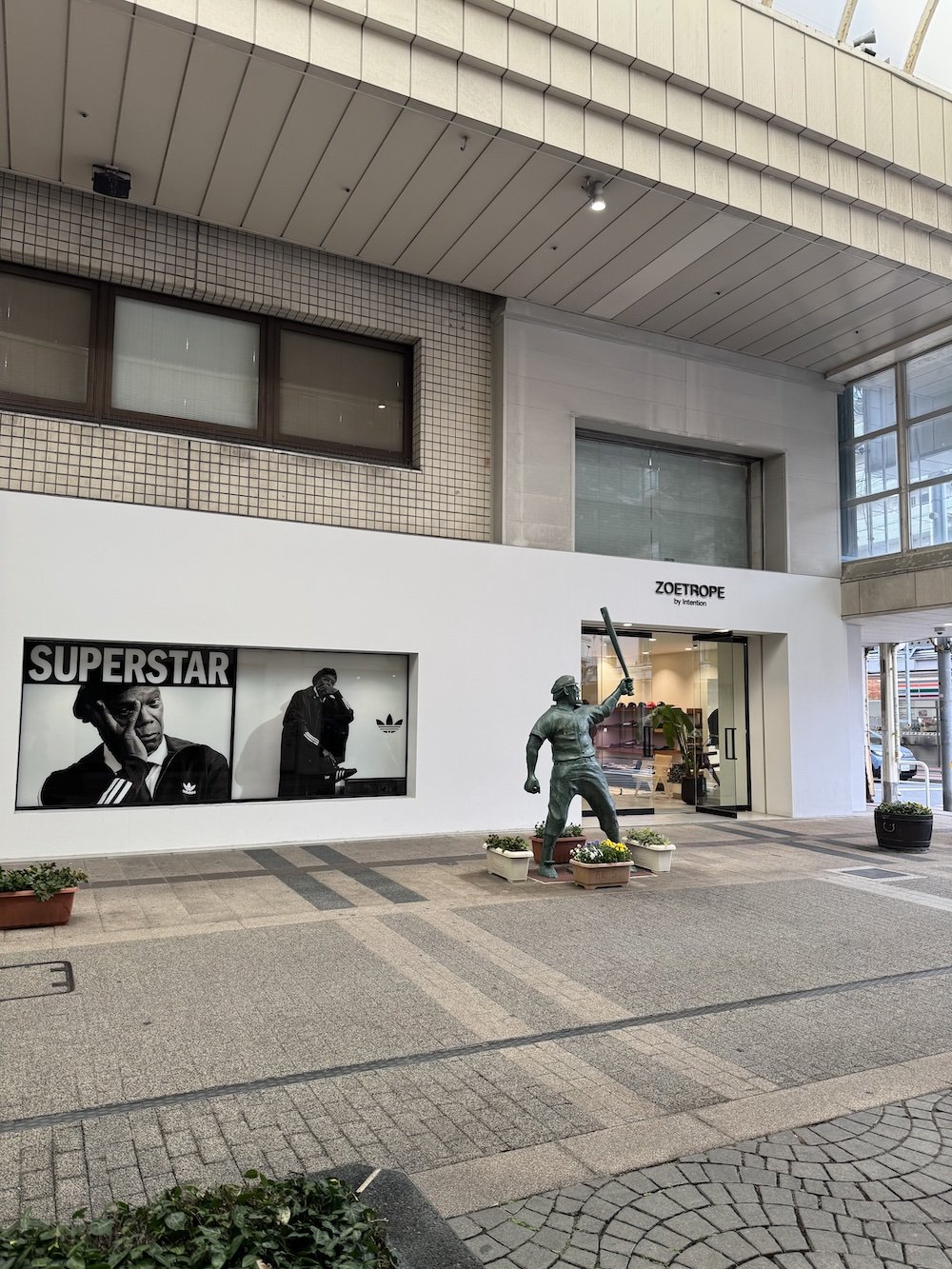
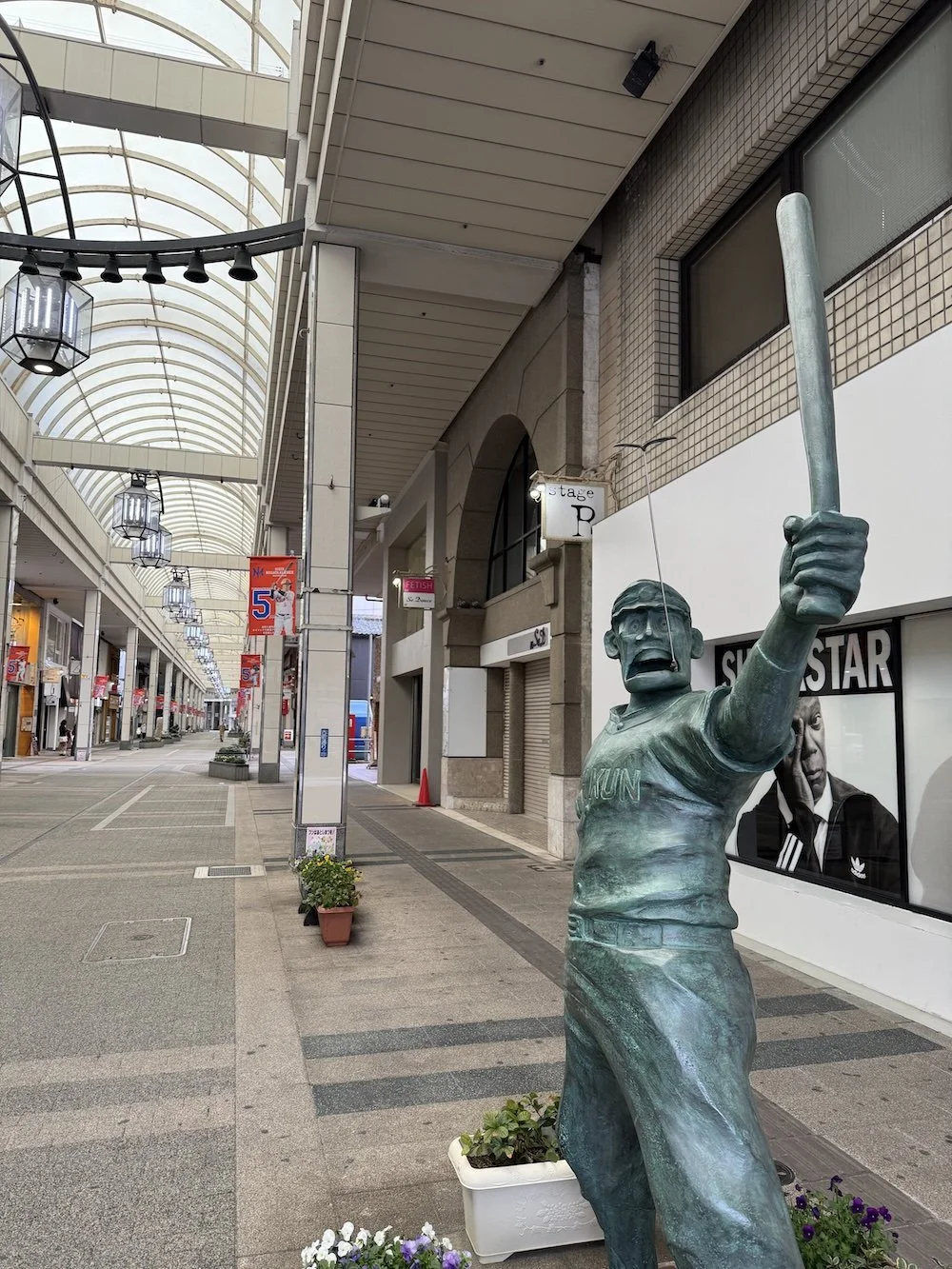
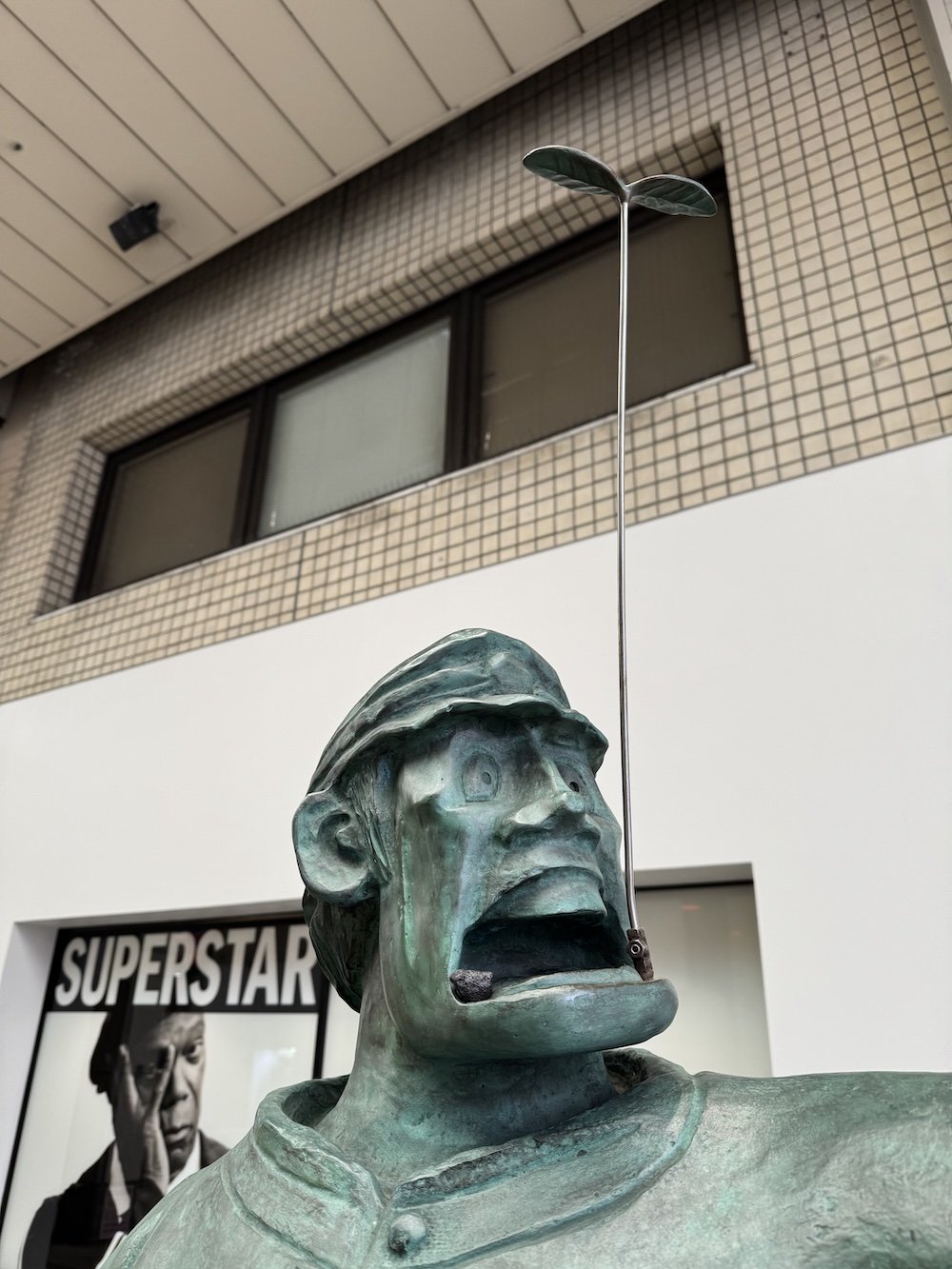
03.25.2026 - Iwaki 岩鬼 (Niigata, Japan)
We kept on strolling. I wanted to introduce my favorite statue to Stone. This shopping mall, Furumachi Mall 5, is always very quiet. Because of aging population, because of the recent trend of people going to suburban mega mall by cars, this older neighborhood is a little deserted. This is very common landscape of rural Japan. Long time ago, the shopping street association put a series of statue of characters from popular baseball manga Dokaben, whose author is from this town. In fact, many good manga artists are from Niigata. We do not know why. Some people say because it is too cold and snowy in winter to go outside to play, so we tend to stay inside and…maybe draw manga to kill time. It may not be the whole truth, but there is something in it — something about the rich inner world that grows quietly in cold, snowy places.
Among many baseball manga statues in this shopping street, this one Iwaki is my favorite. I secretly call him “my boy friend”. I usually take a photo with him when I pass by. Someone broke or stole his “sprout” once so now it is bolted, and I heard that it is taken off during the night. I do not know if it is true. I will check it if I have a chance to come here at 3 AM.
そのまま散歩を続けた。石に私のお気に入りの銅像を紹介したかったのだ。この商店街「古町モール5」はいつも静かだ。高齢化の波に加え、近頃はみんな車で郊外のでっかいモールに行くのが流行りだから、この昔ながらの商店街は閑散としている。これは今どきの田舎の日本の象徴みたいな風景だ。ずっと前に、商店街の組合がここにドカベンの登場人物(実は野球狂の詩のとかもあるけどね)の銅像を置いた。作者がこの街の出身だから。実のところ、新潟出身の漫画家はたくさんいる。どうしてかわからない。冬が寒くて雪が降って、外に出て遊べないから、家の中で暇つぶしに漫画を描くからだろう、なんて言う人もいる。それが全てではないだろうけど、当たっている部分もある。寒い雪国で醸される豊かな内部世界、みたいなものがたぶんある。
この商店街に並ぶ野球漫画キャラクターの銅像の中で、一番好きなのが岩鬼。実はひそかに「私の恋人」と呼んでいる。この前を通ると必ず一緒に写真を撮る。前に誰かが岩鬼の「芽」を折ったか盗んだかしたという事件があり、それから芽はボルトで留められ、夜になると撤収されるという噂だ。本当かは知らない。もし深夜3時にここに来る機会があったら、確かめることにしよう。
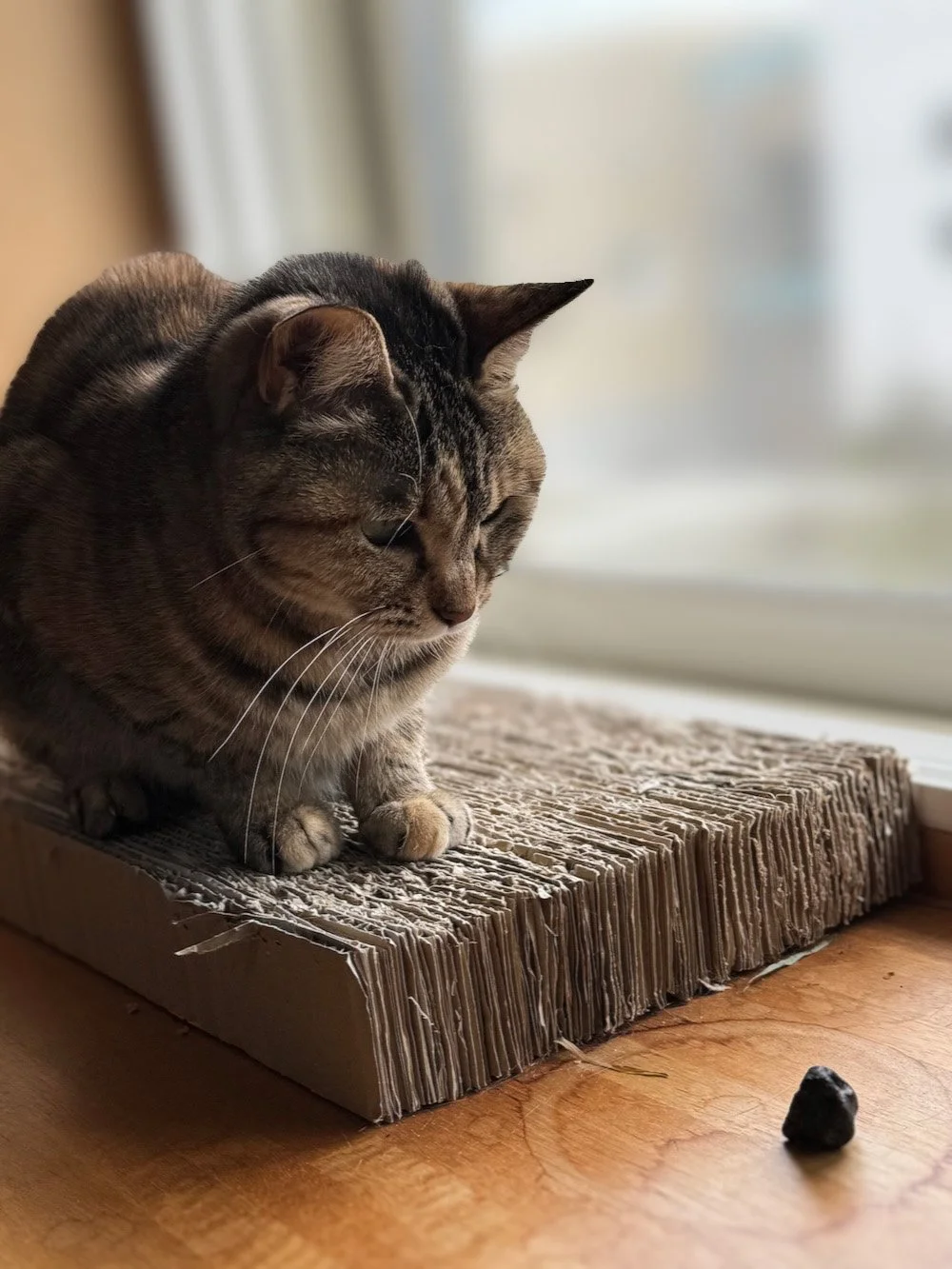
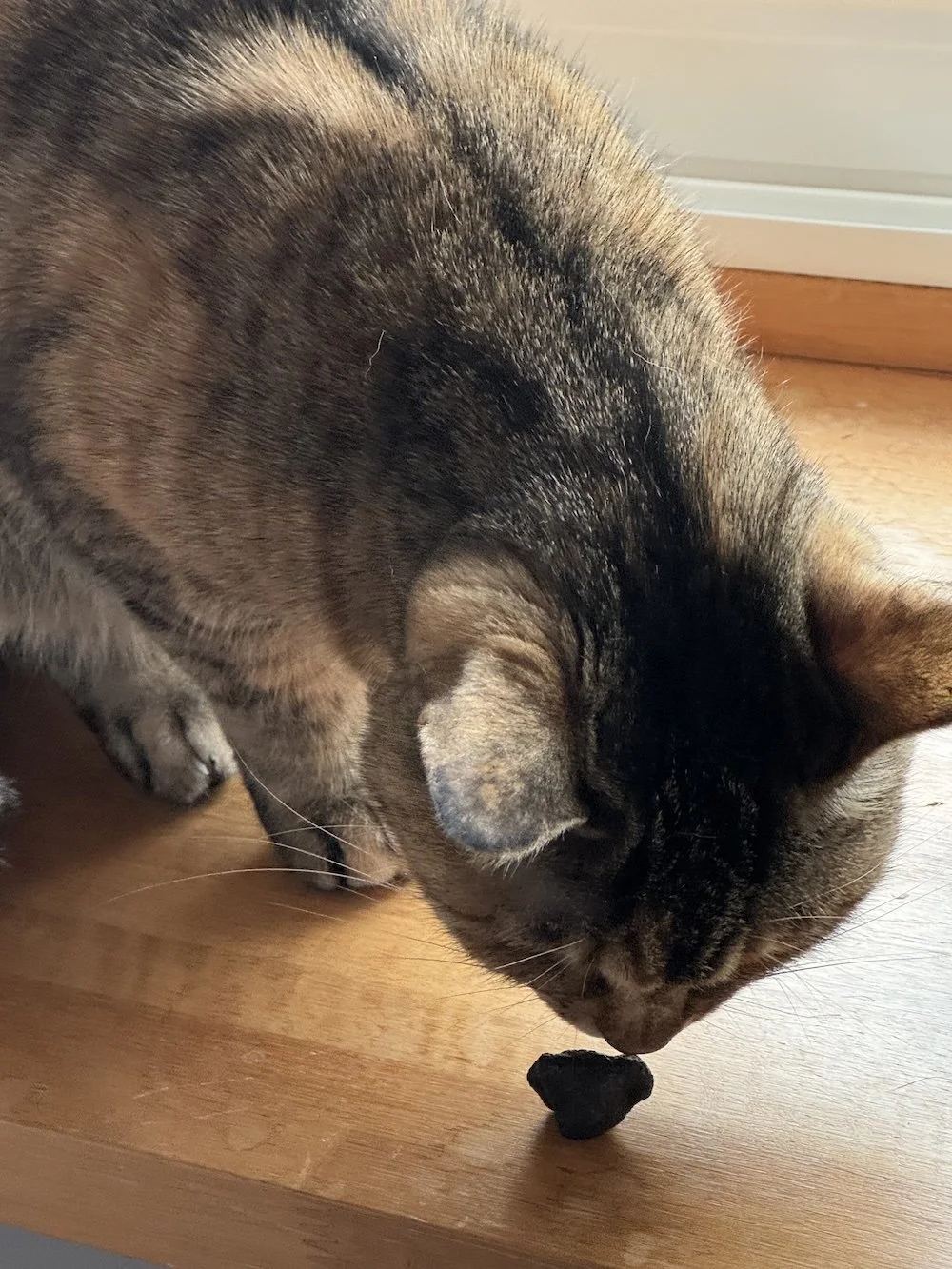
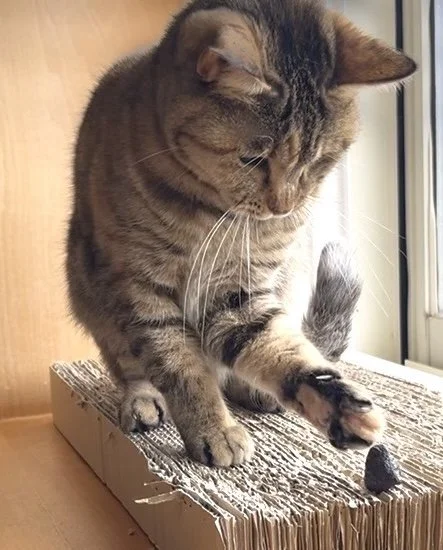
03.26.2026 - My sister’s cat 姉の猫 (Niigata, Japan)
When I first told my sister about Stone, she immediately said it should meet her cat. After she got this cat who was a stray kitten, 96% of my sister’s talk has become about her cat. The cat came to her place in snow day, injured. My sister was not “cat people” at all, not planning to have an animal at home, then, cat decided to stay. Then, my sister very soon evolved into a “cat people”. I wonder what happens to the human brain when the cat comes to your home and decides to stay. Now, if the cat does not “accept” you, you don’t have space in my sister’s house. Luckily, I got accepted by her cat about 2 years ago, so I can stay with them. This cat is very cute, but cautious and shy. She (the cat) rarely let me pet her. The cat was curious of Stone, cautious first, then, luckily the Stone was accepted. Thus, Stone was officially hosted at my sister’s place.
石のことを姉に話したら、猫に会わせよう、とすぐに言った。野良の子猫だったこの猫を飼ってから、姉の会話の96%は猫のことになった。この猫は雪の日に怪我をして姉のうちにやってきた。姉は「猫ずき人」ではなかったし、動物を飼うことなんて考えてもいなかったけど、猫はそのまま居続けることにした。そして、すぐさま姉は「猫ずき人」へと進化した。猫がうちにやってきてそのまま居続けを決める時、人類の脳に何が起こるのか、知りたいものである。今は、猫が「受け入れて」くれない場合には、姉の家にあなたの居場所はない。ラッキーにも、二年くらい前に私は猫に「受け入れられ」たので、この家に泊まることができる。この猫はとても可愛いいが、用心深くて、恥ずかしがりやだ。私に触らせてくれることなんて滅多にない。猫は石に興味津々で、最初は用心深く近づいた。それから、ラッキーにも石は「受け入れられ」た。こうして石は正式に姉の家のゲストとなった。
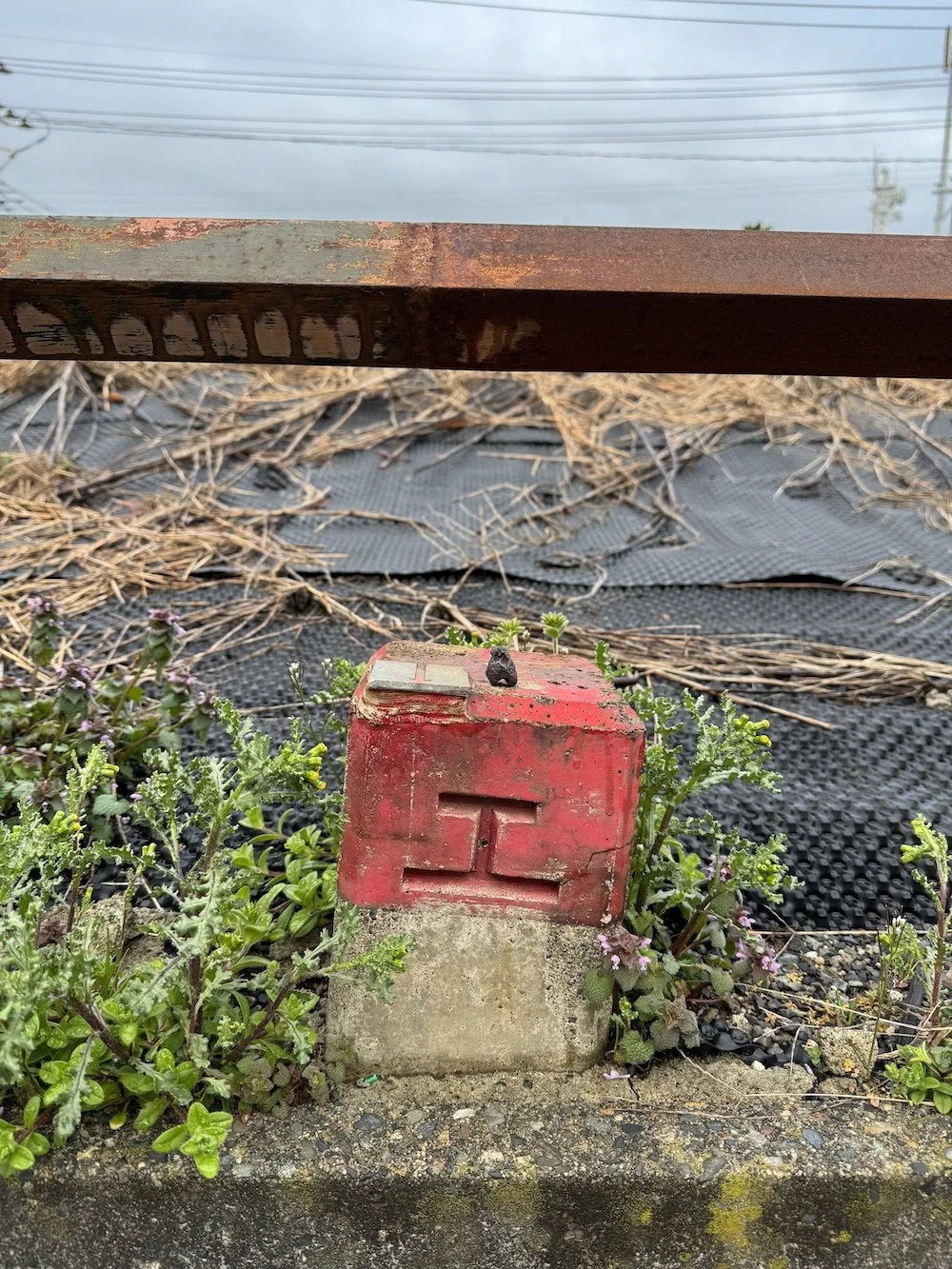
03.26.2026 - A Road to a Supermarket スーパーへの道 (Niigata, Japan)
My sister told me she was going to a supermarket nearby. I decided to go with her. Always, I want to go to a supermarket with her, tagging along. I rarely have enough time when I visit her. Always only a few days to spend together. So I like to do as much as “nothing special” in this town with her. Since I live abroad, far away from her place, visiting her always feels like I am finally back from a space expedition, and when I have to leave again after a few days, it always feels like I am leaving the Earth. I become quite sentimental each time, although I might come back again in half a year. Going to a Japanese supermarket, especially the local one, is always somewhat exciting for me. Still there are a few “local” supermarkets left in this town (a lot of places have been replaced by national chain). They have better selections of local products, fish and snacks.
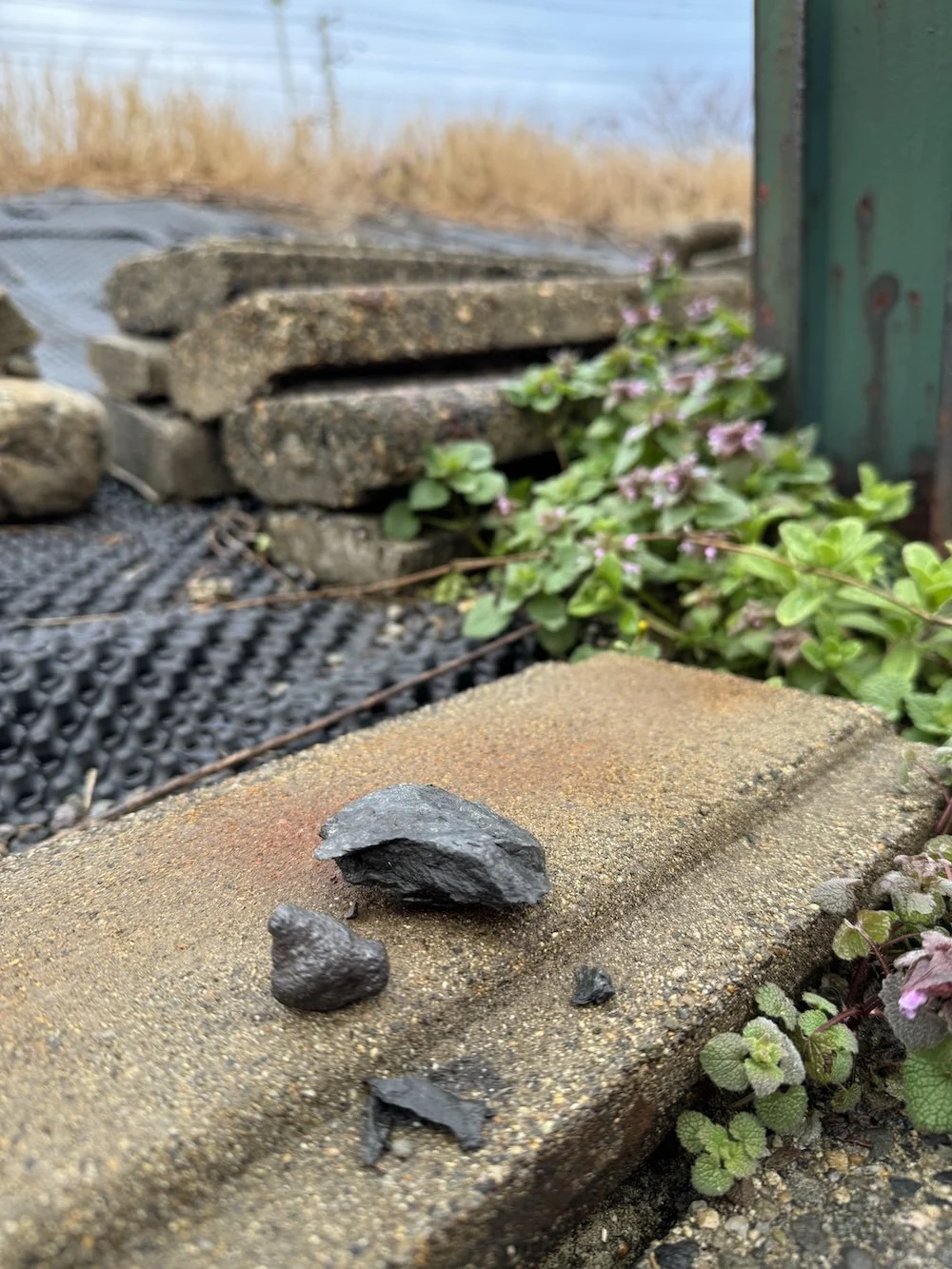
My sister is a good host. Earlier that day, she already found some “location” to introduce to Stone. She said that she found some other stones which are similar to the Stone. We walked by the train track, on the way to a supermarket, to spot that location. It was by the train track. Well, in fact, the Stone fit in the scene perfectly. Probably these other stones came from the train track. It looked like they, the Stone and other stones, were exchanging some information. If I leave the Stone here, no one would notice anything weird, probably forever. But instead, I brought the Stone with us, further towards the supermarket. My sister and I goofed around with Stone. Could the better sisters moment exist on this life than this meaningless conversations around the small guest?
姉はスーパーに行ってくると言った。私も一緒に行くことにした。いつも、私は姉にくっついてスーパーに行きたい。姉のところに来るときは、いつも時間があまりない。ほんの数日しか一緒に過ごせない。だから、この街にいる時にはできるだけ多く「特別でもなんでもないこと」を姉と一緒にやりたいのだ。私は外国に住んでいて、姉の家からは遠い場所にいる。だから、姉のところに来る時はいつも宇宙探索から帰還したような気持ちになり、数日を過ごしてまた戻る時にはこの地上から去るかのような気分になる。毎回、やたらにおセンチな気持ちになる。半年もすればまた帰ってくるのかもしれないのに。日本のスーパーに行くのは、特に「ローカルの」やつに行くのは、いつもちょっとワクワクする。この街にはまだいくつかの「ローカルの」スーパーが残っている。(多くは全国チェーン店に置き換えられてしまったけれど)ローカルのスーパーは地元の野菜や魚、おやつのいいセレクションがある。
私の姉は優秀なホストだ。その日、彼女はもうすでに「石」にぴったりの場所をロケハンしていた。「石」によく似た石のある場所を見つけたというのだ。私たちは線路沿いに、スーパーへの道を歩いた。姉の言う「場所」は線路沿いにあり、確かに「石」がぴったり合う場所だった。たぶんこれらの石たちは線路の敷石だったんだろう。彼ら(我らが石と、その他の石たち)はなにやら情報交換しているようだった。「石」をこのままここに置いていっても、誰も不自然さに気づかないだろう。たぶん永遠に。でも、「石」を置き去りにしたりはせずに、私はスーパーへの道へとさらに一緒に連れていく。姉と私は「石」についておふざけしながらゆく。この人生の中で、こういう小さなゲストを巡る全くどうでもいい会話をすること以上にすてきな「姉妹の時間」なんてあるのだろうか?
03.26.2026 - A Jungle of Tsukushi 土筆のジャングル (Niigata, Japan)
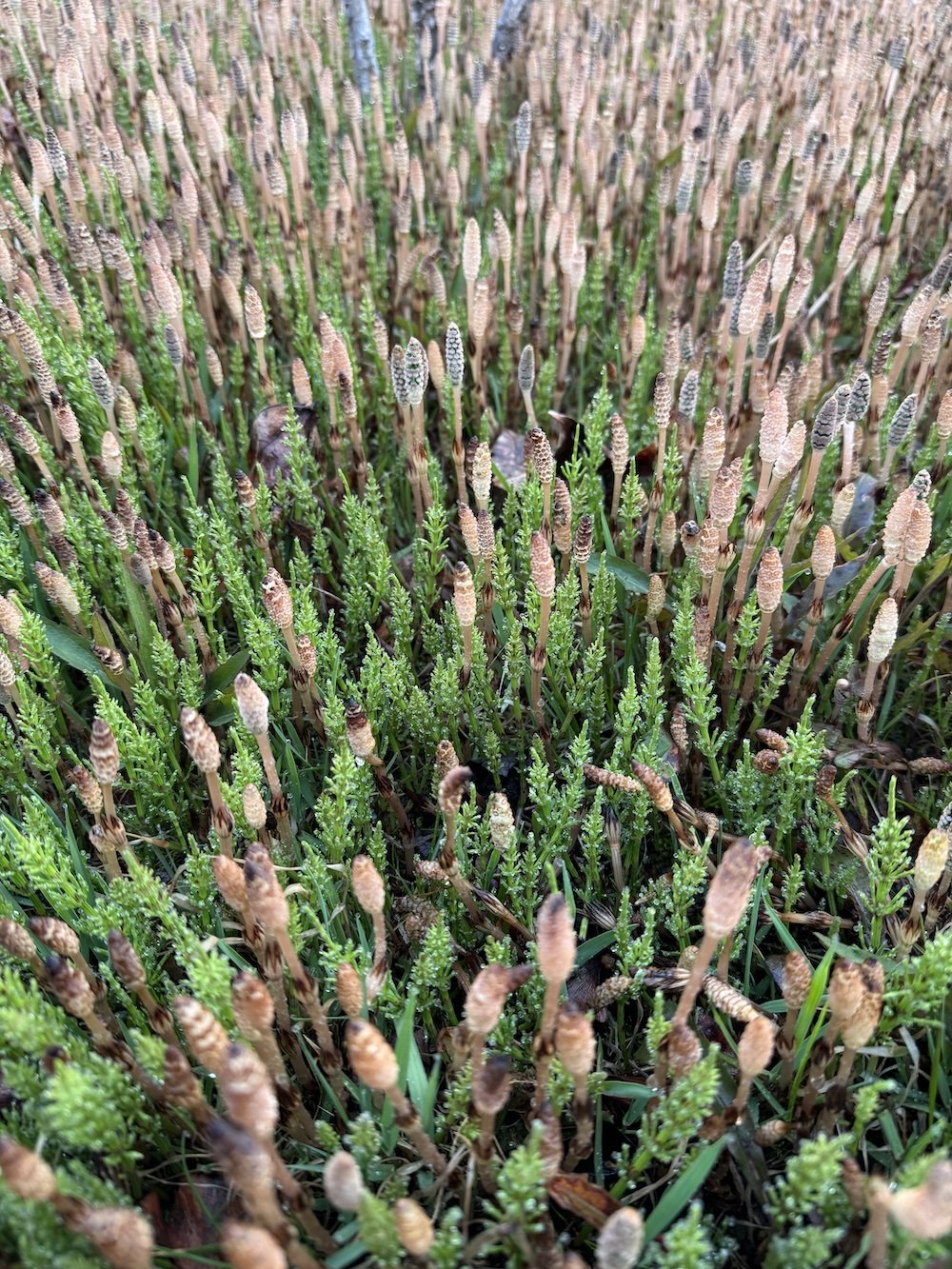
We kept on going toward the supermarket. Then suddenly we spotted a jungle.
A jungle by the car road.
It was within a small soil zone, probably made to have some “green” or flowers by the road. No flowers spotted. Instead, there was a jungle of tsukushi.
I was very excited, since tsukushi always brings me to childhood memory. If I say correctly, it is not exactly that I remember childhood scenes — it brings me to the moment when I was small.
A strange time-leap effect happens, and voilà, I was in a spring field, at the age of three.
We picked them whenever we found them, with my sister, with my grandmother, with my mother.
There are some elements on earth that offer this kind of time-leap magic. It seems, though, the effect works only for certain people. Or maybe some objects work for some people, and other objects for others. It is very personal.
The strange thing is that when I see tsukushi, I always go back very far, to the time when I was very small, as if I have no other strong memory of it since then.
Maybe, from a certain age, I stopped “seeing” it.
In fact, I almost never saw tsukushi in another foreign country. Or maybe I just became tall, and could not see it anymore.
From Stone-level eyes, it really looked like a jungle.
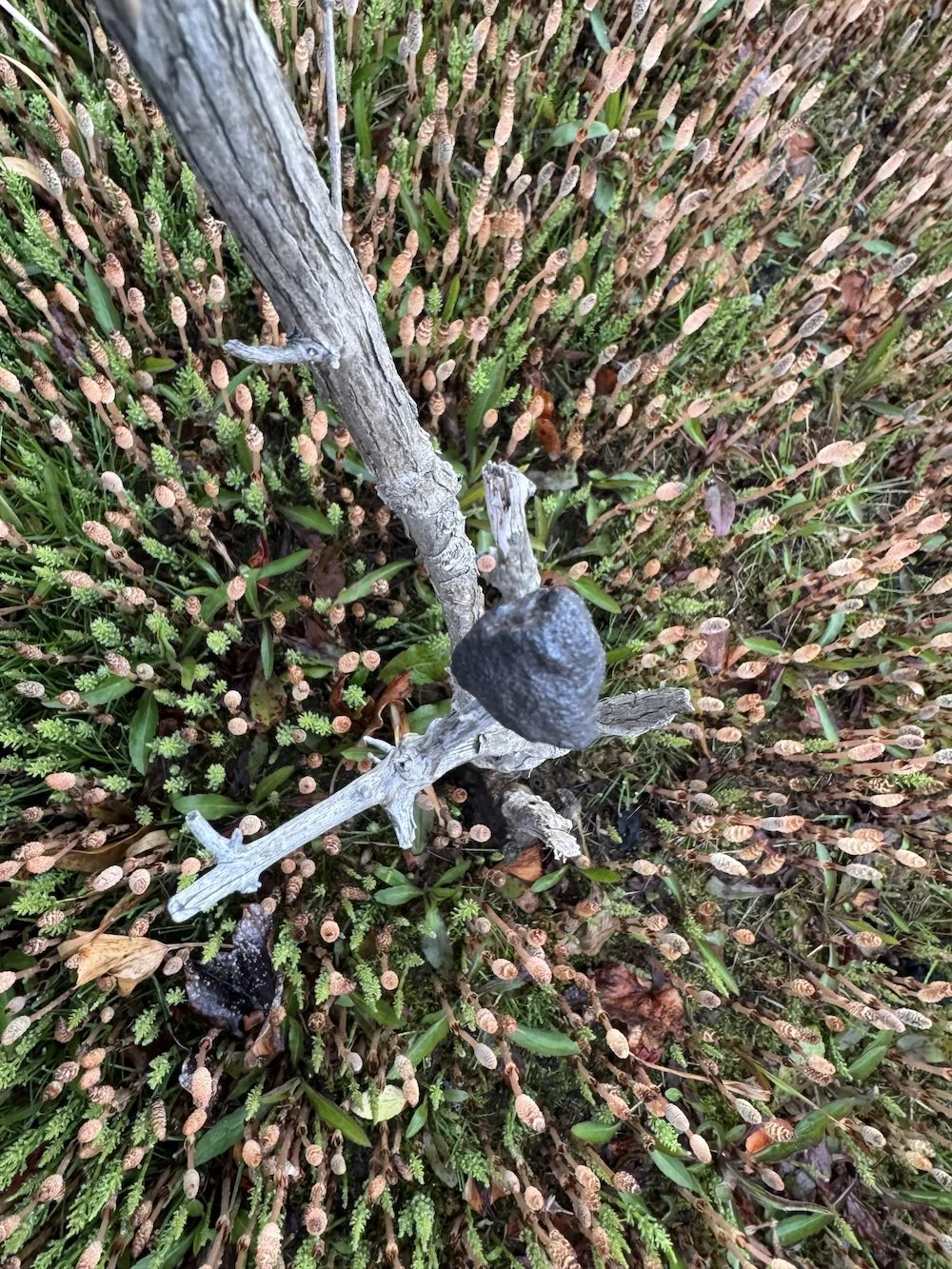
We tried to take photos there with Stone, but Stone got lost in the forest.
Then luckily, we found a small tree — or twig — sticking out from the ground in the middle. Luckily, Stone has a very convenient hole in it, so Stone could land on the tree and take a photo with the jungle of tsukushi.
Tsukushi always brings me the wonder of spring (from childhood, as a wondering small chicken), and today, finally, a new memory point was added to my tsukushi dictionary:
an unforgettable encounter with tsukushi again, thanks to Stone.
われわれはスーパーへの道を進んだ。と、突然ジャングルを見つけた。
道路の脇のジャングル。
それは歩道の脇の、植栽のために囲まれた花壇のようなやつ。でも花は咲いてなくて、代わりに土筆のジャングルがあった。
私はワクワクした。土筆はいつも子供のころを思い出させてくれる。正確に言うと、子供の頃を思い出させるのではなくて、子供の頃に連れ戻してくれる。
奇妙なタイムリープ効果が起こり、ほらね、3歳の私が春の原っぱにいる。
土筆を見つけると、いつもそれを摘んだ。お姉ちゃんと一緒に。おばあちゃんと一緒に。お母さんと一緒に。
地上の要素の中には、こういうタイムリープの魔法を喚起するものが点在している。でも、その効果はある種類の人々にしか効かないようだ。というよりも、あるモノはある人々に、また別のモノは別の人々に「効く」のかもしれない。とても個人的なものなのだ。
不思議なことには、土筆を見ると必ずとても小さかった頃の果てしなく遠い時間へと巻き戻る。まるで、その後土筆についての特筆すべき思い出が他にはなかったみたいに。
たぶん、ある年齢から、わたしはそれを「見る」のをやめてしまったのかもしれない。
事実、外国では土筆を一度も見たことがないような気がする。それとも、単に背が高くなったので、もう見えなかったのかもしれない。
「石」の高さの視点から見ると、本当にそれはジャングルだった。
石と土筆の写真を撮ろうとしたけれど、石が森の中に埋もれてしまった。
でもラッキーなことには、小さな木、というか、棒みたいなのが地面の真ん中から伸びていた。そしてラッキーにも、「石」にはとても手頃な穴が開いており、木の棒の上にうまく引っかり、無事に土筆のジャングルの中で写真を撮ることができた。
土筆はいつも、子どもの頃――ふらふら歩き回るヒヨコだった時代の、春の wonder を連れてくる。今日、ついに、新しい「思い出の点」が私の辞書の土筆の項目に追加された。
「石」のおかげの、土筆との忘れられない出会い、というエントリーポイントが。
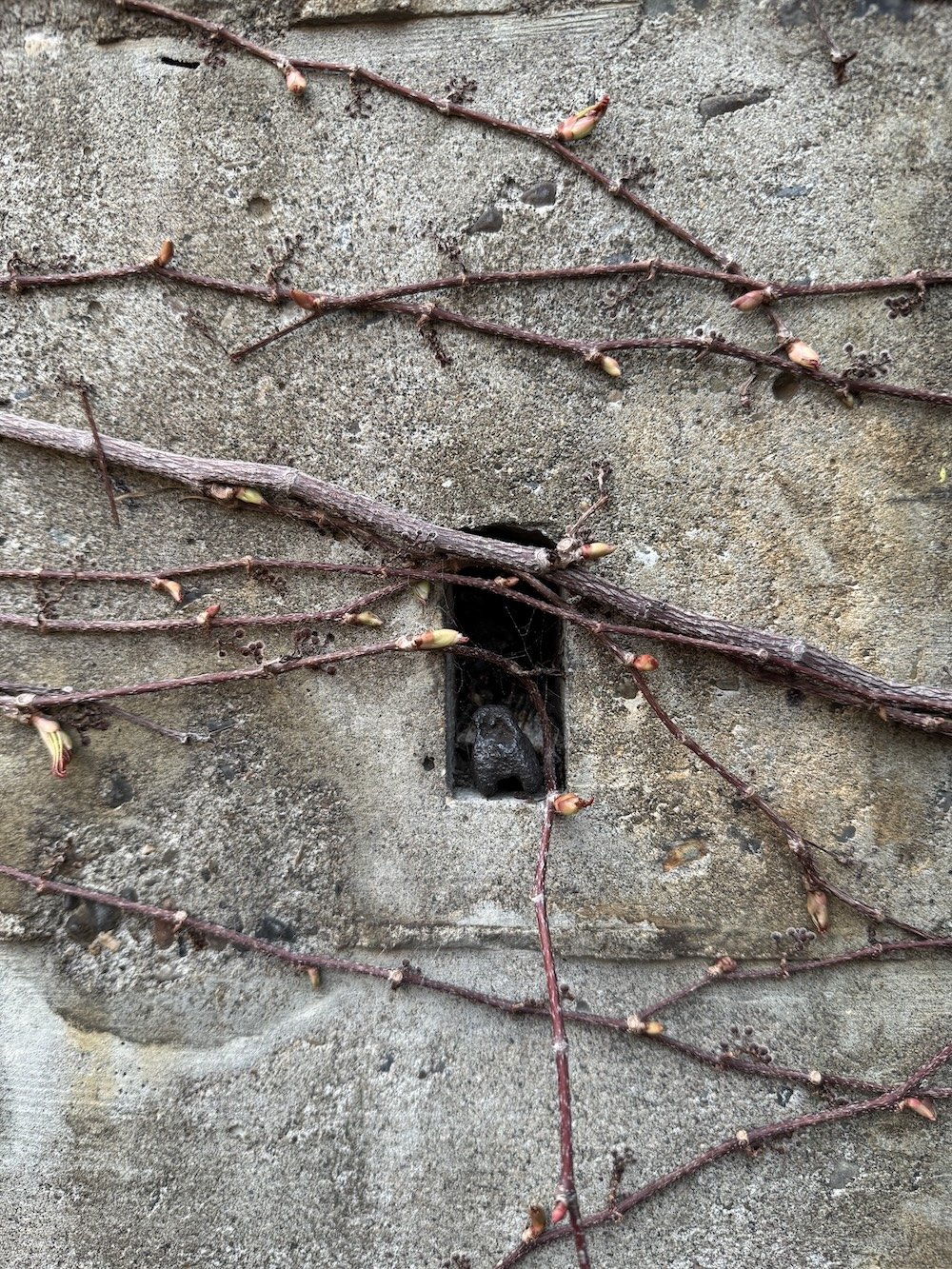
03.26.2026 - The Altar 祭壇 (Niigata, Japan)
Our journey to the supermarket continues.
We marched like sacred warriors exploring the unknown world.
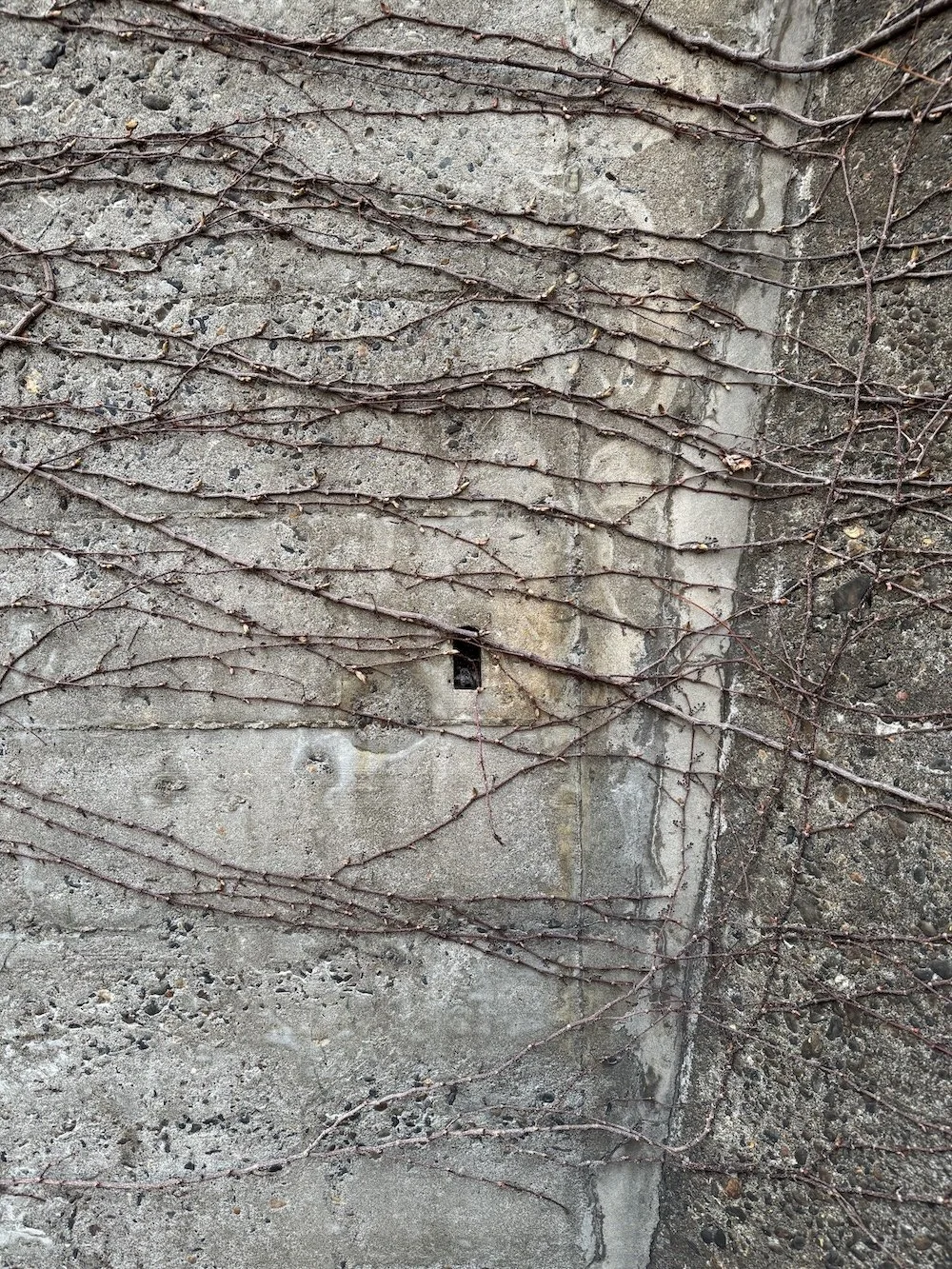
Then, we came across an old “gate” we had never noticed before.
A gate — or better to say, a wall — or even better, a ruin.
The texture of the ruin told its history.
Concrete eroded by rain, snow, and wind over a very long time.
Especially in this town near the ocean, even the wind itself contains salt, slowly eroding concrete and metal little by little.
Then we found an altar.
An empty altar.
Was it made for the Stone?
Well, it was the perfect size for the Stone.
As if it had been waiting for its arrival today.
We carefully placed the Stone into the altar.
My sister screamed:
“Watch out! Maybe there’s some bug inside!”
Yeah, probably some bug, worm, or unknown creature had been living inside this empty altar while the Stone was absent.
I felt some kind of nest-like feeling, some spiderweb-ish stuff, so I placed the Stone extra carefully, trying not to touch them.
Here, we completed the perfect altar for the Stone.
It had been waiting all these years for the Stone to arrive.
Does the world change now, when the Stone fits into the altar like the last piece of a puzzle?
We do not know.
Or perhaps we have no way to prove it.
You could say the entire world shifted at that moment.
Maybe it only happens within yourself.
Life is a dream.
スーパーへの旅は続く。私たちは未知の世界を探検する聖なる戦士のように進んでいく。
すると、これまで気づかなかった古い「門」にでくわした。
門、というよりは壁、いや、廃墟といった方がふさわしいか。
廃墟の肌触りが、その歴史を語っている。
雨や雪、風に長い間晒され、侵食されたコンクリート。
この海の近くの街では、風にさえ塩分が含まれていて、コンクリートや鉄を少しずつ蝕んでいく。
そして、我々は祭壇を発見した。
空っぽの祭壇。
これは「石」のために作られた祭壇なのだろうか?
確かに、それは「石」にぴったりの大きさだった。
まるで、今日という日まで「石」が到着するのを待っていたかのように。
我々は「石」を注意深く祭壇の中に安置した。
と、姉が叫んだ。
「気をつけて! 虫が中にいるかもしれない!」
確かに、虫、芋虫、あるいは未知の生き物が、「石」がいない間、この場所に住みついていたのかもしれぬ。
巣のような感覚、蜘蛛の巣っぽい何かの気配があって、私はさらに慎重に、そこに触れないよう、そっと「石」を安置した。
こうして、今ここに、我々は「石」の完璧な祭壇を完成させた。
これまで長い長い間、石の到着を待っていた、この場所で。
「石」がパズルの最後の一片のようにこの祭壇にハマった瞬間、世界は変わったのだろうか。
分からない。
というか、それを証明する術がない。
世界全体が、その瞬間にシフトした、と言っても構わない。
それは、あなたの中にだけ起きることなのかもしれない。
人生は夢だから。
03.27.2026 - The Jazz Club ジャズクラブ (Niigata, Japan)
I had a meeting with a friend.
She is someone who gives me a big hug whenever we see each other, although it is very uncommon to give hugs in Japan.
The moment of each of our meetings becomes slow-motion.
She runs (but at the speed of slow-motion) toward me, and I run toward her the same way.
Does this seem like too much of an exaggeration for just a meeting?
Well, each meeting happens only once, and it is special, so celebrating it with this dramatic, film-like slow-motion effect is actually accurate.
Accurate to the true emotion happening inside the human body.
For a long time, I have wondered why dogs look so excited to see each other on the street, wagging their tails and showing excitement with their whole bodies, while humans are strangely suppressed — not showing their emotions, or better said, not embodying them.
They sometimes ignore each other.
They sometimes stand face to face like two sticks (and occasionally bend their stick-bodies to a certain degree to show respect — these movements are called "bowing").
Sometimes they have the courage to shake hands.
And finally, they express more emotions through hugging and kissing.
So, back to my friend.
She is someone who has emotions.
She likes art, including some rather obscure art, so naturally I talked to her about the Stone.
Immediately, she understood and included the Stone in our hanging out.
We met at a rather boring square with random chairs.
Then we went to a suspicious little snack bar near the Jazz Club and ate an early dinner.
In front of the snack bar was the "Soap Land" — a shop for adult males, with a neon sign.
A sketchy street.
Humans are quite a strange species, you know.
They have all sorts of entertainment.
Tonight, instead of going into this forbidden "land," we are going to a Jazz Club.
We do not know whether the Stone is underage, of legal age, or beyond age entirely.
We do not care.
We assume it is of legal age, or perhaps non-aged.
The Stone is beyond ageless.
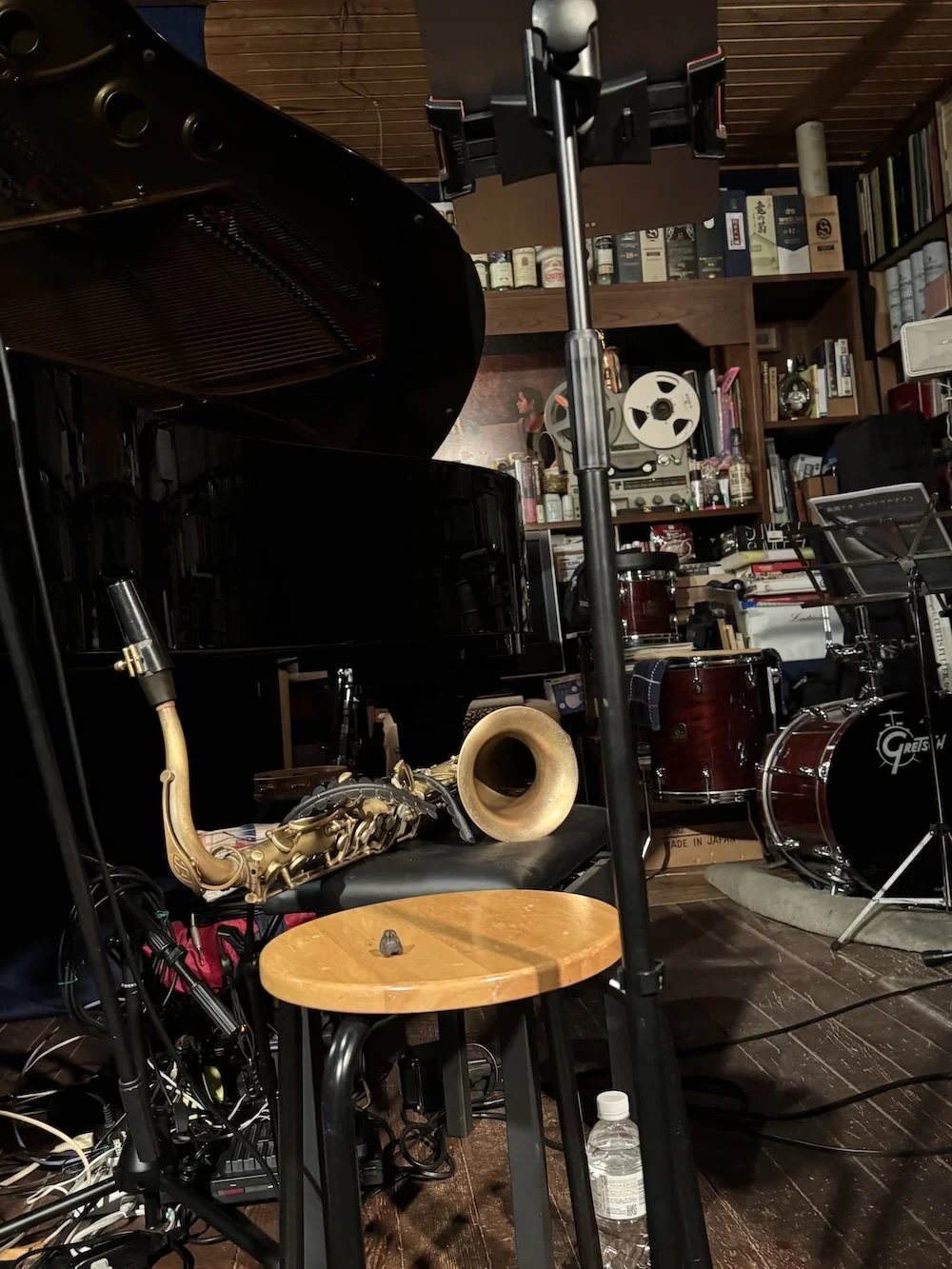
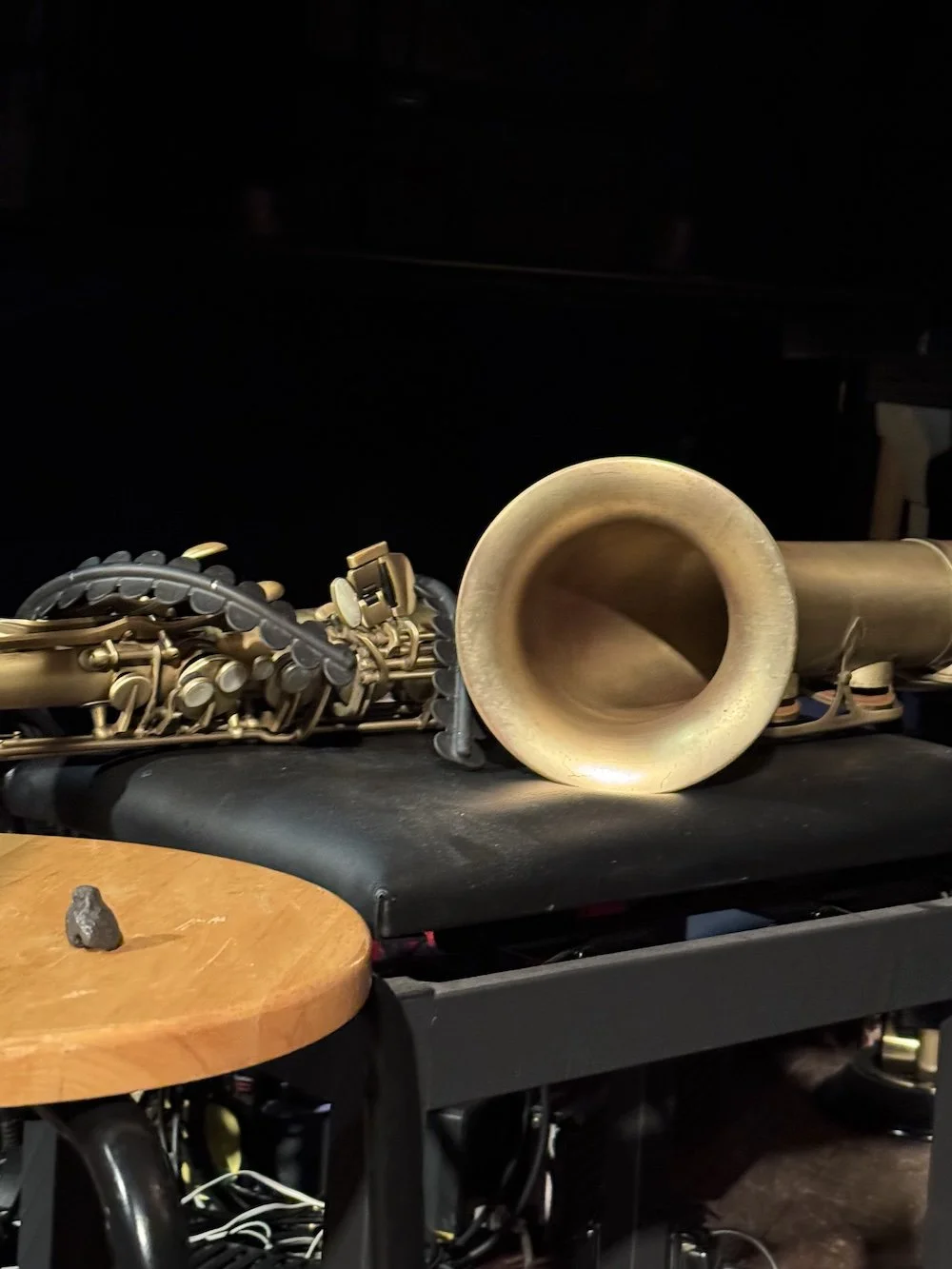
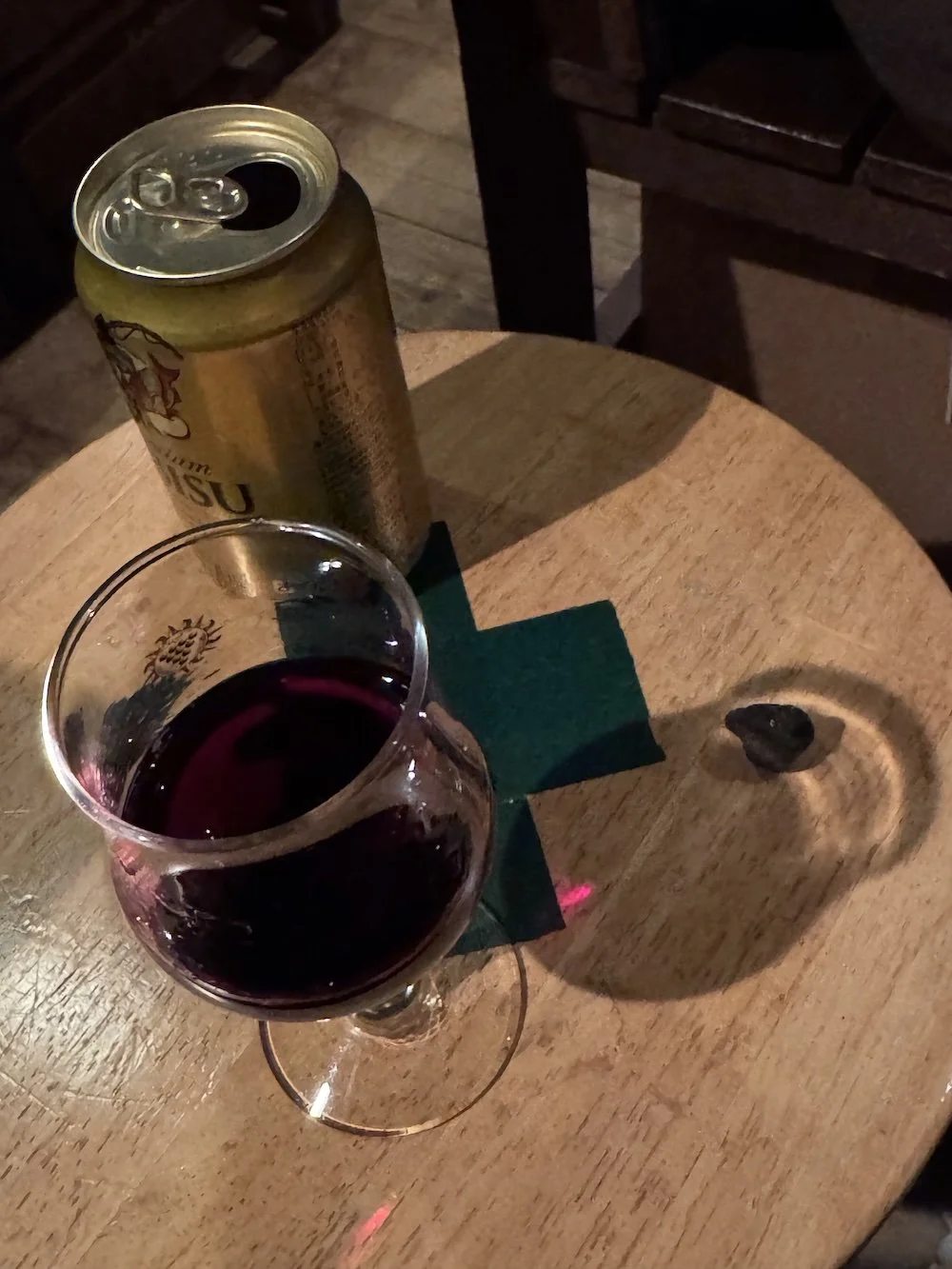
And it fit perfectly into the warm, dense atmosphere of the Jazz Club in this port town.
Why does the air in a Jazz Club always become amber?
It becomes thick, like warm syrup.
The sound is fresh, yet instantly aged.
The grain, the edge, the translucency, the punch.
All the textures — the lightness, the heaviness, the emotions — create a drink, a breathable essence, entering through the ears and caressing us from the inside.
A piano player winks at the saxophone player.
They are really playing, as if playing the very meaning of play itself.
The Stone probably swayed.
But to our human, vacant eyes, we cannot see its dance most of the time.
友達と会った。
彼女は会うといつも大きなハグをしてくれる人だ。日本ではハグはあまり普通ではないけれど。
我々の再会はいつもスローモーションになる。
彼女が私に(スローモーションの速度で)走り寄り、私も同じようにする。
これって、ただ「会う」という状況にしては大袈裟すぎるだろうか。
いや、それぞれの再会は一度きりのもので、それぞれが特別なのだから、それを映画のようなドラマチックなスローモーションで祝うのは実は正しい。
人間の体の中で起こっている本当の感情を、正確に表しているという意味で。
長い間、どうして犬は道で出会うと尻尾を振り、全身で喜びを表現するのに、人間は奇妙なほど感情を表に出さず、あるいはもっと正確に言えば、感情を身体化しないのだろうかと考えていた。
彼らは時に、互いを無視する。
彼らは時に、二本の棒のように向かい合って立つ(そして時々、その棒のような体をある角度に曲げて相手への敬意を示す。この動作は「おじぎ」と呼ばれている)。
彼らは時に、勇気を出して握手をする。
そしてついに、ハグやキスによって、より多くの感情を表現するに至る。
友達の話に戻ろう。
彼女は感情がある人だ。
彼女はアート、しかもかなりニッチなアートも愛好する人だ。
というわけで、ごく自然に私は「石」のことを話した。
一瞬で彼女は「理解」し、石は自然に我々のデートの一員となった。
我々は最初、椅子がバラバラに置いてある退屈な広場で待ち合わせをした。
それからジャズクラブの近くにある妖しいスナックバーで、少し早めの夕食を食べた。
スナックバーの前には「ソープランド」。
そう、あの大人の男性のためのお店のネオンサインが光っている。
怪しげな路地だ。
人類はかなり奇妙な種族だということは知っているよね。
そう、彼らはありとあらゆることをエンターテインメントにする。
今夜、我々は禁断の「ランド」には行かず、ジャズクラブへ向かう。
「石」が未成年なのか、成人なのか、あるいは年齢そのものを持たないのか、我々には分からない。
我々は気にしない。
たぶん成人だろう。
いや、非年齢族かもしれぬ。
「石」は年齢を超えたところを、さらに超えている。
そして「それ」は、この港町のジャズクラブの温かく濃密な空気に完全に溶け込んでいた。
どうしてジャズクラブの空気は琥珀になるのだろう?
それは濃くなり、まるで練った水飴のようになる。
粒。
エッジ。
透明さ。
パンチ。
すべてのテクスチャー。
軽さ、重さ、感情。
それらが一つの飲み物、吸い込むことのできるエッセンスを作り出す。
それは耳から入り込み、我々の体を内側から撫でる。
ピアニストがサックス奏者にウインクする。
彼らは本当に Play している。
Play という言葉の意味そのものを Play するように。
「石」はたぶんスウィングした。
でも、目が空洞の我々人間には、そのダンスはほとんどの場合、見えていない。
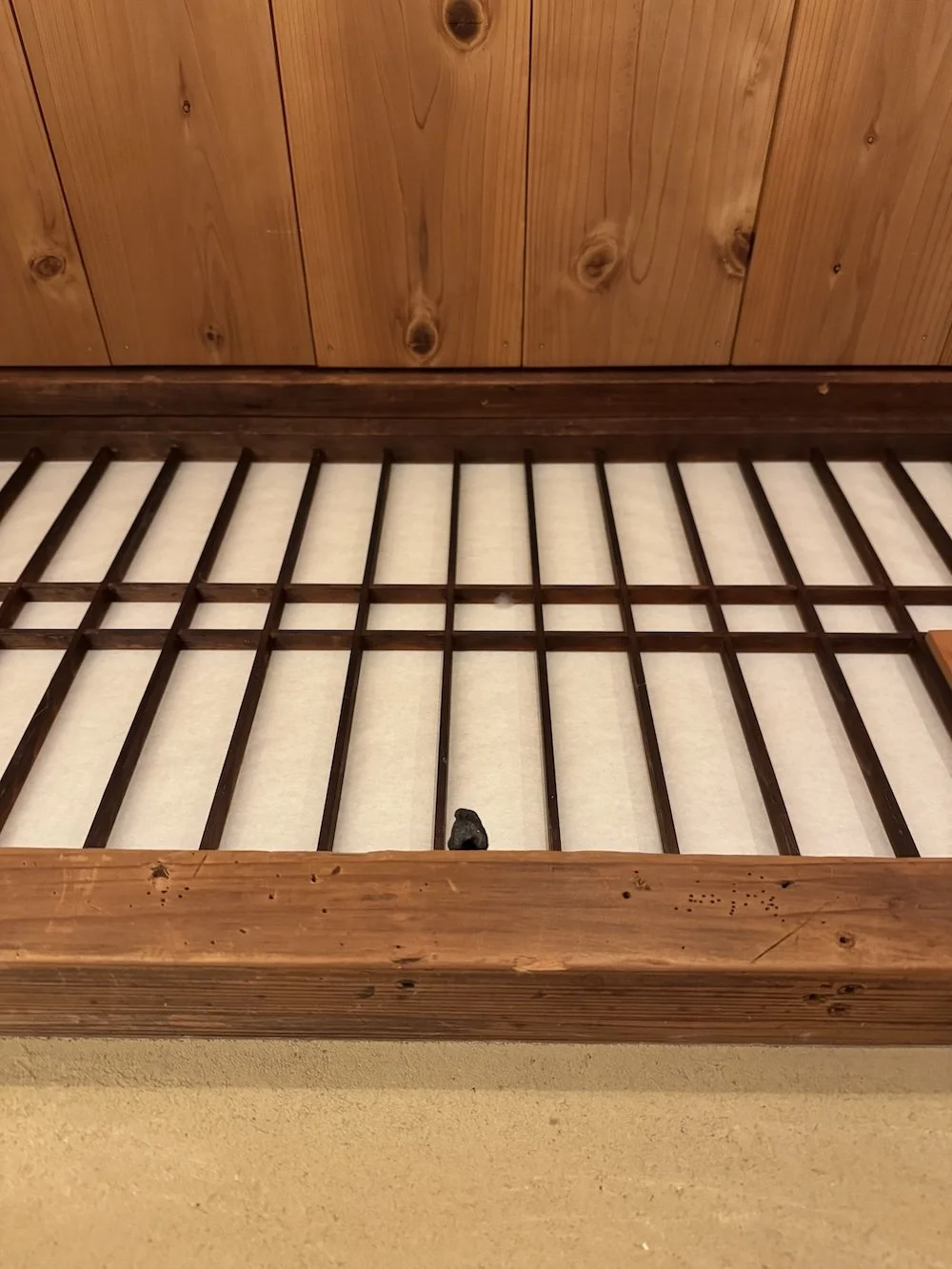
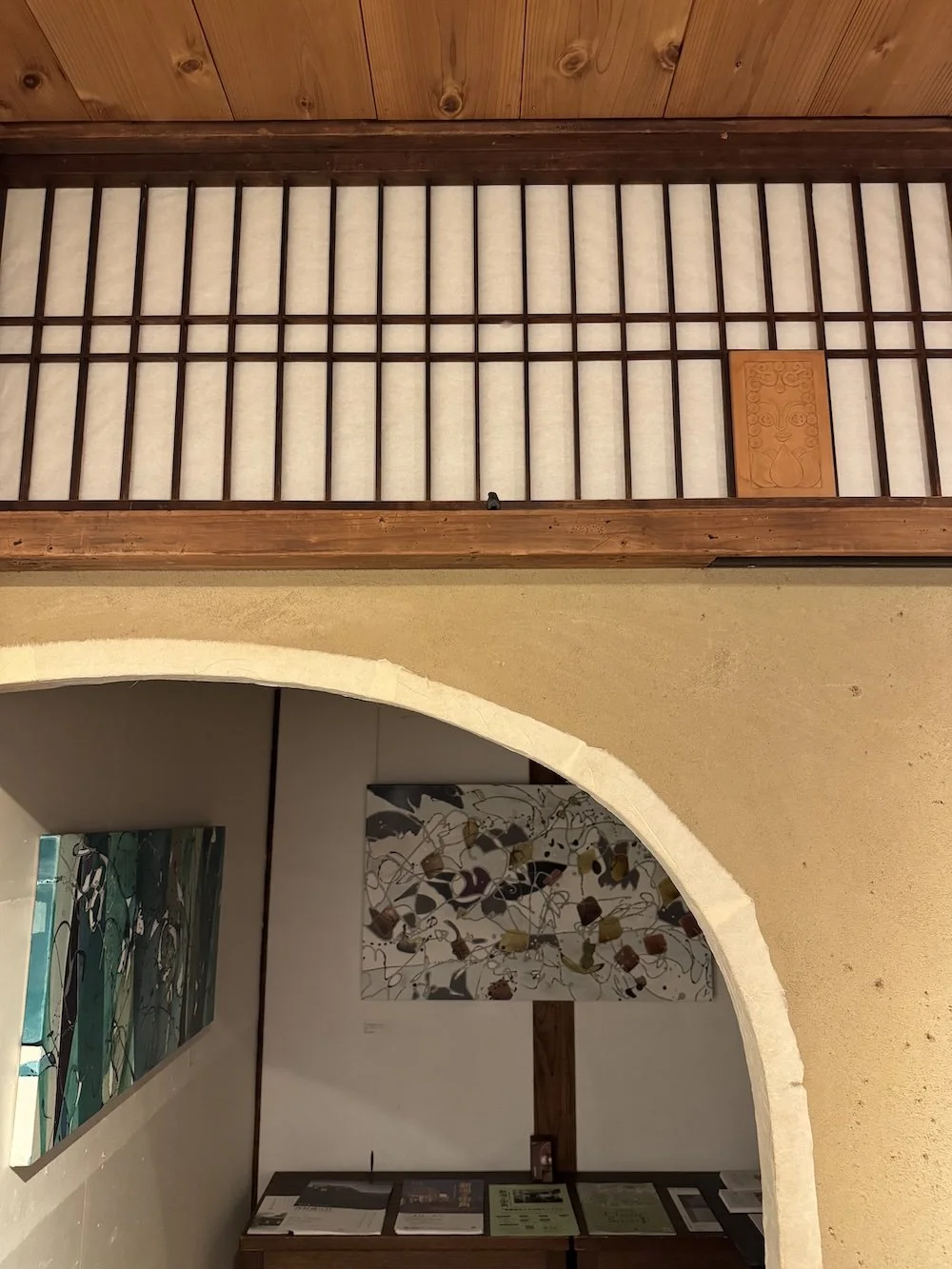
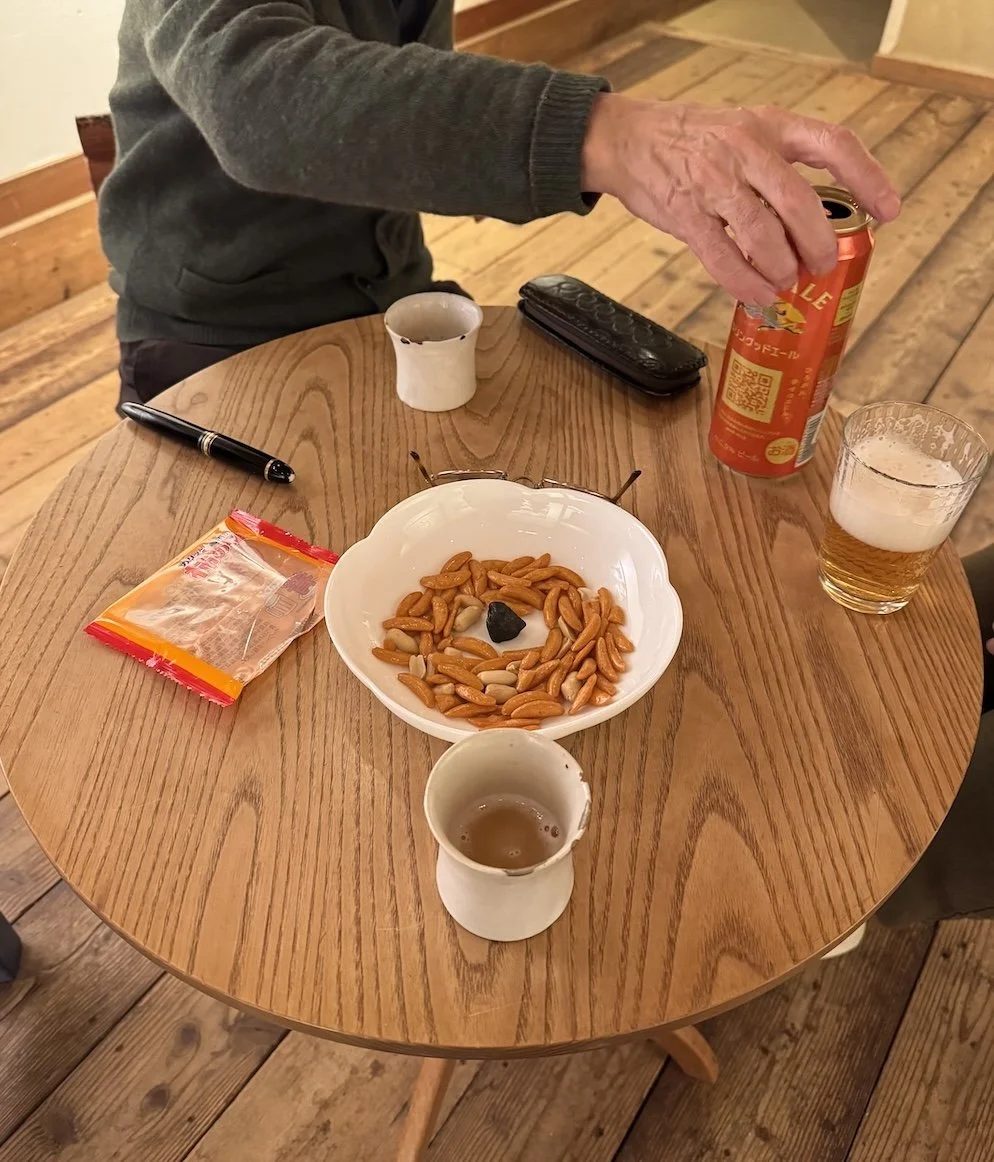
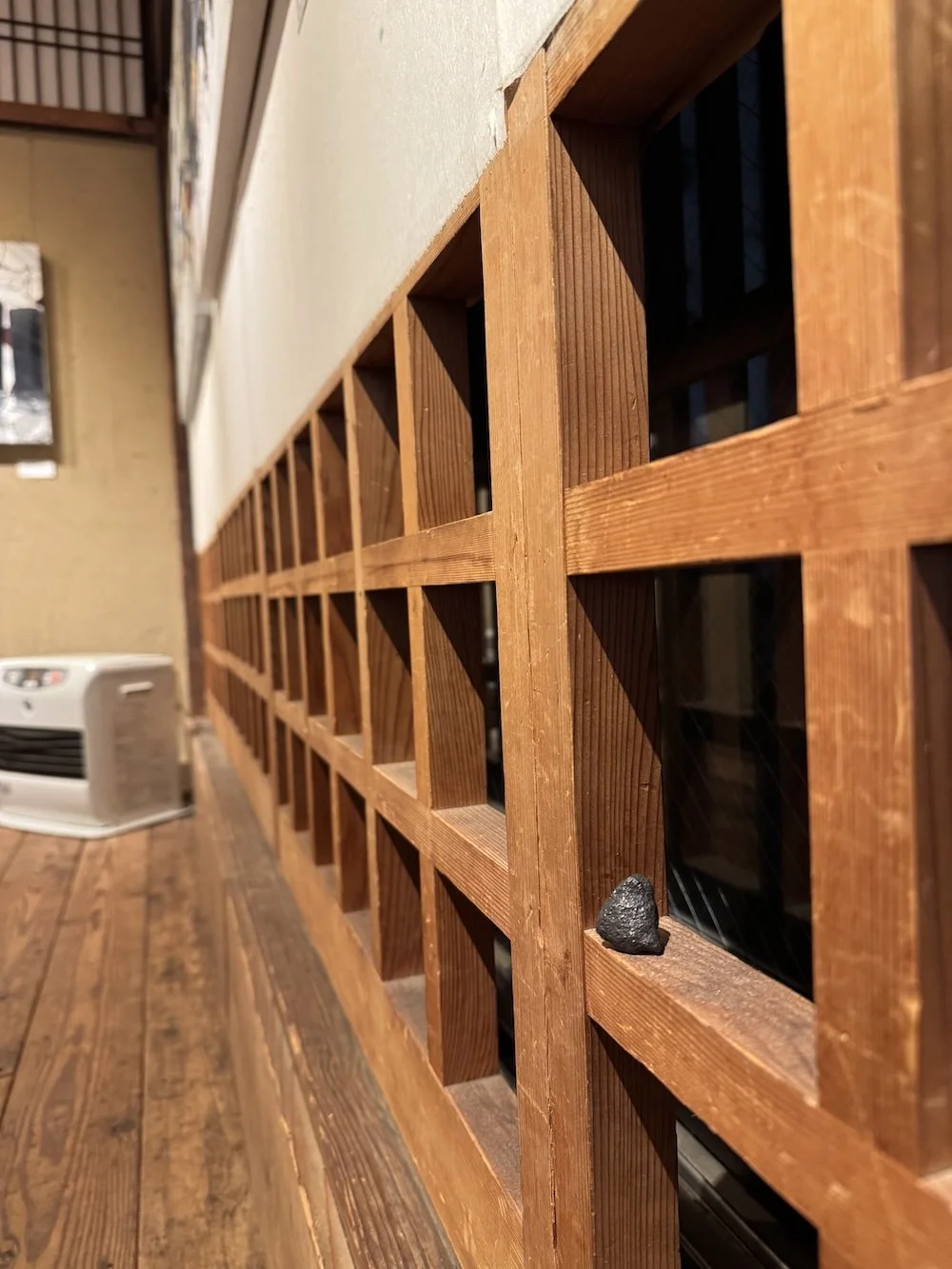
03.27.2026 - A gallery 画廊 (Niigata, Japan)
A friend and I then headed to the place where we could see another friend.
The night was getting deep. The night streets in this rather quiet town are remarkably quiet. Occasionally you may run into someone who is drunk, but most of the time, the town is already asleep. It is not very dangerous to walk at night in this town. Probably rather safe. But still, you may run into some spirit who pulls you into the depth of the night, or tricks you into believing that a leaf is a money bill.
In other words, this town still contains the real feeling of night. Not too illuminated by the strong light of 24-hour convenience stores. In this town, people still sleep at night, and the night falls into a real sense of darkness, and a solemn, bare stillness where wildness could wake up.
We did not have much time. But still, we needed to see him tonight.
He greeted us at the old door of an old traditional building, which had been converted into an art gallery for a while. A small art exhibit was happening.
He is someone who talks to paintings.
In the real sense.
Do we have a word for these people? Painting-whisperer?
I sometimes feel he might have more painting friends than human friends.
He could stand in front of paintings for a very long time. He looks so happy when he carefully places a painting in what he feels is the very best place in the gallery for it.
Maybe he IS more like a painting than a human being.
Why do we think all humans are the same?
Someone could open his heart more to a painting, and the painting opens its heart to him, and talks to him.
Someone could talk to the Stone, and the Stone talks back.
We humans are also, to some degree, objects.
When we connect with them like friends, they become human. Or rather, more human than most of the daily humans you encounter on a busy street.
We started a spontaneous banquet.
With a small can of beer, tea, and rice snacks.
Deep in the night, the gallery rings.
It rings an ethereal, translucent sound that can only be heard by the seventh sense.
If you are alone there, they — the many artworks — start looking at you, giggling at you, and listening to you.
A deep warmth. A sense of eternity.
It is so gentle and serene.
You do not feel alone.
They are with you.
I once met a young talented painter in this small art gallery.
He later became ill and passed away very young.
I felt sad, but knowing that he is still very much alive in his paintings makes me feel sad-happy.
He was someone who could also BE in the middle of paintings for a long time, almost asleep, meditating, smiling.
Tonight, there are three of us, but many more souls are in the space as artwork, maybe the young artist — and then, the Stone.
While we were having our modest banquet, the painting-whisperer quietly mentioned that today was his birthday.
And so, in the middle of our banquet, it became a birthday party.
I do not know how old he is, or how old he has become.
I am not so interested in human age.
When we know that death is not the end, age becomes vague.
But still, for now, we all, humans and all, celebrate his birthday.
***
On the way back, when we parted from my friend in the very heart of the night, she gave me another big hug.
And then, not wanting to leave the stone behind, she called out — 'Goodbye, Stone!'
それから、友達と私は、別の友達に会いに行くことにした。
夜は深まっていた。この静かな街の夜道は、驚くほど静かだ。たまに酔っ払いに出くわすことがあるかもしれないが、街はほとんどもう眠っている。この街の夜歩きはそれほど危なくない。たぶんかなり安全だ。
それでも、時には夜の淵に引きずり込もうとする妖怪や、葉っぱがお札だと騙す輩に遭遇するかもしれない。
言い換えれば、この街には本当の「夜」の空気がまだある。24時間営業のコンビニの光に照らされすぎていない。この街では、人は夜になると眠るし、夜は本当の意味での闇へと、荒々しいものが目を覚ましそうな澄んだ剥き出しの静けさへと落ちてゆく。
私たちにはあまり時間がなかった。それでも、今夜私たちは彼に会っておきたかった。
彼は古民家の扉のところで迎えてくれた。ここは古い建物を改造したギャラリーで、小さな展覧会が開かれていた。
彼は絵と話す人だ。
本当に。
こういう人を指す言葉ってあったっけ?
絵のささやきを聞く人。
Painting Whisperer。
彼はもしかすると、人間の友達よりも絵の友達の方が多いのかもしれないと時々思う。
彼は絵の前に、すごく長い間立ち尽くすことができる。絵のためにすごく丁寧にギャラリーの中の「ここぞ」という場所を探してあげて、それを飾る時にはやたらに嬉しそうなのだ。
彼は人間というより、むしろ絵に近い存在なのかもしれない。
人間はみんな同じだと、どうしてみんな思うんだろう。
人よりも絵に対して心を開く人もいる。すると、絵の方も心を開いて、その人に話しかける。
石に話しかける人もいる。そしてまた、石も返事をする。
人間もまた、ある意味では「モノ」なのかもしれない。
友達のように付き合っているうちに、それらは人間になる。
いや、そのへんの忙しい街角ですれ違う人の群れなんかより、ずっと人間らしくなることだってある。
ゆるい宴会がはじまった。
小さな缶ビール、お茶、おせんべい。
深夜の画廊は鳴る。
第七感でしか聞こえないような、透き通ったかすかな響き。
もし一人でそこにいたら、彼ら――たくさんの絵たちが――あなたを見つめ、クスクス笑い、そして耳をそばだてる。
深い温かさ。永遠の感覚。
とてもやさしく、静謐な空気。
ひとりではない。
みんなそこにいる。
以前、この画廊で一人の若い才能ある画家に出会った。
彼はそれから病気になり、若くして亡くなった。
私はとても悲しかった。でも、彼が今でも彼の絵の中で生きていると思うと、悲しみに少しの喜びのようなものが混じって、泣き笑いする。
彼もまた、絵たちに中にずっと佇んでいられる人だった。
眠っているように、瞑想しているように、笑いながら。
今夜、ここにいるのは三人だけれど、本当はもっとたくさんのソウルがいる。
絵たち。
もしかすると若い画家。
そして、石。
ささやかな宴会の途中で、Painting Whisperer がぽつりと言った。
今日は自分の誕生日なのだと。
そういうわけで、宴会は途中で誕生日パーティーになった。
彼が何歳なのか、何歳になったのか知らない。
私は人の年齢にあまり興味がないのだ。
死が終わりでないと知ると、年齢というものも少し曖昧になる。
それでも今夜は、人間も、人間でないものたちも、みんなで彼の誕生日を祝う。
***
帰り道、友人と夜の中央で別れる時、彼女はまた大きなハグをくれた。
そして、石との別れを惜しんで「さようなら、石!」と言った。
03.28.2026 - Departure 旅立ち (Niigata, Japan → )
Once again, the day came when I had to leave my furusato.
Whenever I visit my sister, there is always a day when I have to leave her. Most of the time, I am not ready to leave. My belongings are scattered around the house, my plan to help clean her place remains unfulfilled, I have not played with the cat enough, and I have not spent enough time with my sister. I have not talked with my sister enough — oh, that is a lie. I have probably talked with her enough.
Since arriving a few days ago, I have been talking with my sister like a machine gun, from morning until late at night, disturbing her sleep schedule. Even so, I feel I have not talked enough to make up for all the time we spend apart. So until the very end of my stay, I keep following my sister around like a cat and keep talking as if I were still her three-year-old little sister.
I subconsciously, and intentionally, avoid preparing for my departure. Shortly before my train leaves, I finally gather my belongings and pack my luggage. This is probably, subconsciously, a way of preventing sentimental feelings from rising too strongly. I stay practical. I have to hurry. No tearful moment has time to emerge.
While doing this, I always think that I will not be ready when the time comes for me to die. I will probably still be frantically gathering my scattered belongings, trying to get ready, without allowing myself any sentimental moment to say goodbye to this life, to this world.
It is almost comical, the way I furiously try to get everything ready during the last minutes before the train departs: saying goodbye to the cat, touching her forehead (if she allows me to do so), and briefly placing my hands together in prayer at the family shrine.
Luckily, my sister is a "dry" person on occasions like this (or perhaps she simply pretends well to be so). She cooks breakfast for me, makes tea afterward, and then comes down to the entrance to say,
"Hai. Jaa ne. Kiotsukete. Itterasshai."
(OK. See you. Take care. Go, and come back.)
Each time I leave my furusato, I feel as though I die a little.
Maybe it is this feeling of departure. A small rehearsal for the real departure.
It is a little sad, a little tender. Everything seems beautiful, and I still want to remain part of the world I am leaving behind for a little longer. The place where everyday life resides. Nothing special. Someone you love. A cat you love. Familiar smells. A place where time seems to pass differently.
Maybe it is because it feels timeless.
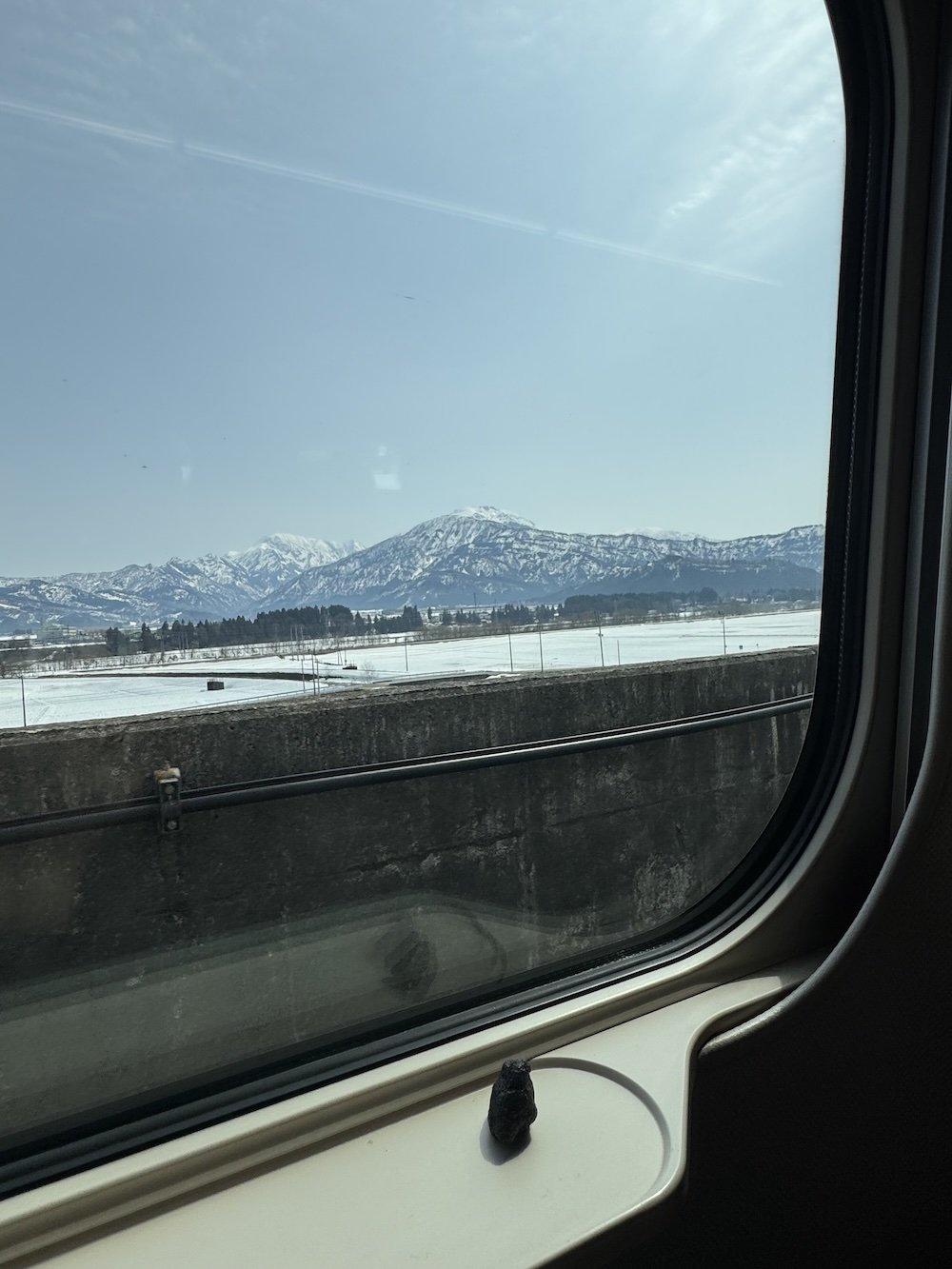
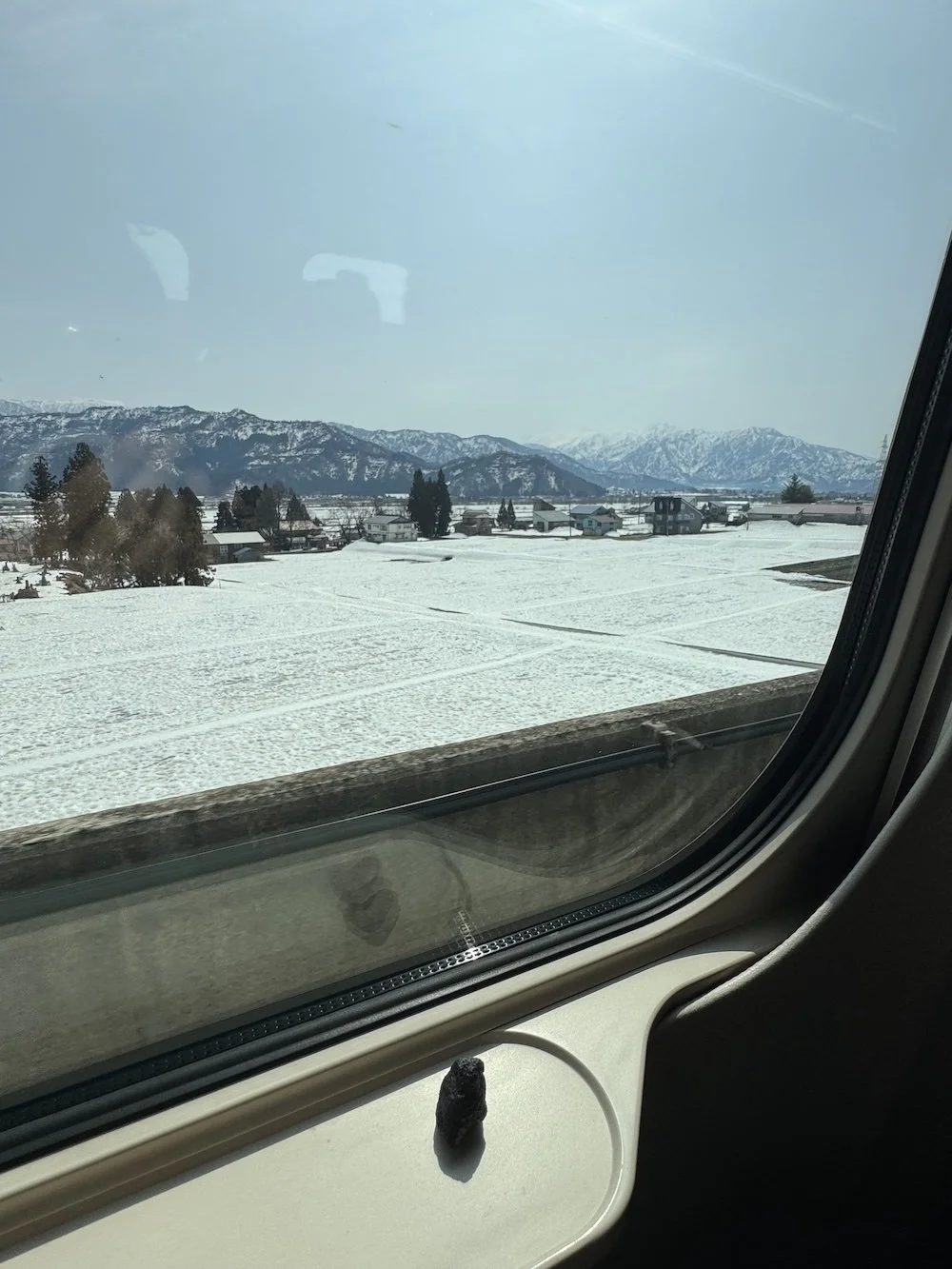
I grabbed my large bags and ran to the train station. Soon, I found myself on a Shinkansen heading toward Tokyo.
The area where I grew up gets a lot of snow in winter. This train line starts in the snowy countryside, passes through a long tunnel, and suddenly emerges into sunshine. Yasunari Kawabata described this contrast between the two regions of Japan in Snow Country, though in his novel the train was traveling from Tokyo toward Niigata.
Cloudy to sunny. Wet to dry.
Whenever I take this train — which I have taken many, many times — I am always a little wet at the beginning, because I have just died a little and am departing from a beloved universe.
By the time the train passes through the tunnel, I am no longer quite so sentimental. I feel ready for more adventure, ready to head toward a place I do not yet fully know.
People call our wet side of the country "Ura-Nihon," literally "the back side of Japan."
I wanted to show Stone the snow country where I come from, because I am proud to be from Ura-Nihon — the wet, shaded side of the country, with its deep winters and heavy snow.
That is where I am from.
And in some sense, that is who I am.
Inside me is a kind of wet, blue-gray, radiant field of snow.
I wanted to share that place with Stone.
We caught a glimpse of it in the spring snowfields.
Stone wanted to touch it.
Maybe next time.
If there is a next time.
また、故郷を後にする日がきた。
姉のところに行くたびに、また、旅立ちの日がやってくる。大抵、私は出発の準備ができていない。私のモノが家中に散らかり、姉の家の掃除を手伝うという計画は実行されず、猫とも十分に遊んでいないし、姉とも十分に時間を過ごしていない。そして、姉と十分に話していない。まてよ、それは嘘だ。たぶん、姉とは十分すぎるくらい話したはずだ。
数日前にやってきてから、私は姉とマシンガンのように話し続けている。朝から、深夜まで、姉の就寝スケジュールを邪魔しながら。それでも、一緒にいなかった時間を埋めるには、まだ話し足りない気がする。だから、最後の最後まで、姉に猫のようにくっついて追いかけながら、まるでまだ三歳の妹のままみたいに喋り続ける。
私は無意識に、もしくは意図的に、自分の旅立ちの準備をサボる。電車の時間ギリギリになって、散らばっているものを集め、トランクに押し込む。これはたぶん、無意識に、センチメンタルな気分が溢れてくるのを防ごうとしている行為なのだ。実務的なことに集中せよ。急がないと遅れる。涙が昇ってくる隙間なんてない。
これをやってる間、いつも、ああ私は死ぬ時に準備なんてできないだろうなあ、と考える。死が訪れるその時になっても、私は散らかった身の回りのものを髪の毛を逆立てて集め、なんとか間に合うように駆けずり回り、でも、そのことでこの人生、この世界にサヨナラするというセンチメンタルな瞬間が入り込むのをうまく防ぐことに成功するだろう。
電車が発車する前の最後の数分で私が準備を整える様子はほとんどコメディだ。猫にさよならを言い、おでこをちょっと撫で(撫でさせてくれた場合の話だが)、仏壇にちょっとだけ手を合わせる。救われるのは、姉がこうした状況には「ドライ」な人(あるいは、そういうフリをするのが上手い人)だということだ。姉は私のために朝ごはんを作り、食後のお茶を淹れて、それから玄関まで降りてきて
「はい。じゃあね。気をつけて。いってらっしゃい」という。
故郷を離れる時にはいつも、少しだけ死ぬみたい。
これはたぶん、旅立ちの感情なのだ。本当の旅立ちに向けての、小さなリハーサル。
ちょっと悲しくて、もの寂しい。すべてが美しく思えて、私はもう少しだけこの世界の一部のままでいたい。日々の暮らしが住まっている場所に。特別なことは何もない。好きな人がいる。好きな猫がいる。時間の流れ方が違うみたいに感じる。
それはたぶんそこが時間など関係ない場所だからなのかもしれない。
私は大きな荷物をつかみ、駅へと走る。すぐに、東京に向かう新幹線の車中の人になる。
私が育った場所は冬にたくさんの雪が降る。この路線は雪深い地方を起点として、長いトンネルを過ぎると、突然いい天気の場所に出る。川端康成が『雪国』の中で描いた日本の二つの異なるエリアのコントラスト。彼が書いたのは逆に東京から新潟へと向かう旅の印象だったけれど。
曇りから晴れ。湿り気から乾燥。
この電車に乗るたび — 何度も何度も、この電車に乗った — 私は最初、少し湿っている。ほんの少し死んだばかりで、大好きだった宇宙から旅立ったばかりだから。
でも、トンネルを通り抜ける頃には、それほどセンチメンタルではなくなり、不思議と次なる冒険、未知の場所へ向かう準備ができてくる。
この国の中の湿った側は「裏日本」と呼ばれている。文字通りに取れば、「日本の裏面」というわけだ。
私は「石」に自分の生まれ育った雪国をみせてあげようと思った。私は「裏日本」— 冬は深く、たくさんの雪が降る、この国の陰の側にある湿った土地で生まれたことを誇りに思っているから。
だって、それが私の原点だから。
そして、言うなれば、それが私だから。
私の中には、一種の湿った、青灰色の、輝く雪原がある。
その場所を「石」と分かち合いたかった。
春の雪原が、一瞬だけ見えた。
「石」はそれに触れたかった。
たぶん、次の機会には。
もし、次の機会があるとしたら。
03.28.2026 - Hana 花 (Tokyo, Japan)
When we returned to Tokyo, the season of Hana had already arrived. "Hana" literally means "flower," but in Japan, when we say Hana, the first flower that comes to mind is Sakura — cherry blossoms. During this season, people chase Hana. Sakura has a very short life, from the first bloom to the final fall. When you notice the first flowers opening, they can suddenly become full bloom within days, and then it is over. A once-a-year opportunity. So people follow "sakura opening reports" like weather forecasts, and track the "sakura front" like a weather front, making sure they do not miss the blossoms. If the opening happens to fall on a holiday, you must go. Even on a work day, you may find yourself wandering under the flowers on your way home.
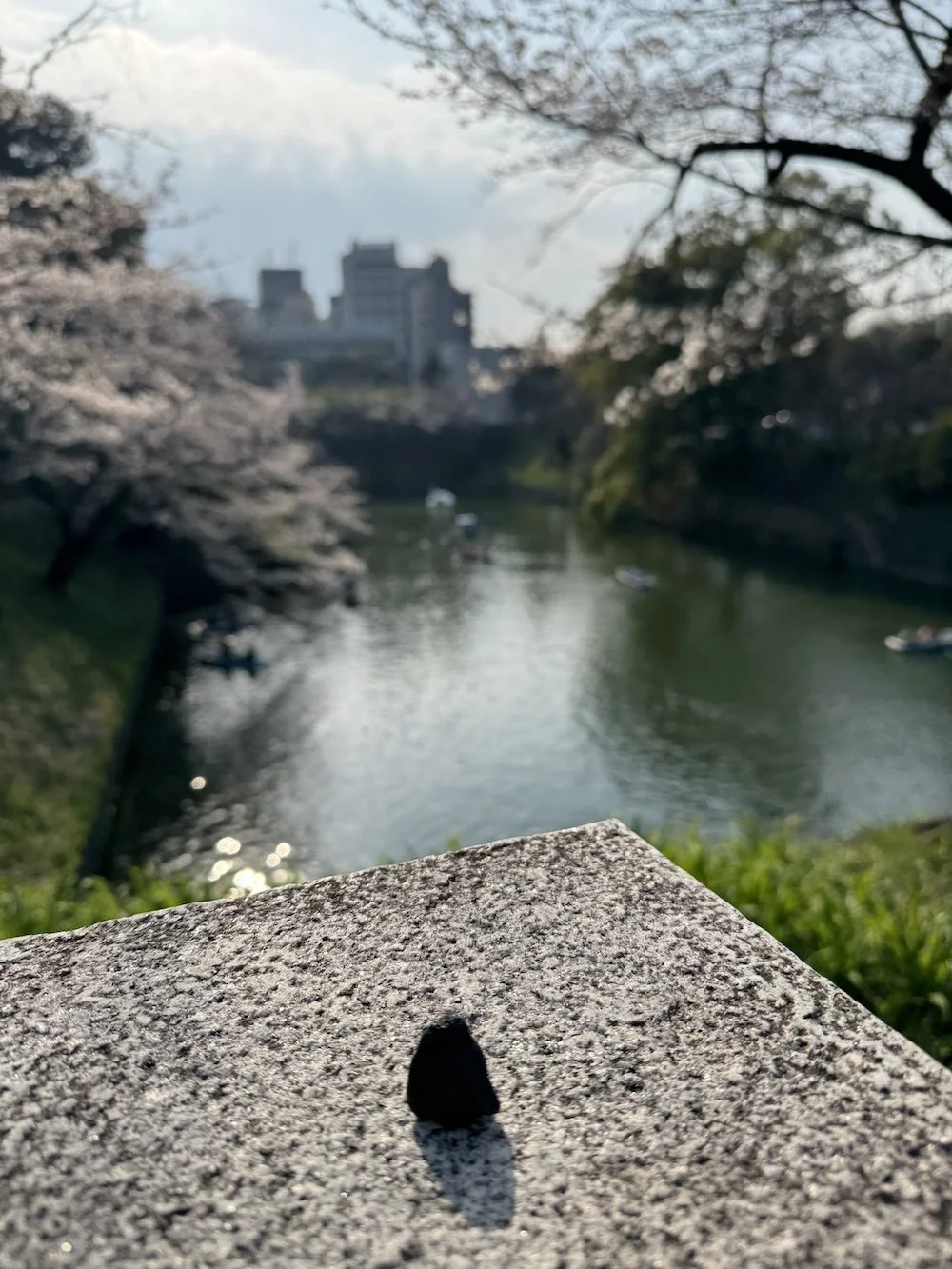
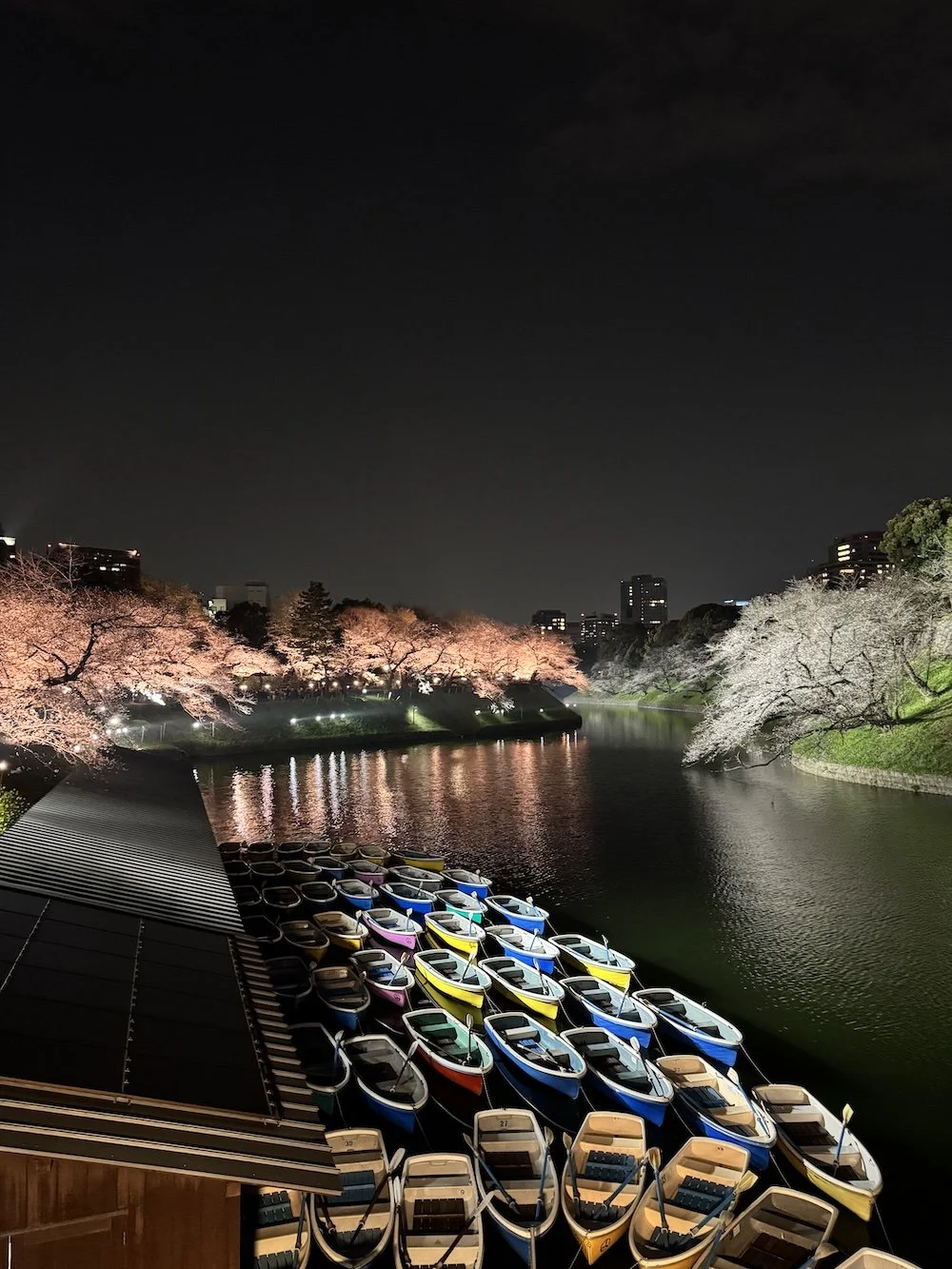
You cannot waste a single day during the flower season. Tomorrow it could rain. A strong wind could come and scatter the petals. So we decided to go to the famous sakura spot — the moat of the Emperor's Palace. It is not exactly a coincidence, but it is a rather rare thing that the Stone is here during the flower season, able to experience Sakura. And it is equally rare for me to be here during this season. This is the fate of someone who lives far from their home country. In that sense, among all the hanami crowds gathered there, the feeling that the Stone and I carried must have been crystallized into something of unusual purity.
And yet, in truth, everyone here carries a little of that purity within themselves. Anyone who has come all this way simply to look at sakura holds something gentle inside — even the lovers with slightly impure motivations, even the groups more focused on food and drink than flowers. Of course, the family lifting a newborn baby up to see their very first sakura, or the old man gazing quietly at the blossoms, wondering if this might be his last chance to see them — they carry this gentleness clearly. But even the rowdy drunk ones, most likely, carry a little of it too.
The sakura at the Emperor's Palace was lit up, and looked like a postcard. Sakura is beautiful up close, but seen from a distance, it looks like a soft gathering of feathers, hazy, as if veiled in a gentle mist. If you could breathe this mist in through your eyes and tuck it away in a quiet corner of your heart, it might help you walk through the rough and scratchy road of the year ahead. There are many people who believe, somewhere in themselves, in this kind of dream-like story — and they were all there, moving slowly in a long procession under the flowers.
東京に戻ると、花の頃になっていた。花というのはFlowerという意味だけれど、日本で花といえば、とにかくまず「桜」ということになる。この時期、人は花を追いかける。というのは、この桜という花は開花から散るまでがとても短くて、ようやく開いたかと思うと、数日でワッと満開になって、すぐに終わってしまう。一年に一度きりのこの「花」をキャッチするために、人々は「開花予想」なるものをやり、「桜前線」なるものを追いかけ、開花が休日に当たろうものならばなんとしてでもと花を見に出かけ、そうでなくても仕事帰りについ花のあるあたりをふらふらする。
花の季節は一日たりとも無駄にしてはいけない。明日は雨が降るかもしれない。風が吹いて散ってしまうかもしれない。そんなわけで、桜の名所といわれる皇居の堀にはじめて出かけてみた。「石」が花の季節にここにいて、花を見ることができるのは、偶然とまでは言わないけれど、なかなかに稀なことなのだ。それと同じように、私が花の季節にここにいて、花を見ることができるのも、それなりに稀なことなのだ。これが故郷から遠いところに住んでいる者の定めであって、そういう意味では、多くの花見客の中でも私と石の思い入れはなかなかの純度で結晶していたはずだ。
でも、実際には、ここにいる誰もが、その純度を持っている。
花を見ようとわざわざここに来た人は、少し不純な動機があるかもしれない恋人たちや、花より団子と宴会を決め込んでいるグループであっても、どこか優しいものを心の片隅に抱いている。初めての花を見せようと赤ん坊を抱いて掲げている人、来年はこの桜をもう一度見れるだろうかと目を細める老人はもちろん、花の下に集まる人は心の中にすでに花の柔らかさを少し宿している。どんなに乱暴な酔客でも、たぶんそうなのだ。
皇居の桜はライトアップされて、絵葉書のようだった。桜は近くで見ても美しいが、遠くから見ると柔らかい羽毛の連なりのようで、靄(もや)がかかったように霞んでみえる。この靄を目で呼吸して、心の片隅に蓄えることで、人はなんとかこの一年のザラザラした道を歩いていけるのかもしれない。そういう夢のような話をどこかで感じている人たちが、花の下を行列してゆくのだった。
03.29.2026 - Tokyo Tower 東京タワー (Tokyo, Japan)
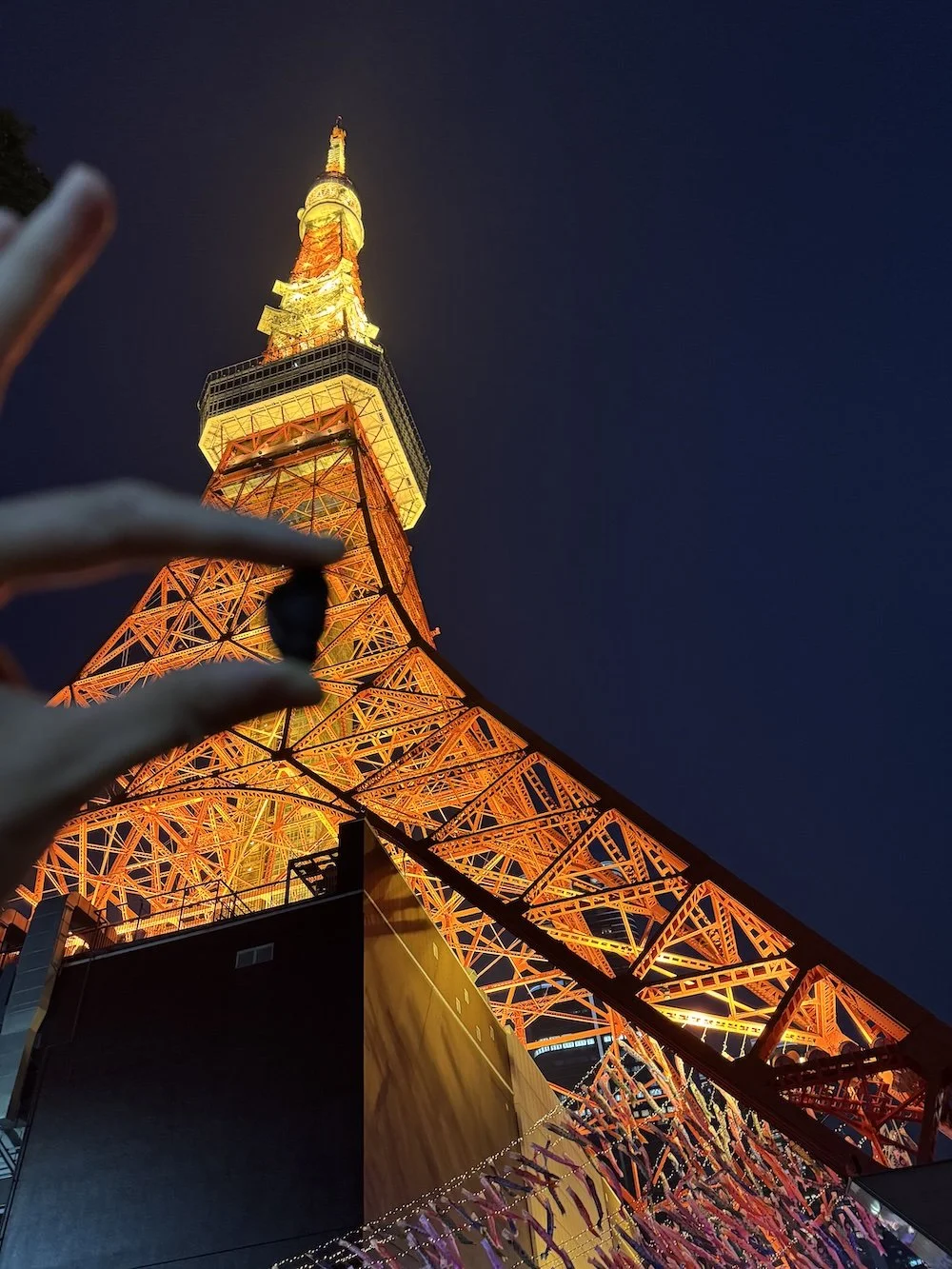
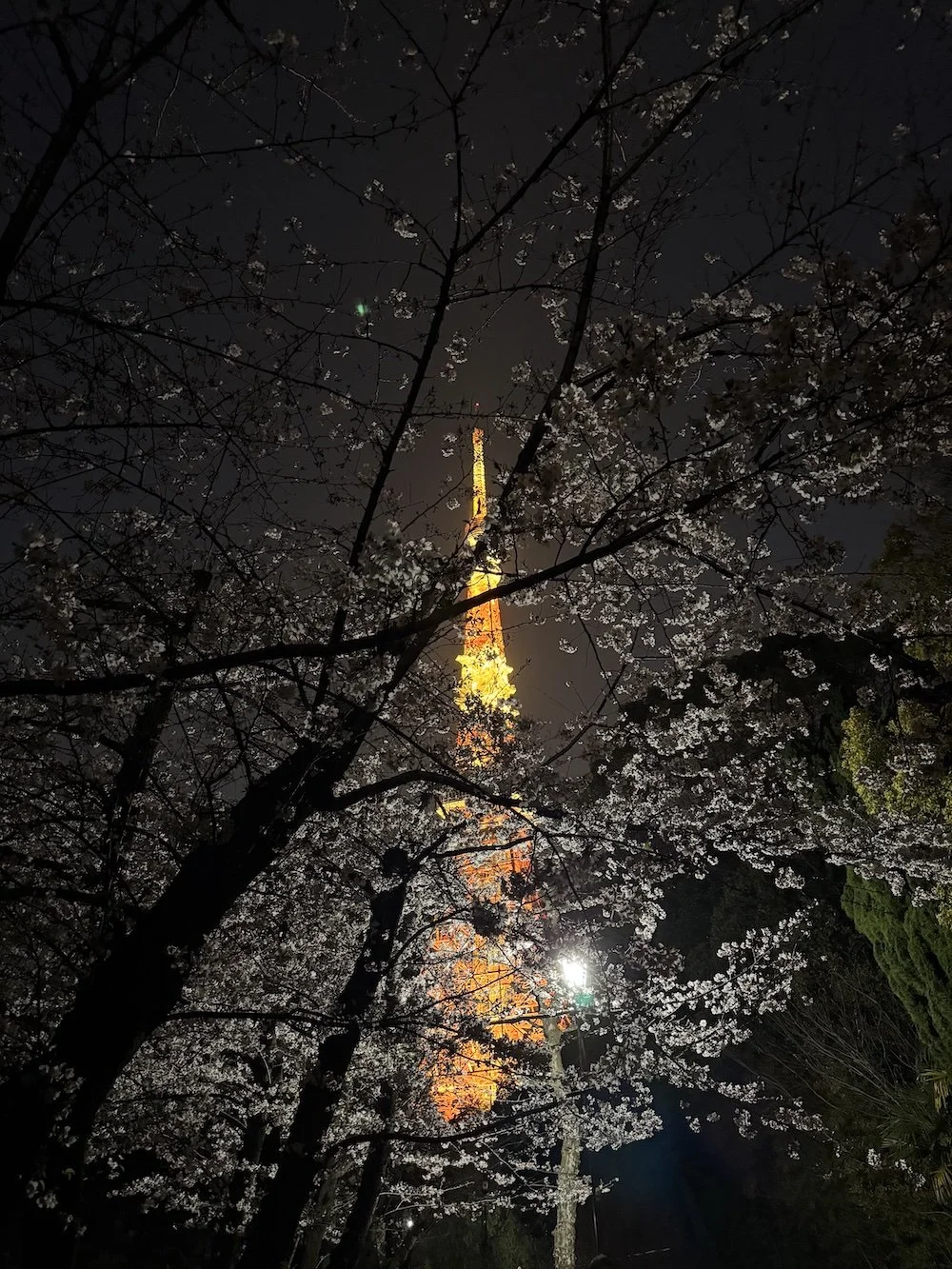
Cherry blossoms continue. Wondering where to go, I suddenly thought of visiting “that person.”
When I was a college student, on holidays—or rather, on days when I skipped classes and wanted to drift around doing nothing—I often went to see “that person” with friends who, like me, had come from the countryside.
For us, lost in this maze-like city and not knowing where to go, that person was wonderfully straightforward. His name was Tokyo Tower. The symbol of Tokyo itself. If you went up to the top, you could see the entire city at a glance. Even when you stood on the ground confused, not even knowing where the entrance to this city was, looking down from above gave you the feeling that you had somehow conquered it.
A little later, I climbed the tower with an older colleague who had been born and raised in Tokyo. I do not remember how we ended up there. This person had a habit of sighing and saying, “Is there anything exciting?”
I never understood how anyone could say such a thing in a city that felt like a treasure box.
So perhaps I said, “Then let's at least climb the tower.”
At that time there was still a Wax Doll House inside Tokyo Tower. It was something like a freak show: celebrity wax figures in the style of Madame Tussauds mixed, for some reason, with exhibits about “tortures of the world” and severed heads. It felt especially inappropriate to visit such a place with a colleague, but I guided him through it with great enthusiasm, as if it were a secret garden and I alone possessed the key.
That person later became a successful novelist. Perhaps he found something exciting in the world. Or perhaps he decided there was nothing exciting in the world and chose to create it himself.
Either way, we hardly ever see each other now. The friend I was once close to has also drifted into a different world. We seem to be walking along roads that no longer cross.
In this way, even people with whom we spend an afternoon, a single day of our lives, passing “meaningless” time together, exploring “another world” that appeared beyond a dark empty corridor, do not necessarily remain fellow wanderers forever.
They may have forgotten long ago that such a day, the day I spent with them, ever existed. And if they have forgotten it, perhaps it never happened at all.
Yet in my memory, fragments of that day remain preserved. Whenever I see Tokyo Tower, those fragments gather and take shape again.
The Wax Doll House is still there. We are still there. We giggle and shake our heads in disbelief, and continue climbing upward. From the highest point, we look down together upon humanity.
And that simple act of passing time with someone was, without question, “something exciting.”
Tonight I will not climb the tower.
But I am certain that “that person” will remember the night Stone and I spent together, spending our “meaningless” time.
Standing in the middle of the city.
Looking down at us.
桜はまだ続く。どこに行こうと考えて、「あの人」のところに行ってみようと思いついた。
学生の頃、休日に、というか、実は授業をサボってぼんやりしたい時に、同じように地方出身の友達と登ったのが「あの人」だった。迷宮のようなこの街で、どこに行ったらよいのかわからない私たちにとって、あの人はとにかくわかりやすかった。何しろ名前が「東京タワー」なのだから。紛れもなき東京のシンボル。上まで登れば、その街が一望できる。この街の「入口」すら分からず地上では困惑しているとしても、一望することでとりあえずそれを制覇したような気分を味わえる。
もう少し経った頃、東京生まれの年上の同僚と一緒に登ったこともある。なぜ、どういう経緯でそうなったのかは全く思い出せない。その人はため息混じりに「なにか面白いことないですかねえ」というのが口癖だった。こんな宝箱のような街で、なんでそんなことを言うのか不思議だった。それで「それならいっそ登りましょう」と誘ったのだったかもしれない。その頃タワーの中にあった「蝋人形館」にも入ったはずだ。ここはマダムタッソーのような有名人の蝋人形と、なぜか「世界の拷問」というおどろおどろしい展示や生首が同居する、見世物小屋のような場所だった。職場の人とそんなところに行くのは、一段と不謹慎な気もしたが、意気揚々と案内したと思う。まるでそこが、自分だけが鍵を持っている秘密の花園であるみたいに。その人はその後、売れっ子の小説家になった。世界に何か面白いことを見つけたのかもしれないし、全く面白いことがないので、自分で創り出そうと考えたのかもしれない。どちらにせよ、その人とはその後、ほとんど会うこともなく別の世界に暮らしているし、仲が良かった友人ともいつのまにか連絡が途絶えて、交わらない道を進んでいるようだ。
こんな風に、ある午後、人生の中の一日を一緒に暇つぶしして、誰もいない薄暗い通路の奥から現れる異界を共に探検したような人でも、それからずっとその無意味で、とびきり濃厚な時間を一緒に過ごすとは限らない。彼らはそんな一日があったことはとうに忘れているかもしれないし、彼らが忘れてしまえば、もうそれはなかったことなのかもしれない。ただ、私の記憶の中に、そんな日の時間のかけらがまだそのまま保存されていて、東京タワーを見るたびに、そのかけらが結集して形となる。たしかにまだそこには蝋人形館があって、私たちはクスクス笑ったり、呆れたりしながら上空へと歩を進め、一番高いところから人類を一緒に見下ろす。ただそれだけの暇つぶしを、誰かと一緒にやったのは、間違いなく「なにか面白いこと」だった。
今夜はタワーには登らない。でも「石」と一緒に暇つぶしした夜を、きっと「あの人」は記憶してくれるはずだ。街の真ん中に突っ立って、私たちを見下ろしながら。
04.01.2026 - A Passage 通路 (Tokyo, Japan)
It is a kissaten I discovered only recently, run by an older lady and a man working in the kitchen. If you come in the morning, they serve a Japanese-style morning set, and the place seems to have many regular customers. Yet it is never too crowded, no matter what time of day you visit. At the same time, it never feels neglected or run-down.
The interior preserves the atmosphere of an old-fashioned kissaten. Here and there, you notice hints of Art Deco details. But these were not added later to create a certain aesthetic. The place is authentic all the way through, including the imperfections of the design and even the stains on the walls. It is old, but not dirty. Carefully maintained, clean and tidy, and filled with a gentle, comfortable atmosphere.
Nowadays, they could probably market the place as Showa Retro and attract more customers. Yet there is not the slightest trace of that kind of self-conscious nostalgia here. At first glance, everything appears effortless. In reality, maintaining this balance is anything but easy. The moment an owner becomes tempted to follow a trend, even slightly, the whole thing can collapse in an instant.
The older woman who works the floor, and who is probably the owner, is understated and endlessly modest. She is certainly older, but there is nothing grandmotherly about her. Her slender frame is wrapped in a long skirt — though do not imagine anything too fashionable or eye-catching. Her clothes are modest, quiet, almost plain.
She greets customers and takes orders with a perfect balance of friendliness — neither too much nor too little. Some people might find her a little distant. But I suspect this was once the ideal form of service in Tokyo. No excessive familiarity. Crisp, comfortable, and respectful.
And yet, behind that apparent reserve, something warm sits quietly smiling. The kindness is real, not performed. Warmer, perhaps, than any pasted-on smile could ever be.
To call it urban sophistication might make it sound colder than it is. If I had to describe the place in one word, I would simply call it beautiful.
Sometimes I find myself imagining that this may have been the core aesthetic of Tokyo — or, going back even further, of Edo.
One morning, a table across from me was occupied by a few young foreigners. They did not speak Japanese. For a moment, I thought I might offer to interpret.
To my surprise, however, the owner managed to take their order perfectly without speaking a single word of a foreign language.
One side spoke English. The other spoke only Japanese. On the surface, nothing should have been understood between them.
At that moment, I was reminded that there exists a level of communication among human beings that lies beyond language itself.
The owner somehow succeeded in delivering breakfast — toast, eggs, and drinks — to the hungry young people.
“Kōhī? Tea? Ah, tea?”
“Eh? Tamago dake? Hai, tamago dake ne.”
Listening to this exchange, with its small stumbles and moments of uncertainty, I realized that something was open there.
Some kind of door. Some kind of passage.
If human beings can keep that passage open, they are able to understand one another even across the boundaries of language.
When that passage is closed, nothing gets through, no matter how many languages you speak. You could score perfectly on the TOEIC and still fail to communicate.
And strangely enough, the experience of reaching one another through such an open passage may be richer than the experience of communicating through language itself.
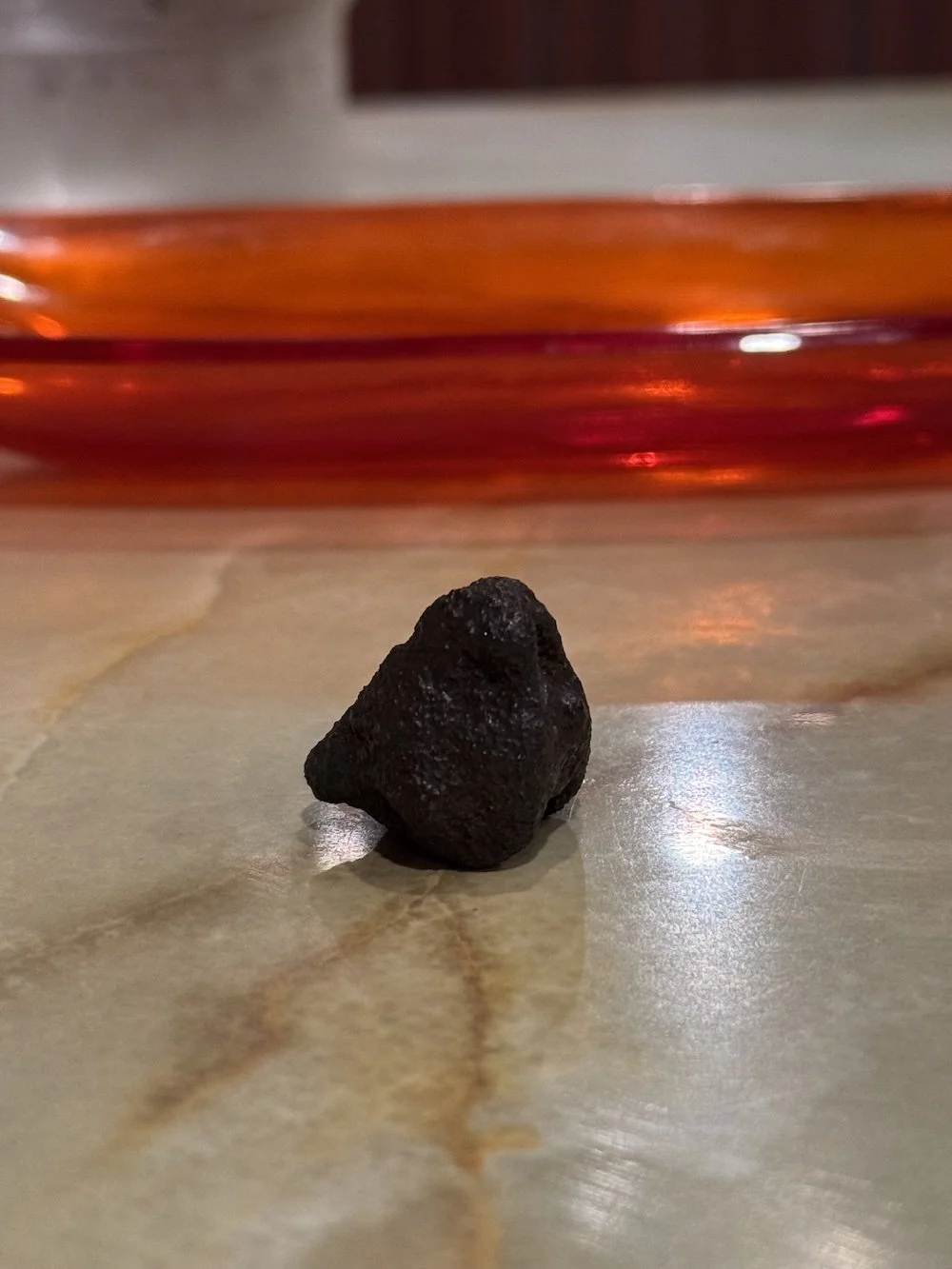
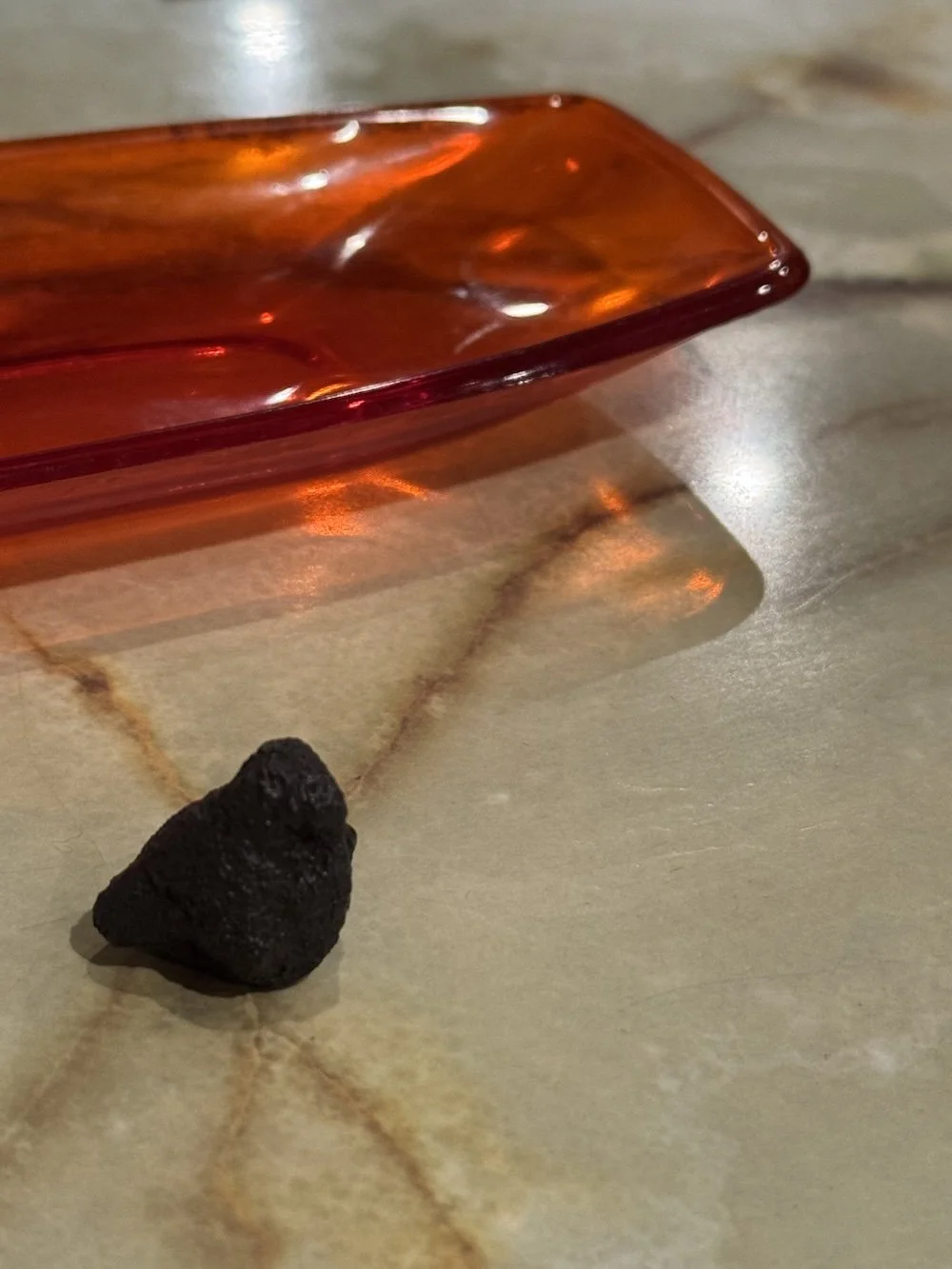
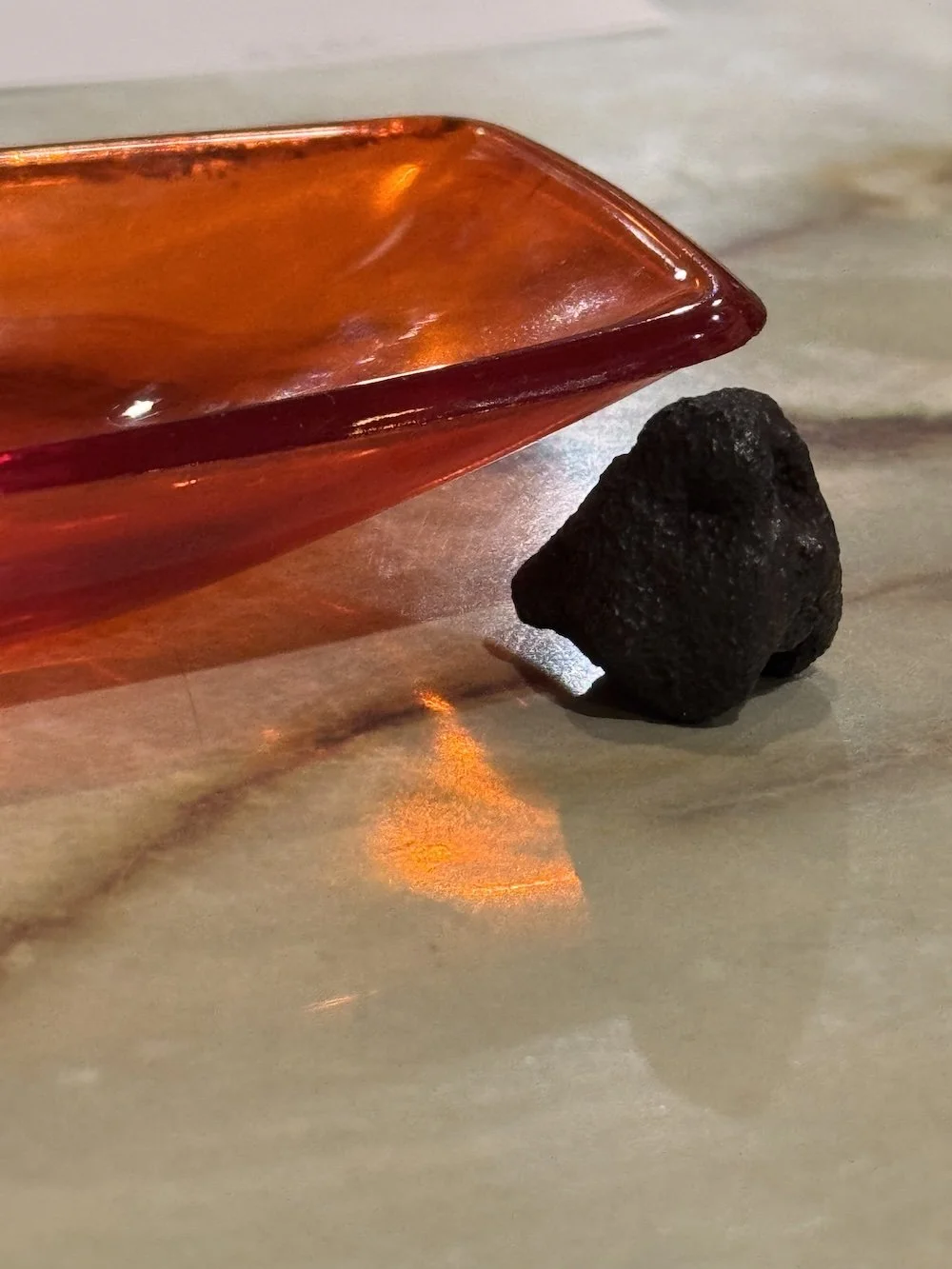
The tabletop has a marble pattern. The retro metal sugar pot is covered with tiny scratches, yet polished to a beautiful shine. The oshibori tray, probably about the same age as the café itself, casts an amber shadow across time.
Will places like this remain here forever?
Will the passage remain open?
Will this woman, dignified as a single wildflower and carrying within her the entrance to that passage, continue to inhabit this earth forever?
The Stone seemed to know the answer.
For now, however, it appeared far more interested in savoring the present moment, quietly communing with the marble, the old walls, and the timeworn oshibori tray.
どうしても石を連れて行きたい場所があった。ここはごく最近みつけた喫茶店で、年配の女性と厨房にいる男性の二人で切り盛りしている。朝方行けばモーニングセットを出してくれるお店で、常連客も多いようだ。ただ、どの時間帯に行っても混みすぎているということはなく、かといって寂れたという風でもない。内装は古き良き時代の「喫茶店」をそのまま残していて、どこかアールデコ調の意匠らしきものが点在していたりするが、それは「らしく」するために後から再現したものではなくて、意匠の不徹底さや壁の滲みも含めてどこまでも本物そのままというところが潔い。古びていても汚くはない。小ざっぱりと整えられていて、心地よく柔らかな空気が漂う。今ならもっと昭和レトロを「売り」にできそうだが、そういうケレン味は微塵も感じられない。一見無造作であるようで、この絶妙なバランスを保つことは並大抵ではない。ある日、店主がふと色気を出して、流行に乗ってみようかと揺らいだ瞬間などに、それは一瞬で崩れてしまうものだからだ。
フロアを担当している女主人らしき女性は、きりっとしているが、どこまでもつつましい。年配ではあるが、おばあさんという風情は全くない。痩せて華奢な体をロングスカートでつつみ、(といっても、目立つようなオシャレだと想像してはいけない。あくまでも、つつましく、むしろ地味で大人しい身なりなのだから)これ以上でもこれ以下でもいけない愛想のバランスで客を迎え入れ、注文を受けてくれる。人によっては、そっけない、と感じる向きもあるかもしれない。でも、これがたぶん(かつての)東京の絶妙の接客なのだ。お客と必要以上にべたべたしない。さっぱりと、でも、心地よく。そして、そのサービスの実は、そっけない奥に情がしっかりと座ってこちらを向いて微笑んでおり、それは貼り付けた笑顔なんかよりずっと温かかったりする。都会的洗練、というと更に冷たく感じるだろうが、一言でいえば、「きれい」な店、とでも言えばいいのか。これが東京という街の、(更に遡れば、江戸の)美学だったのではないかと夢想したりもする。
ある朝、数人の外国の若者が向かいのテーブルを占めていた。彼らは日本語を話せない。私はふと、通訳を買って出ようかと考えた。しかし、驚くべきことに、女主人は一言も外国語を話さず、それでも完璧に注文を成立させてしまった。一方は英語、一方は日本語だけを話している。表面的には、何も通じ合っていないはずだった。その時、言葉が通じ合わなくても、何かが通じるというレベルのやりとりが人類には存在することを改めて知った。お腹をすかせた若者たちに、女主人はパンと卵、飲み物の朝食を与えることに見事に成功した。「コーヒー? ティー?、ああ、ティーね?」「え、たまごだけ? はい、たまごだけね。」 その、つまづいたり、惑ったりするやりとりを聞きながら、そこには何かが「開いて」いることに気づいた。人類が、そこを開けておきさえすれば、言語の違いさえ越えて、通じ合える扉、通路のようなもの。ここが閉じていると、Toeicで満点を取ろうが、何も通じない。しかも、不思議なことに、こうしてその双方の開いた「通路」を通して通じ合う体験は、たぶん言葉を通して通じる体験よりも、豊かな何かなのだ。
テーブルトップは大理石の模様をしている。金属のレトロな砂糖入れにはたくさんの細かな傷があるが、磨き上げられて美しい。たぶんこの店と同じくらいの年齢のおしぼり受けは、時間を超えて飴色の影を落とす。こんな場所がいつまでもそこにあるのか。通路はいつまでもそこに開かれるのか。通路への入口を持つこの凛とした一本の草花のような人は、いつまでもこの地上に生息し続けるのだろうか。石はその答えを知っているらしかったが、今はただ「今」を味わおうとばかりに、大理石や古い壁、おしぼり受けと交感しあっているらしかった。
04.02.2026 - Hollow 空洞 (Shinjuku, Japan)
The time for falling had come.
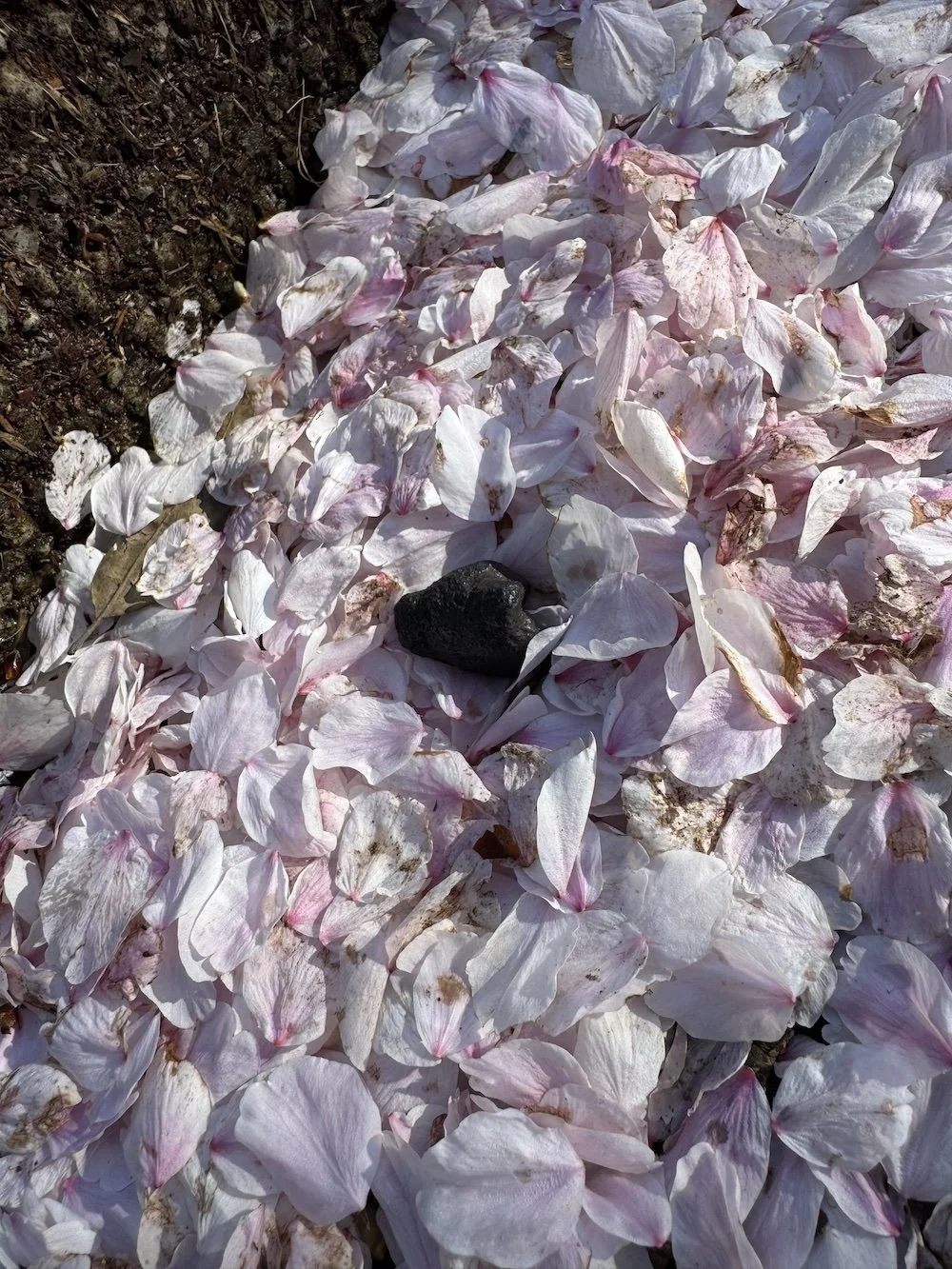
Some trees were still in full bloom, but at this time of year, flowers bloom not only above you, but below you as well. When the wind blows, flowers bloom in the air. Flowers bloom upon the surface of the water. Flowers bloom beside the road, and even in the gutters.
Perhaps it was the feeling that the end was near that kept people gazing at the blossoms.
Saigyo once wrote:
“Would that I might die beneath the blossoms in spring, around the time of the full moon of the second month.”
He was quite a romantic monk.
It is true. At this very moment, one could lie down not upon the rough nakedness of the earth, but softly upon a bed of petals.
From the moment I first met Stone, it seemed somehow like a philosopher. Or a wandering monk. It gave me the feeling that it had already been reincarnated many times, or had witnessed such things happen again and again. Yet at the same time, it could also sit there blankly, as if none of these matters concerned it at all. It appeared to possess a kind of innocence quite unlike its appearance. For that reason too, it somehow reminds me of a traveling monk.
Perhaps it was once a wandering monk itself.
Or perhaps, just as it does now, it traveled hidden in someone's bosom, journeying from place to place.
For that matter, it is not even clear that Stone belongs to this Earth.
Perhaps it came from another planet.
If that is the case, the scale of its journey may be beyond anything we can imagine. It may live at a speed where spring, summer, autumn, and winter pass in a single blur.
Stone, in fact, has a hole.
It is not completely solid. If you look through one side, you find a hollow cavity inside, something like a raspberry.
If this hollow is its mouth, perhaps Stone is reciting waka poetry.
Its voice, however, vibrates at a frequency human beings cannot hear. Quietly. Secretly.
Or perhaps this hollow is Stone's heart.
Stone also resembles a shell.
I have not even tried it yet, but if I were to place my ear against that little wind tunnel, perhaps I would hear echoes of the world it has listened to from the other side.
In any case, Stone carries a hollow within itself.
Just like us.
Just like human beings.
Stone lies down upon a bed of blossoms.
Before long, the petals will wither and disappear. Yet Stone may remain there.
Resting upon the time of things that leave more quickly than itself, Stone seemed to be filling its hollow with the memory of flowers.
散る頃になった。まだまだ満開の木もあるが、この時期には上ばかりではなく、下にも花が咲いている。風が吹くと、空中に花が咲く。水辺では川面に花が咲き、道路の脇や排水溝にだって花が咲く。ああ、もうすぐ終わりなのだなあという感慨もあって、花を愛でる人の数はまだまだ減らないようだった。西行法師は「願わくは花の下にて春死なむ そのきさらぎの望月のころ」と詠んだ。なかなかロマンチックなお坊さんだ。確かに、今なら剥き出しの土の荒々しさではなくて、花のベッドの上にふんわりと身を横たえることができそうだ。会った時から、「石」はどこか哲学者のようでもあり、放浪の修行僧のようでもあるし、もう何回も生まれ変わりをしたり、見たりをしているんじゃないかと予感させたが、同時に、そんなこととは無関係にぽかんとただそこに座っているような風でもあり、見かけには寄らぬ無邪気さも湛えているらしく、そこも含めてやっぱり旅の僧侶とどこかつながる。それ自身が旅の僧だったことがあるのかもしれず、あるいは、今と同じように誰かの懐に隠れてたくさんの旅をしたのかもしれない。そもそも、それがこの地上の出身であるということさえ不明なのだ。もしかしたら別の星からやってきたのかもしれない。とすれば、その旅の時間の単位はわれわれの想像を絶するようなもので、春も夏も秋も冬も、一瞬で過ぎ去るような高速度の中にいるのかもしれない。
「石」には、実は穴がある。中が詰まっていなくて、片側からのぞくと、ラズベリーの実のように空洞になっている。これが口だとすれば、石は和歌を詠んでいるのかもしれない。ただし、その「声」は人間には聞こえない周波数で、とても密やかに響く。あるいは、この空洞が石の心なのかもしれない。「石」は貝殻にも似ている。まだ試してさえいないのだが、その風洞に耳を当てると、向こう側から聞いた世界の音がそこに響いているのかもしれない。「石」はともあれ、中にひとつの空洞を抱いている。われわれ人間と全く同じように。
「石」は花のベッドに横たわってみる。しばらくすると、花は朽ちるが、石はまだそこに居続けるのかもしれない。石は自分よりも早く去っていくものの時間の上で、空洞を花の記憶で満たしているようだった。
Spring 2026 - Clouds 雲 (Japan)
A Detour
A few days ago, my sister sent me a message.
“Hmmm. It didn't appear today either.”
She had submitted a photograph of Stone sitting in a jungle of horsetails to a local television station. The evening news program has a corner where viewers can send in photographs. If selected, the picture appears briefly at the end of the broadcast together with the contributor's name.
Now that I think about it, I remember her saying, quite excitedly,
“Maybe we can make Stone's television debut!”
Of course, the plan was to promote the horsetails, not Stone. (Although Stone was, in fact, the true protagonist.)
People would admire the jungle of horsetails, but nobody would notice the mysterious stone sitting quietly in the middle. That was the strategy.
After submitting the photograph, my sister apparently spent several evenings sitting in front of the television, waiting to see whether it would appear.
Today? Tomorrow?
But in the end, the photograph was never selected.
According to my sister, the photographs chosen that week were mostly pictures of flowers just beginning to bloom.
So Stone's television debut in Japan never happened.
Still, perhaps it is worth remembering that such a secret operation was carried out on Stone's behalf. There was someone who cared about Stone enough to try.
Stone missed the chance to enjoy the “fifteen minutes of fame” that Andy Warhol once promised to everyone.
Actually, I have never told Stone about any of this.
I do not think it would be disappointed.
There is something amusing about the idea that the person concerned never learns what happened. Or perhaps, someday far in the future, I might quietly tell Stone that during our journey there was once a secret attempt to make it a television star.
Things like that happen.
Sometimes there are people thinking of us without our knowing it.
Their thoughts gather like small clouds.
They accumulate quietly in a secret warehouse somewhere behind the visible world, where they are sometimes never discovered, and sometimes disappear without anyone ever knowing they were there.
脇道へ。
数日前、姉から「うーん、今日も出なかった。」という連絡がきた。姉は地元のテレビ局の夕方のニュース番組で視聴者からの写真投稿を募集しているコーナーに、「石」が土筆のジャングルにいる写真を送っていたのだ。選ばれるとニュースの最後に投稿者のハンドル名と一緒に、一瞬その写真がテレビに映るのだそうだ。姉は確かに、あのあとしばらくして「〈石〉をテレビデビューさせられるかもしれない!」とかなんとか興奮したように言っていた。もちろん、石がそこに写っているということ(というか、石が本来は主役なわけだが)は黙ったまま、土筆の方をアピールして選んでもらう。それでみんなは土筆のジャングルはすごいなあ、となるが、真ん中に謎の石が写っていることには気づかない、という作戦だったわけだ。投稿後、数日の間、今日は出るか、明日は出るかと夕方、テレビの前に陣取っていたらしいが、結局、土筆の写真は選ばれなかった。姉によると、選ばれていたのは咲き始めた花の写真たちだったようだ。
というわけで、石の日本のテレビ局での映像デビューは叶わなかった。ただ、そういう作戦が密かに遂行されたこと、それくらい石のことを想っていてくれた人がいたことは憶えておいてもいいだろう。石はアンディ・ウォーホールの言う「誰もが15分だけは有名になれる」チャンスを逃した。
実はこのことは石には伝えていない。がっかりするとも思えないけれど。当人はずっと知らなかったというのも面白いかもしれないし、遠いいつの日にか、あの旅の途中でそんなことがあったんだよとそっと伝えて驚かせるのもよいかもしれない。そんなふうに、私たちには自分では知らないが、実は周りの人がそっと想ってくれていた想いの雲のようなものがあり、裏側の(時には誰にも知られずに過ぎ、消えてゆく)秘密倉庫に静かに蓄積している。
04.03.2026 - Bardo Space Station 中有のステーション (Haneda, Japan)
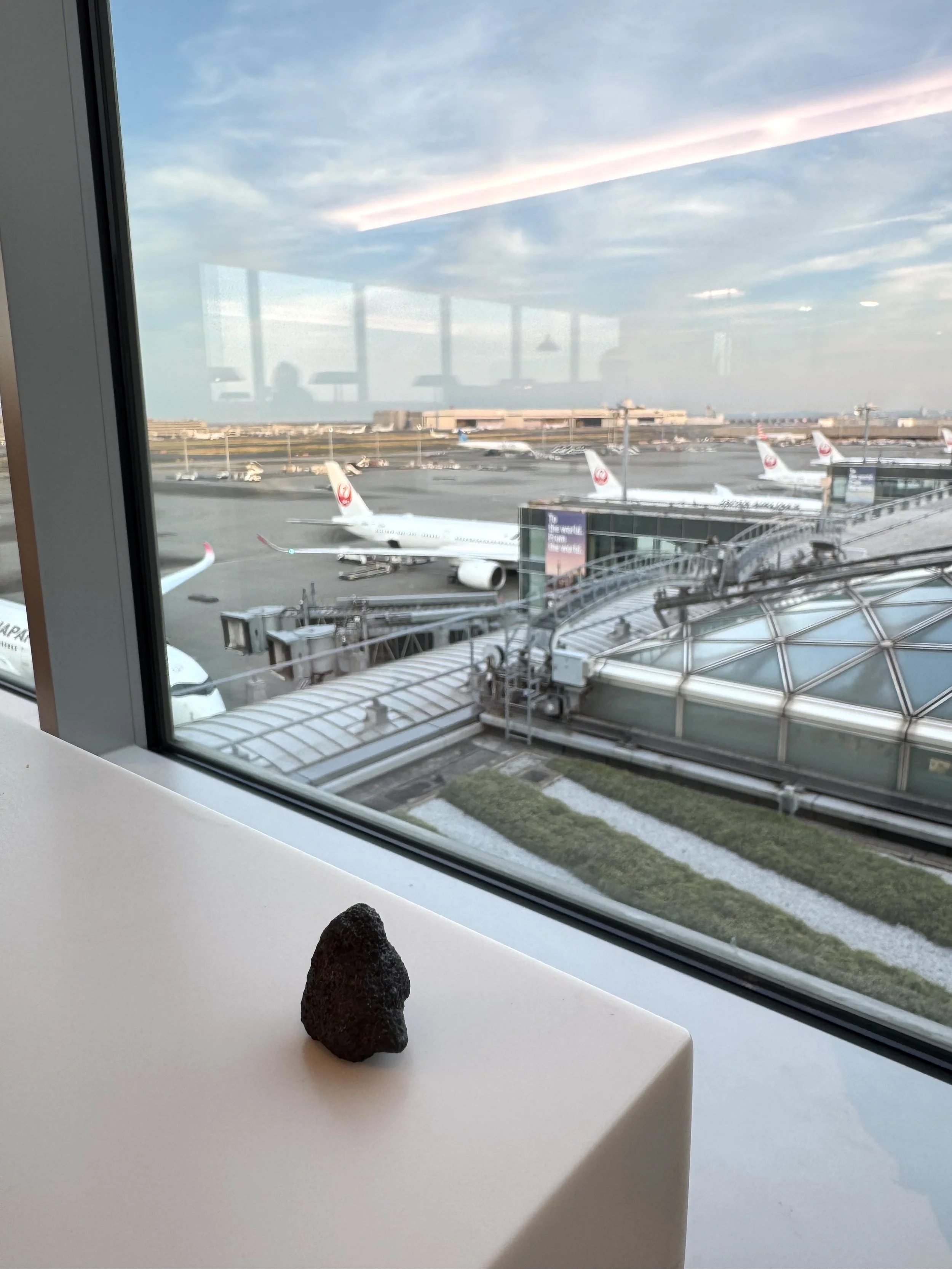
Arriving at the airport lounge, Stone and I finally breathed a sigh of relief.
When Filip handed the Stone to me, I asked him, half-joking:
"Maybe this stone is from another planet. It could be radioactive. I should be careful going through airport security."
Filip smiled and said,
"Ha ha… it might be."
He did not deny it.
Fortunately, this concern turned out to be unnecessary — or perhaps it does not emit a detectable beam even if it did come from another planet — or perhaps the Stone has learned how to make itself invisible on such occasions. Either way, the Stone and I passed through security without trouble.
When I walked into the lounge without any fuss, the Stone was probably a little surprised.
Because I hardly look like the sort of person who belongs in an airport lounge.
Please do not misunderstand. It is not because my ticket is business class.
I gained this lounge access only recently, after a long, long, long accumulation of flight distances, little by little, over the years.
I have to admit that I have flown quite a bit. I take it as a reward for having gathered my courage, many times over a long period of time, to peel myself away from the ground where I felt safe.
I used to love airports.
I still like them, somehow.
Perhaps because an airport has the feeling of a place where you become equally rootless — where you become "someone who is not anyone" — for a brief time after slipping free from the gravity of one country and before falling into the gravity of another.
A space station for spending ambiguous time before moving to the next planet.
A place where people who had the courage to become a tiny “piece” torn off from their own land, gather together, crossing oceans, flying through the sky.
Mingling. Almost like the stones on a riverbank. I see the faces of stones from all different places here.
The Stone probably also once belonged to something larger. A rock? A mountain? A country? A planet?
Did it separate from that something one day, and begin its journey?
I projected these thoughts onto it, but the Stone simply looked out the window in silence.
Equal, I said — and yet even here, in this bardo space station, we quickly create hierarchies.
Those who can enter the lounge, and those who cannot.
In the plane, it is even more obvious. First class, business class and economy class.
It is a perfect miniature of class society.
Who invented the term "economy class"?
Neither first nor business, we nameless flock are gathered together under the label of "economy"
We might feel more comfortable if called “ordinary-human class” or “all the others class”.
If first class passengers are jewels, we are the ordinary stones you can find anywhere.
Once I saw a businesswoman leave the lounge with half a glass of juice still unfinished.
I think I thought I wanted to be like her someday.
But the story does not go that way.
I had already refilled my drink three times, and gone back to the buffet three times.
This tendency of mine will probably not change even if I travel to another planet.
The Stone might be rolling its eyes at me.
And yet — it may be the Stone that knows best of all: that my stone is always the same stone, no matter how far it travels, how many pieces it breaks into, or how polished it becomes.
空港のラウンジに辿り着いて、私と「石」はホッと一息ついた。
Filipが「石」を私に渡した時、冗談めかして
「地球外の石で放射能を発しているかもしれない。空港のX線検査には気をつけないとね」
と訊くと、彼は微笑みながら
「ふふ、そうかもね」
と否定しなかった。
この推定は杞憂であり、または、地球外から来ていても感知されるようなビームは出していないらしく、
または、石はこうした時に存在を消す術を身につけているらしく、
石と私は無事に検査場を通過した。
手慣れた様子で私がラウンジに入ると、たぶん「石」は少し驚いていた。
どう見ても、私は空港ラウンジにいるような種類の人間ではないからだ。
誤解しないでほしい。それは私の航空券がビジネスクラスだからではない。
長い、長い、長い年月に少しずつあちこちへ飛んだ距離が積み重なり
近頃私は、ついにこのラウンジアクセスを獲得したのであった。
それでもまあ、ずいぶんとたくさん飛行したらしい。
長い間に、幾度も、暮らし慣れた地面から引き剥がされるという冒険に飛び立つ勇気を奮い起こした、
そのことへのご褒美みたいなものだと理解している。
空港が、昔は大好きだった。
今でも、それなりに好きだ。
それはたぶん、ひとつの国の縛りの外へ出て
つぎの国の縛りに降り立つまでの、束の間
根なし草となり、「誰でもない誰か」となり、ある種の平等さの中を浮遊する場所。
次の星に移動するまでの、曖昧な時間を過ごす、宇宙ステーション。
海を超え、空を飛び、引き剥がされた一片のカケラとなる勇気を持った人たちが
ぞろぞろと集う場所。ごちゃまぜ。まるで川原の石ころたちのように。いろんなところからやってきた、出自のいろんな石たちの顔が見える。
「石」もかつては、もっと大きな、岩? 山? 国? 星? に所属していたのだろう。
ある日、そこから分かれて、旅に出たのだろうか。
そんな想いを投影しても、「石」はただ、黙って窓の外を見ているだけだ。
平等、と言ったが、私たちはこの中有のステーションでも、早速階級を作っている。
ラウンジに入れる人と、入れない人。
飛行機に乗れば、さらに一目瞭然。ファーストクラス、ビジネスクラス、エコノミークラス。
階級社会の縮図そのまま。
エコノミークラスって、誰が名付けたんだろう。
一番でも、ビジネスマンでもない、名前のない我々は「エコノミー」な群れとして把握される。
いっそ、庶民クラスとか、その他大勢クラスとか呼んでくれた方がしっくりいくだろう。
ファーストクラスが宝石なら、われわれはどこにでもある石っころの集まりというところだ。
以前、空港ラウンジでグラスに注いだジュースの半分を残して去っていくビジネスウーマンを目撃して、
あんな人になりたい、と思ったような気がするが、
結局、そんな風に物語は運ばない。
私は飲み物をさっきからすでに三杯はおかわりし、ビュッフェの食べ物を三度はおかわりする。
この習性は、どの星に行っても変わらないだろう。
「石」は、そんな私の様子に呆れていたかもしれない。
それでも、どんなに分かれても、砕けても、磨かれても
やはり私の石は同じ石でしかない、ということを
一番よく知っているのが、「石」なのかもしれなかった。
04.03.2026 - Left Hook 左フック (New York City, USA)
It hits like a left hook, out of nowhere.
I should have anticipated it. And yet it comes so dry, so cheerfully straight, that it catches me off guard for a second.
Or rather — it wakes me up in a second. The next moment I am on my feet, nearly shouting into the phone.
Right. I remember now. This is the place where everyone is sparring, every single day. A place where the kind of struggle and stinging pain that comes with being alive is felt in its rawest form. One of those strange corners of the Earth where people gather who have convinced themselves that this is not suffering at all, but the pleasure of being alive — the very force that keeps them moving.
And so, to simply meet the car I booked, I first have to clear a rather rough obstacle.
"Hello? ○○ Car Service? I have a reservation. Where are you?"
"I… close… black… va…"
"I can't hear you! I'm at the passenger pickup lane, number 4!"
"…I… see… yo…"
"Hello? Where?"
"…here… black… nis …van…"
"I see you! I'm coming!"
The ○○ in the name is actually the name of a planet. This car service may well be run by aliens. The cars dispatched from outer space, however, are always driven by immigrant men with thick accents. Each time it's a different person, from a different place — but always an alien with an accent that has not faded. I am also an alien from another planet, and have not fully mastered the language of this place (on Earth, they call it "English"). Naturally, communication between two aliens has gaps. Things get out of sync, slip, get mixed up. Even so, we generally understand each other — and sometimes a warm sense of camaraderie rises up between us, alien to alien.
Still, the first impression of this city is relentlessly grainy.
The dispatched car is a different model with a different driver each time, but always somehow a little torn, a little scattered, a little rough.
Softness and delicacy, elegance and attentiveness — things like a thin silk kimono — would be ripped apart in an instant in this town. So from the start, it arrives without any of that. Just unvarnished roughness.
Today's car was an old black Nissan van.
In the darkness of the night, with its black seats and black everything, it was even more formidable.
Its left hook is stronger than expected.
The tear in the leather seat is patched with duct tape.
A thin brown smell — cigarettes, maybe, or the accumulated odors of many bodies.
The suspension is worn out, so every dip and bump in the road hits directly.
My body has already been launched into the air in every direction, many times over.
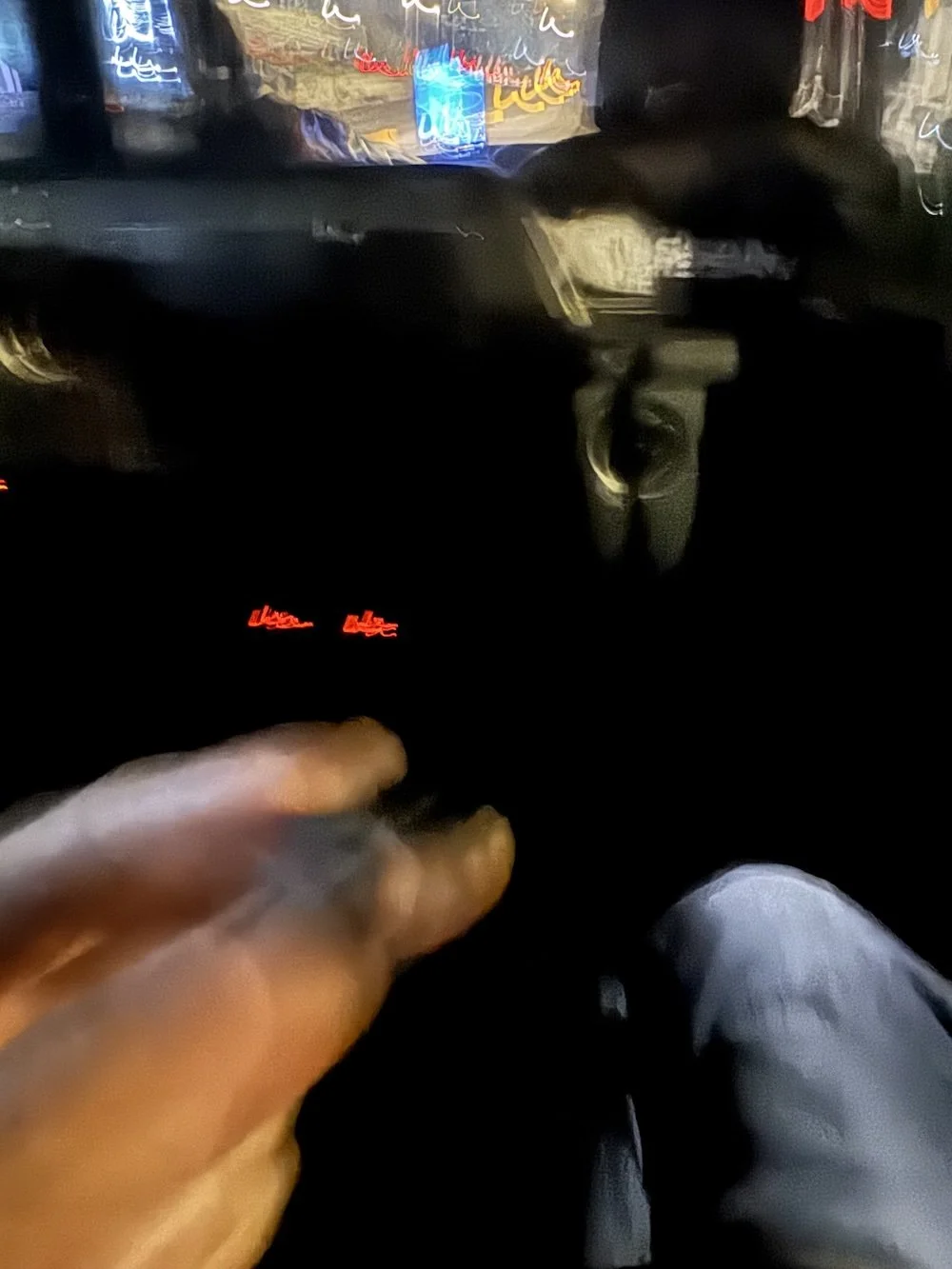
I took out the Stone, thinking to show it this city we had just arrived in.
But the car shakes so violently in every direction that the Stone might fly out the window if I am not careful.
Our view, too, becomes nothing but streaks of light — things that can only be caught in motion.
The view from the DeLorean in Back to the Future.
Or maybe the Stargate sequence from 2001: A Space Odyssey.
The car shakes even those images loose.
I almost laughed.
I think the Stone jumped inside my palm.
Before I even had time to think about how to introduce this city to the Stone, the rhythm between them had already begun to sync.
それはいきなり左フックでやってくる。
予想はしていたはずだ。それでも、それはあまりにドライに、ほとんど陽気なほどストレートにスパンと打ち込んでくるので不意をつかれて一瞬たじろぐ。というか、一瞬で目が覚める。次の瞬間には、立ち上がり、電話口に向かってほとんど怒鳴るくらいの声を上げている。
ああ、そうだった。そうだった。ここは、誰もが日々スパーリングをしているような場所だった。
生きるというある種の「もがき」やヒリヒリとした痛みを剥き出しのまま感覚する場所。それが苦痛ではなく、むしろ生きることの快感、生きる活力であると思い込める人々が集まってくる、地球上の奇妙なエリアの一つ。
そんなわけで、予約済みのカーサービスの車と巡り合うために、まずここでは、荒っぽい難題をクリアする必要がある。
「Hello、〇〇カーサービス? 予約した! 今、どこ?!」
「すぐ…。黒い…ニッサ…バ….」
「よくきこえない! 私、待合レーン、番号は、4!」
「… …. あ、…みえた….」
「え? どこ?」
「…こっち…っち、黒いバン…見え…」
「あ、オッケー! 今い…」
〇〇の部分には、実はある惑星の名前がついている。もしかしたら宇宙人が経営しているのかもしれない。地球外から配車される車は、でも、いつも訛りの強い英語を話す移民のおじさんが運転している。やってきた場所は毎回違うが、同じくらい訛りが消えていない異邦人(エイリアン)運転手が配車されてくる。私も、別の星から来たalienであって、この場所の言語(地上ではそれを「英語」と呼ぶ)を完璧にはマスターしていないから、当然のように二人のエイリアンの間のコミュニケーションには、あちこちに穴が空いている。ずれたり、滑ったり、掛け違ったりする。それでも、ざっくりは通じるし、時にはエイリアン同士の、温かな同胞感覚が交流することもある。
それにしても、この街の第一印象はあまりにもザラザラしている。
配車は毎回、違う車種で、違う運転手であっても、
一様にどこか少し破れていて、散らかっていて、少し雑である。
柔らかさや細かさ、端正さ、丁寧さ、
そうした薄い絹の着物のようなものは、この街では一発で引きちぎられてしまいそうだ。
だから、初めから、そんなものを纏わないゴツゴツとした質感で、それはやってくる。
今日の車は、年代物の日産の黒いバンだった。
夜の暗さの中で、シートも何も全て真っ黒いそれは、ますます威力がある。
こいつの左フックは予想以上に効く。
レザーシートの破れはガムテープで補修されている。
煙草か、蓄積された体臭か、薄茶色い匂いがする。
サスペンションが摩耗しているのか、道路の凹凸が、そのまま容赦なく伝わってくる。
さっきから、私の体は何度となく、空中に、四方八方に跳ね上がっている。
「石」に着いたばかりのこの街を見せてあげようと思い、取り出したが
迂闊にしていると、私の手をすり抜けて、窓の外に飛び出してしまうくらい
車は前後左右に揺れた。
当然、私たちの視界もまた、動体としてしか捉えられない光の筋になる。
バックトゥーザフューチャーのデロリアンから見た視界。
もしかしたら、2001年世界の旅のスターゲート。
そんな夢想を跳ねのけるくらい、
笑っちゃうくらい、この車は揺れる。
「石」も、私の掌の中で、跳ねた、と思う。
この街を、どうやって石に紹介しようか、と思案する暇もなく
石と街のリズムは、すでに振れ合っていた。
04.11.2026 - Guys ヤツら (New York City, USA)
Today, again, there was a crowd in front of the famous paintings. (On this Earth, there is such a thing as a "famous" "painting.") In this city, there are many "famous paintings" in many "museums," and wherever you go, there are always crowds of people. Picasso, Van Gogh, Renoir. These works are surely always surrounded by flocks of humans, endlessly admired. Are people who are good at capturing the world the ones who get praised? They are certainly skilled. Something feels alive, something moves. And yet, the sight of humans standing in front of rectangular things mounted on walls, nodding with admiration — from a certain distance (and I mean, of course, a distance something like from outer space) — looks rather comical.
The paintings in traveling exhibitions come and go. You may never see them again. The permanent collection, on the other hand, is always there. Once I realized this, I began to visit the "guys" scattered across this city from time to time. Under this way of thinking, "paintings" started to feel less like objects and more like people. A kind of personage. Distinct, opinionated, interesting characters. I went there, and the guys were there again today, as usual. Tourists were snapping photos and posing in front of them. I, on the other hand, quietly talk to them.
How are you doing? Aren't you tired, being looked at by so many people? Long time no see. How have you been? Yeah, I've been okay — well, more or less. Actually, there were times I wasn't okay. Can I stay here for a while? Do you mind if I come in a little? I mean it. The world is pretty exhausting sometimes. I mean it. But also — the world is not so bad, right? When I end, do you go on? Are you looking this way from over there? Will you also, after a very long time, quietly return to become part of the outside world?
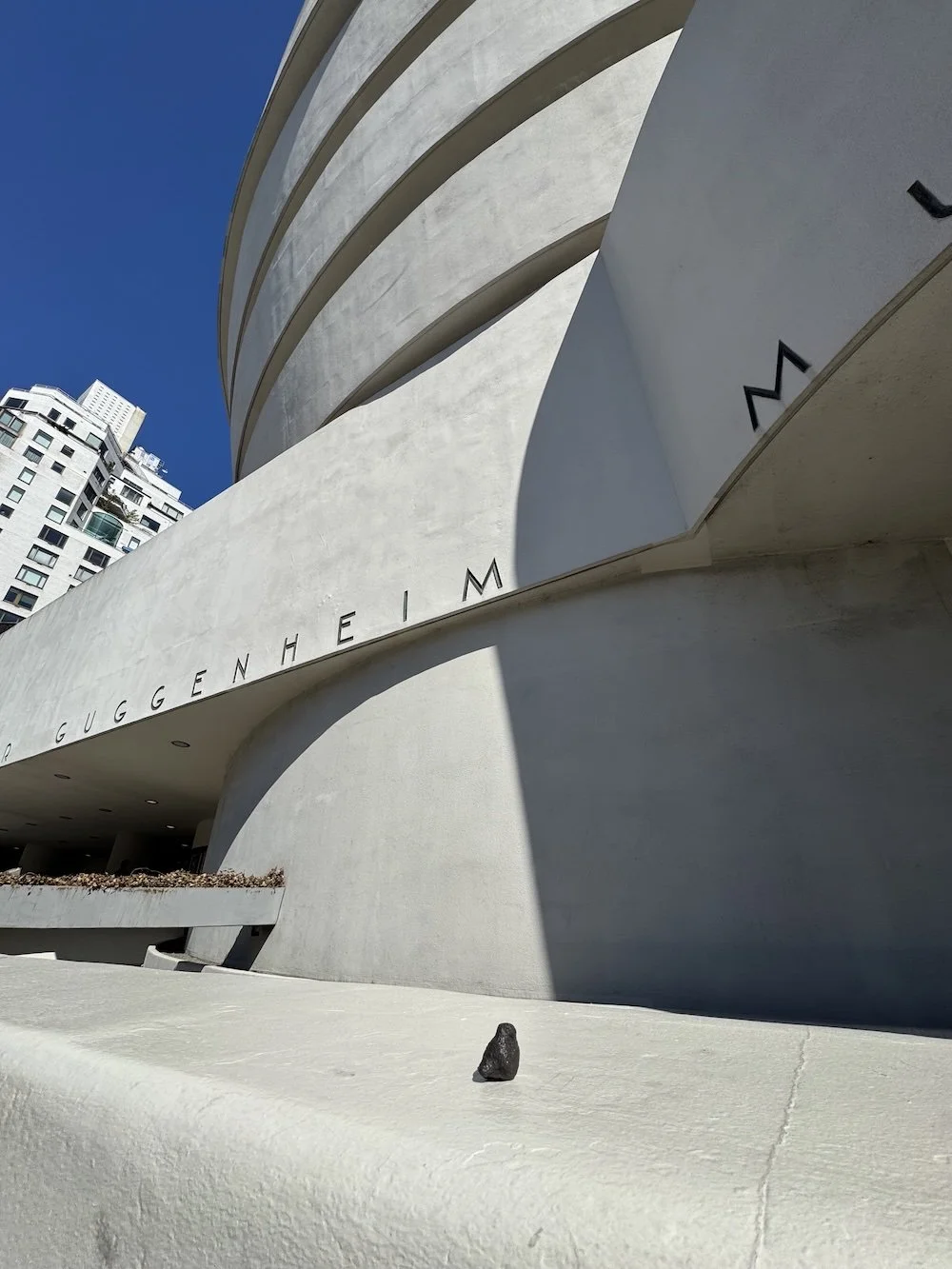
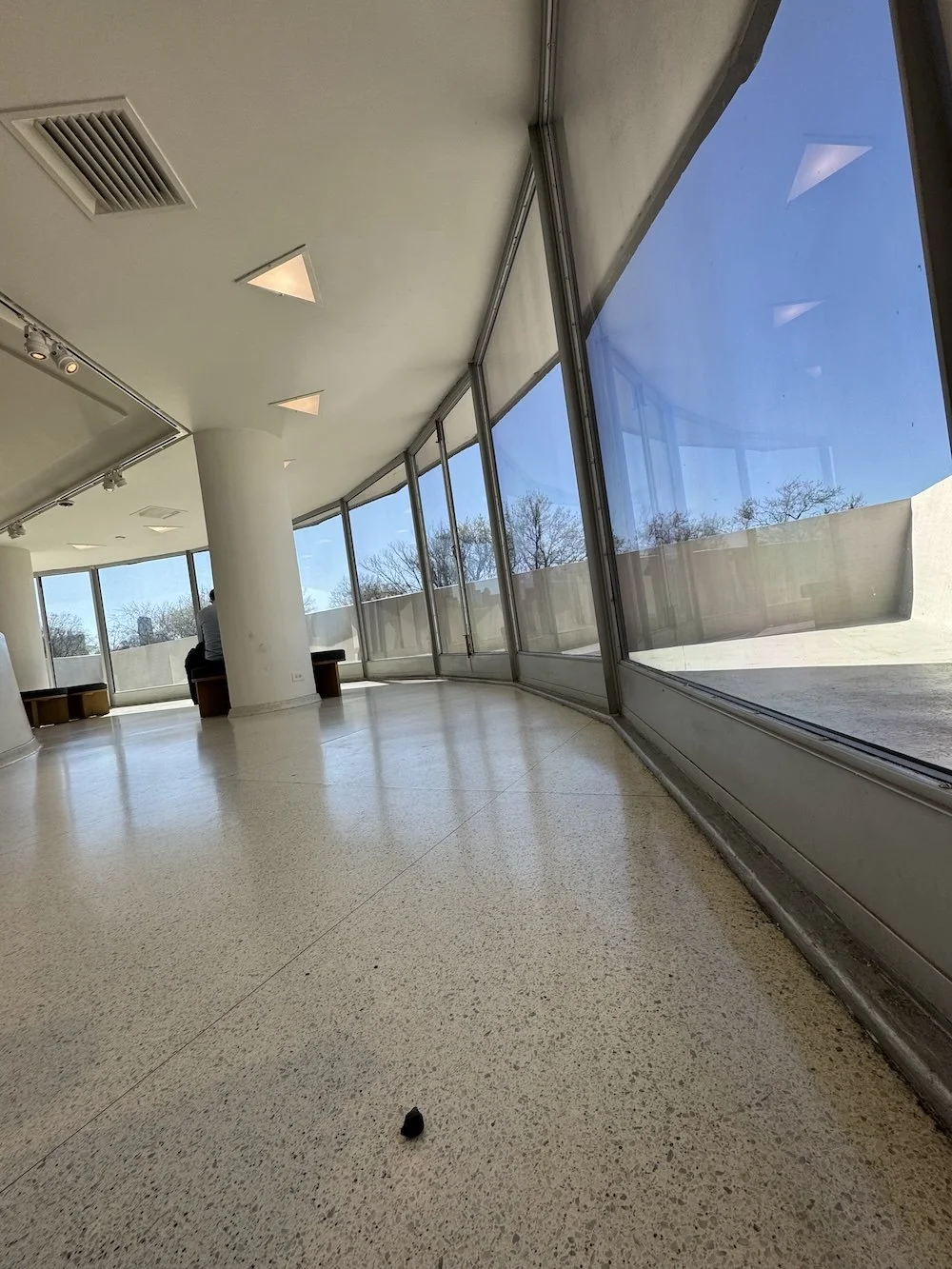
This white "museum" in the shape of a shell suits Stone well. Stone seemed to like the building itself more than the paintings inside. Or to put it another way, Stone showed almost no interest in the paintings — a strangeness I couldn't quite explain. Perhaps they exist in different dimensions, or simply move at different speeds. I even wondered whether Stone simply couldn't see paintings at all.
今日も、有名な絵(この地上には「有名な」「絵」というものがある)の前に人だかりができている。この街には、あちこちにある「美術館」にこの「有名な絵」がたくさんあって、そこにはいつ行っても人だかりができている。ピカソ、ゴッホ、ルノアール。この辺は、間違いなく常に人類の群れに取り囲まれて感嘆されている。世界を捕まえることが上手い人が賞賛されるのか。確かにうまい。何かが生きていて、躍動しているようでもある。それでもやはり、壁に並べられた四角いものを眺めては、しきりに感心している人類の様子は、遠目にみると(もちろんそれは、地球外くらいからの遠目で)かなり滑稽でもある。
巡回展の絵は、去ってゆく。もう二度と会えないかもしれない。一方、常設展のヤツらは、いつでもそこにいる。そう気づいた頃から、この街に散在している「ヤツら」に時折会いに行くようになった。そういう考え方をするようになって、「絵」というものが、物ではなくて人だと感じるようになった。ある種の人物。はっきりと区別と主張のある、面白いヤツら。そこにいくと、今日もヤツらはそこに居た。観光客は写真をパチパチ撮って、その前でポーズした。私はこっそり話しかける。おつかれさま。こんなに人に見られて、疲れない? 久しぶり。元気だった? うん、私は、まあ、元気だった。いや、元気じゃない時もあった。しばらく前にいてもいい? ちょっと入り込んでも構わない? いや、マジで。世界って結構、疲れるよね。いや、マジで、世界ってまあまあ面白いよね。私は終わっても、君は続くの? そっちから、こっちを見つめているの? あなたも長い長い時間の後には、外側の世界の一部に静かに戻っていくのかな。
貝殻の形をしたこの白い「美術館」は、「石」にはお似合いだと思う。「石」は「絵」よりも、その建物自体が気に入ったみたいだった。
逆にいうと、石は絵に不思議なほど興味を示さなかった。
おそらく、別の次元、あるいは、別の速度の中にいて、
石には絵が全く見えていないのかもしれない、とすら考えた。
04.11.2026 - Breathing Hole 息抜き穴 (New York City, USA)
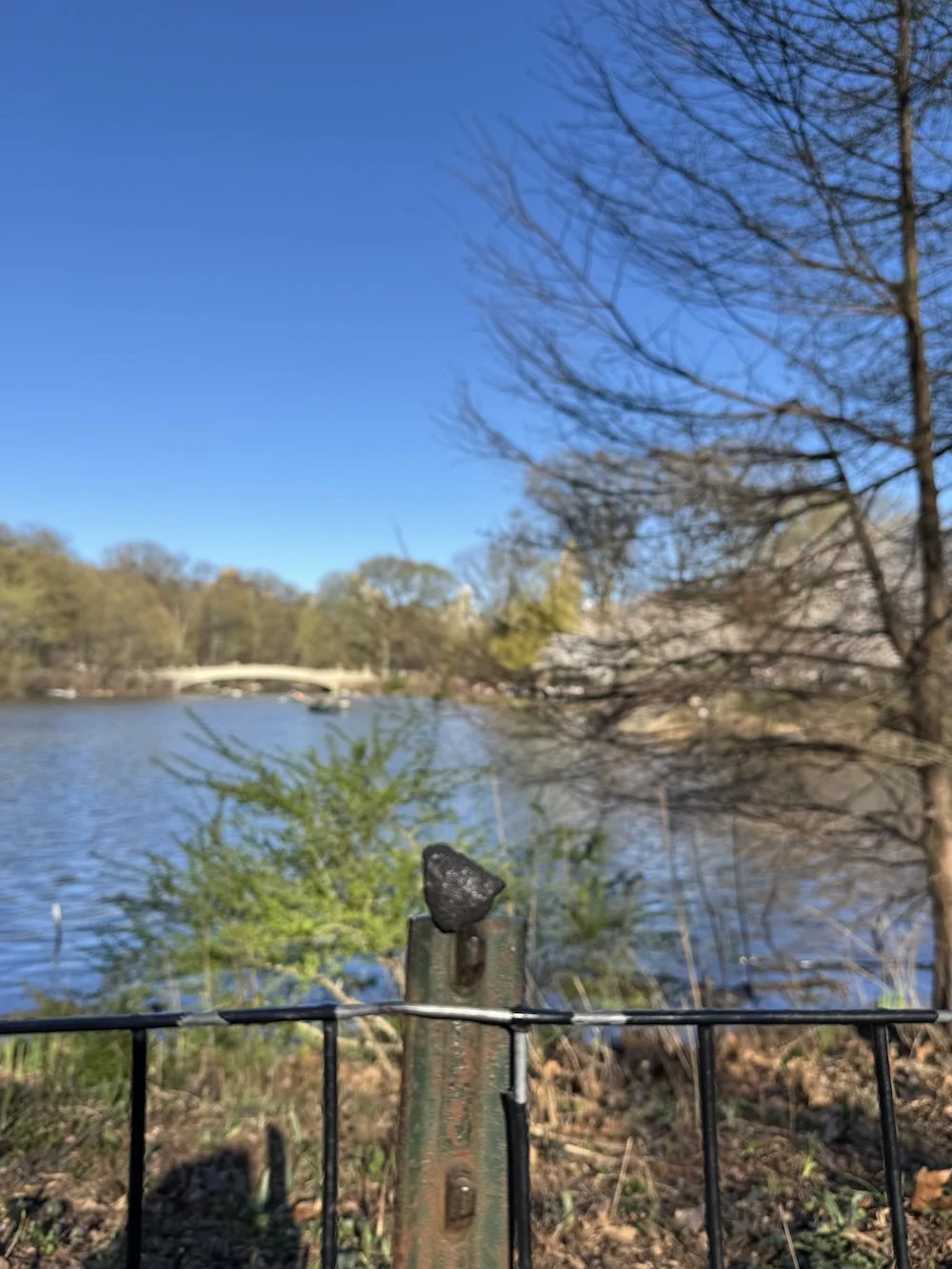
Since we had the chance, we decided to walk home through the park.
Seen from above, the park is a huge green rectangle carved out of the middle of a city of rough gray buildings.
They say it was set aside while the city was still taking shape. Someone with remarkable foresight—an architect, perhaps, or someone else entirely—stopped the city in its tracks. As people settled here and houses began multiplying, this person said, “Wait.” Then they drew an enormous square across the ground and declared:
"You may build only outside this line."
And that is how the park was saved.
(Though they probably weren't actually carrying a stick.)
In cities, the entrance is sealed.
The entrance to where?
To the Earth.
If you were to cut the Earth in half like a watermelon, you would find that the surface beneath a city is almost always carefully sealed with concrete and asphalt.
So that nothing can leak out.
Leak out?
The Earth's energy.
But if it is sealed completely, the city begins to wither.
So—not too alive, but not dead either—every city is given a breathing hole of just the right size.
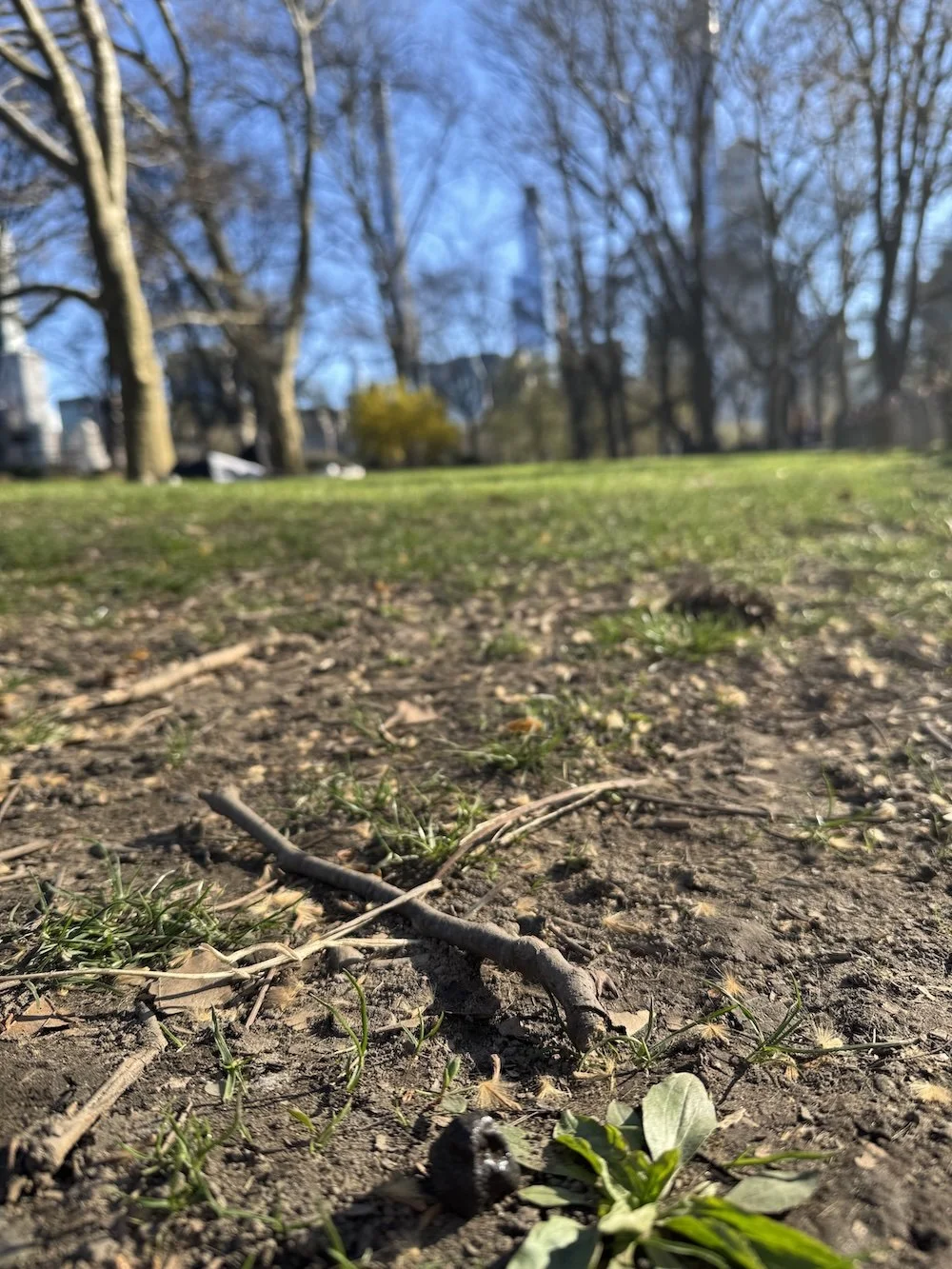
People are lying all over the grass.
Some are having picnics.
They lie against the breathing hole, drawing something up.
Others sit on benches, but I suspect the very first thing you’re supposed to do in a park is to lie against the breathing hole and receive something from deep inside the Earth.
Stone rolled onto the grass as well.
It breathed.
For a moment, I found myself worrying that Stone might slip back into the hole.
せっかくなので、公園を通って帰ることにした。
この公園はザラザラと灰色をした建物が並ぶこの街のど真ん中に大きくくり抜かれたでっかい緑の長方形として空からは確認される。
なんでも、この街が出来上がっていく途中に
先見の明のある建築家か誰かが提案してできたものなんだそうだ。
人間たちがある場所に住み着いて、だんだんと家が増殖していく時に
君たちちょっと待て、と手に棒を持ち
大きな、途方もなく大きな四角形を地面にダーっと描いて
この外側にしか家を建てちゃだめだ、と、そんな風にして、この公園は確保された。
(棒は実際には持ってなかったと思うが)
街というのはいろいろな都合で入り口が塞いである。
どこへの入り口? 地球への入り口が。
地球をスイカみたいに半分に割ると
街の表面は大抵コンクリかアスファルトで念入りに塞いである。
漏れ出すことがないように。
何が漏れないように?
大地のエネルギーが。
ただし、完全に塞ぐと枯れる。
だから、
生きすぎないように、でも、死なないように、
街には適当な大きさの「息抜き穴」が開けられている。
芝生の上には、たくさんの人が寝転んでいる。
ピクニックをしている人もいる。
穴にひっついて何かを吸い上げている。
ベンチに座っている人もいるが、
たぶん公園でやるべき正しい行為の第一は、
息抜き穴にひっついて(つまり寝転がって)、地球の内側から何かを受け取ることなのだ。
石も転がってみる。
石は呼吸した。
石がそのまま「穴」の奥に潜って行ってしまわないか、少し心配になった。
04.17.2026 - Puppet Theatre 人形劇 (New York City, USA)
I like puppet theatre.
More precisely, I like the roundabout activity of humans deliberately trying to express themselves — or something — through objects. Musical instruments are one version of this. They have a way of pulling out some deep inner voice that would otherwise never emerge.
"Acting," in which a person pretends to be someone else, is already a strange thing. But gathering ordinary objects, deliberately making something that resembles ourselves, and then furiously manipulating it as if it were alive in order to convey something — that is stranger still. As if to say: the body we were born with is simply not enough to tell the truth.
Some people go even further — beyond puppets shaped like humans or animals. Everyday objects. Abstract forms. Perhaps even a stone. Humans who try to read something from a stone, and to convey something through it, are probably interested in something that cannot be drawn out through the human body or through human time.
The world that is ordinarily spoken of and written down is almost entirely the world as seen by humans. And yet we always forget that this is only a very, very small part of the whole. When we play with objects, there are moments when something else flashes through. In that instant, I, the other, objects, time, and place — everything startles awake at once.
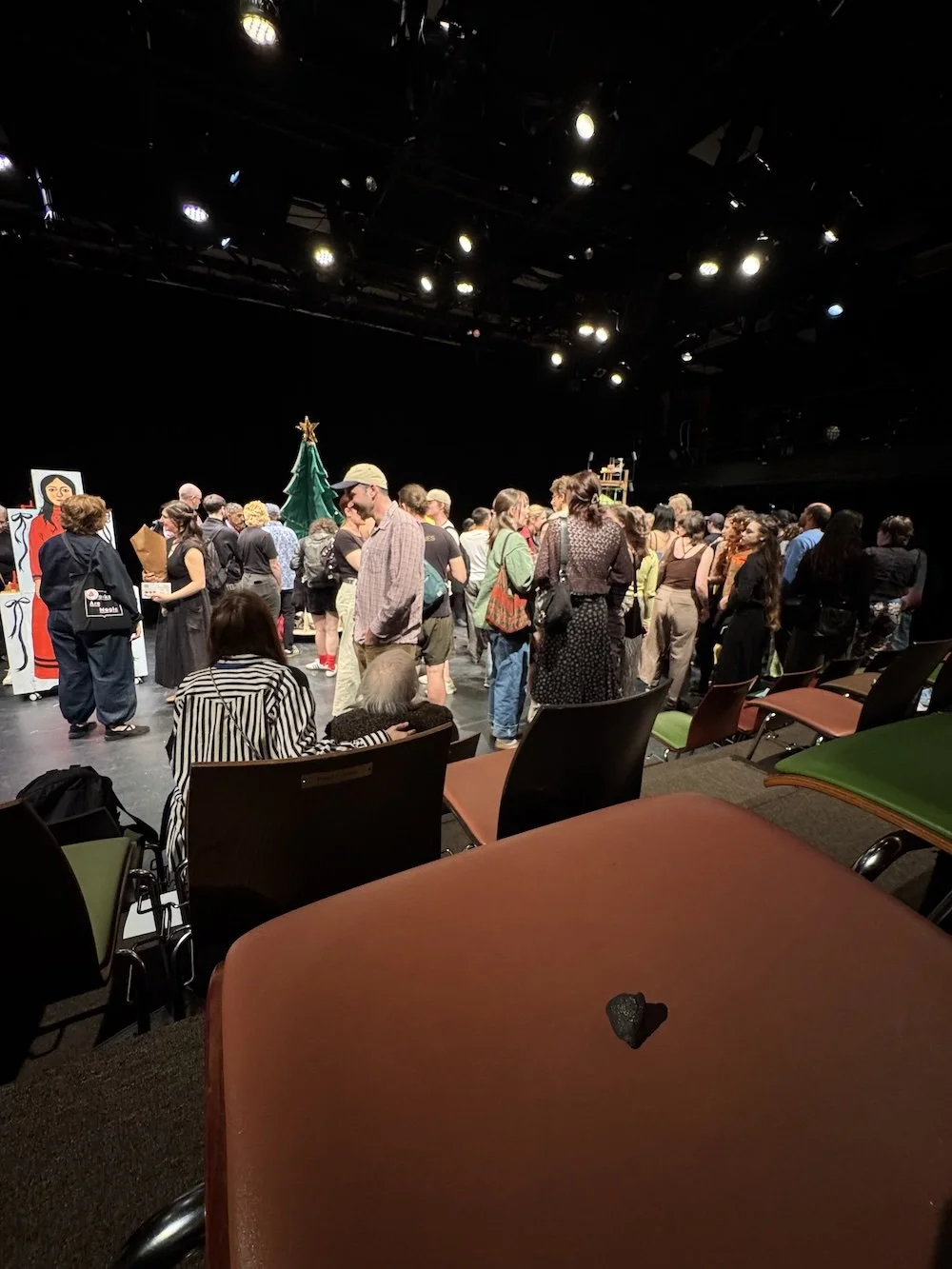
Tonight, I brought Stone to a puppet festival. Every experimental work seemed, to Stone, like something entirely ordinary — something familiar. It stood there strangely relaxed, as if it were somewhere it had known for a long time. Stone may be a resident of that other time — the time we sometimes glimpse and suddenly startle awake.
It occurred to me that if I were to pull out the stopper that is Stone, the other world might come rushing in with tremendous force, and figure and ground would reverse in an instant.
The thought made me catch my breath, just a little.
人形劇というものが好きだ。正確に言うと、人間がわざわざ何か物体を通して自分を(?)表現しようというまどろっこしい営みが好きだ。例えば楽器もその一種。ものとの格闘の中から、そうでなければ出てこない人間の奥の声みたいなものが、ようやく引っ張り出される仕組みになっている。
人が何か別の人のフリをする「演技」というもの自体が奇妙な行為だけれど、何か身近な「もの」を集めて自分と同じような形をしたものをわざわざ作り、それを生きているかのように必死に動かして何かを伝えようとする営みは、さらに奇天烈だ。生まれ持った自分の体は、本当のことを話すにはあまりにも不十分だ、とでも言うように。
人間や動物の形をしている「人形劇」ならまだしも、そうですらないものを通して伝えようとする者もいる。日用品、抽象的な形、もしかしたら「石」。石を通して何かを読み取り、伝えようとする人間は、たぶん、人間の体や人間の時間では汲み取れない何かに興味がある。
普段、語られたり、書きとめられたりする世界は、ほぼ人間が見ている世界だ。ただし、それは世界全体のほんの、ほんの一部でしかないことをみんなはいつも忘れている。ものとの戯れの中で一瞬チラリと、「そうでないもの」がよぎる時があって、その時、我も、彼も、ものも、時間も、場所も、一斉に「ハッと」する。
今宵、石を人形劇の祭りに連れて行ったが、どの実験的な作品も石にとっては当たり前の何かだったようで、懐かしい場所にいるように妙にリラックスして佇んでいた。石は私たちが時々垣間見て「ハッと」する時間の側の住人なのかもしれない。
石という栓を抜いた瞬間に、あちらの世界が猛烈な勢いで流れ込んできて、図と地が一気に反転するのかもしれないと気づいて、少しだけ息を飲んだ。
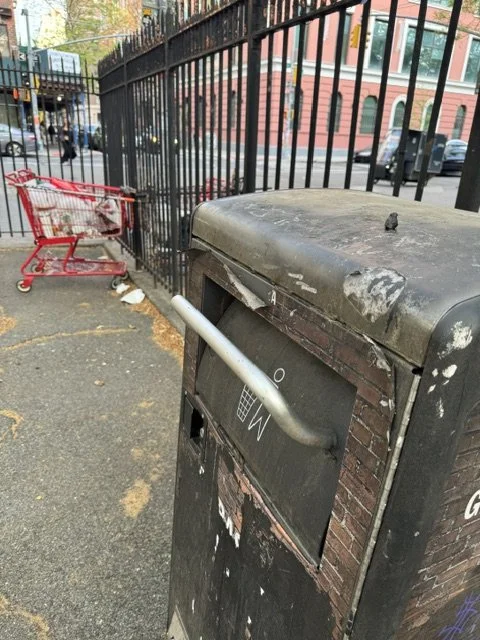
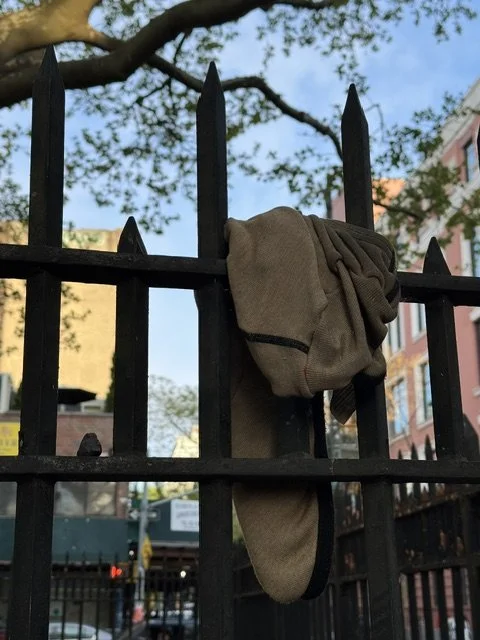
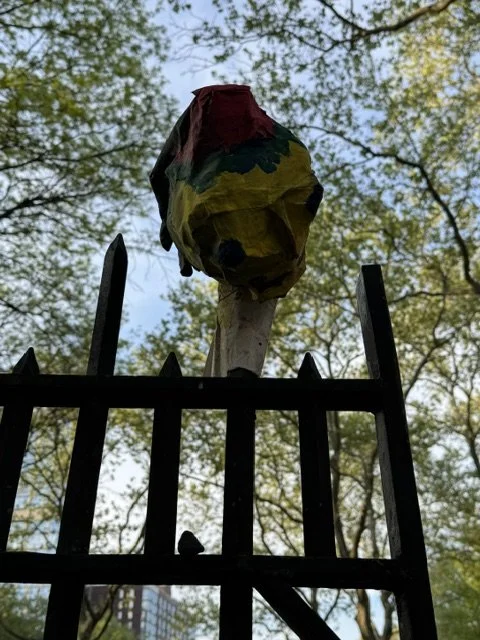
04.24.2026 - While Waiting 待ち合わせ (New York City, USA)
I decided to go to the puppet festival again. It was fun the other day. This time, I invited a friend to come along.
A friend I hadn't seen in a while. We'd eat dinner together first, then go see puppet theatre.
What a perfect evening.
As I was heading to our meeting point, my phone vibrated.
Sorry, I'll be a bit late!
No worries!
I replied.
Soon, the phone vibrated again.
Even if I rush, I'll probably make it just in time for the show.
The perfect plan — a light meal before the theatre — had quietly collapsed.
Take your time!
I replied.
But inside, I thought, Oh well.
I was a little hungry, but not in the mood to eat alone. I was a little grumpy, too.
While all this was going on, the time left was too tight for a proper dinner, but too long to do nothing — and this awkward stretch of time had suddenly appeared in front of me.
There's a park in front of the theatre. But it's not the kind of park where I particularly want to spend time.
Leftover food scattered around. Benches that might be sticky if you're not careful.
Oh well.
I sighed again and looked at my phone.
I wasn't especially interested in looking at it, but I knew I could easily kill twenty or thirty minutes just gazing at the letters and images floating inside this rectangle.
At some point, humans began spending a remarkable amount of their precious lives looking at this rectangle, killing time.
I slid my fingers up and down, side to side. Looked at posts that weren't particularly interesting. Opened my email inbox again — the same one I'd opened a few seconds ago.
Someone eating something that looks delicious. Someone with perfect makeup.
These places used to be where actual humans would post little thoughts and ease their loneliness. Now they seem to be full of people posting AI-generated words and images, doing something that vaguely resembles business — though perhaps some of them aren't people at all, but machines.
And yet humans are so bored with living, so lonely, so irritated, that they keep seeking something inside this rectangle.
What's inside is supposed to be now.
The feeling of being connected to the world, right at this very moment.
That was the idea, anyway.
I scrolled through several feeds, went back to my email, did a meaningless search, then came back to the same thread.
Scroll. Scratch. Scratch some more. A broken record.
Keep scratching. Scratch harder.
Maybe something real will appear if I keep going.
It hurts even to remember that there was never anything real there to begin with.
Oh well.
I sighed once more and noticed the prickling feeling inside my chest. Just as I was beginning to feel sick of its grainy texture, I remembered.
I was not alone.
Let's play with Stone!
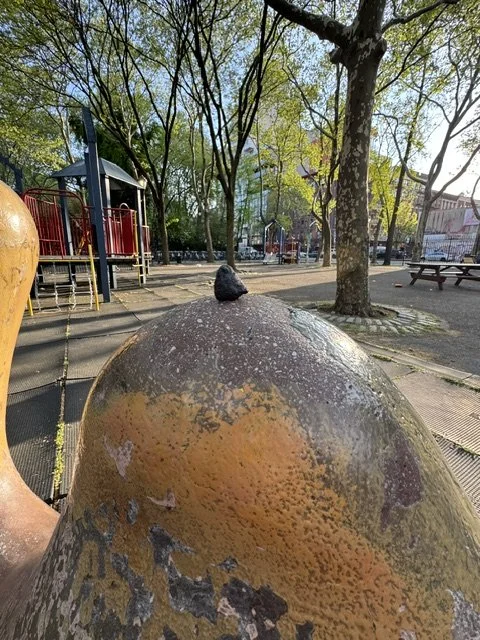
Stone grasped this park immediately, the way it always does.
Things my eyes hadn't seen until a moment ago began appearing, one after another.
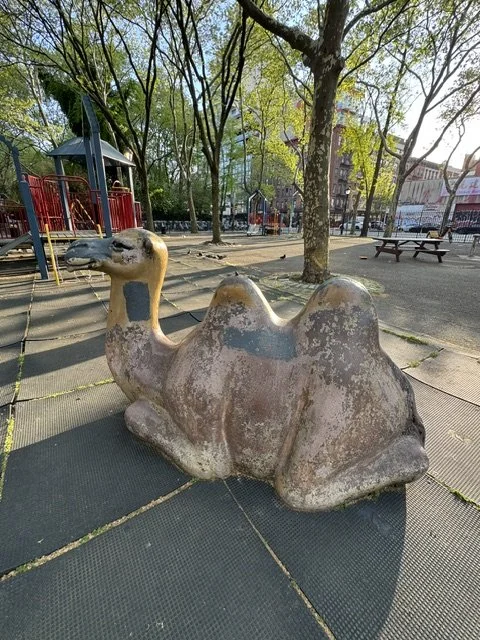
A camel!
There was this enormous thing right in front of me, and I genuinely hadn't seen it until now.
Eyes often see nothing at all.
I laughed.
Stone climbed onto things that looked a little dangerous.
Watch out — there might be chewing gum on that!
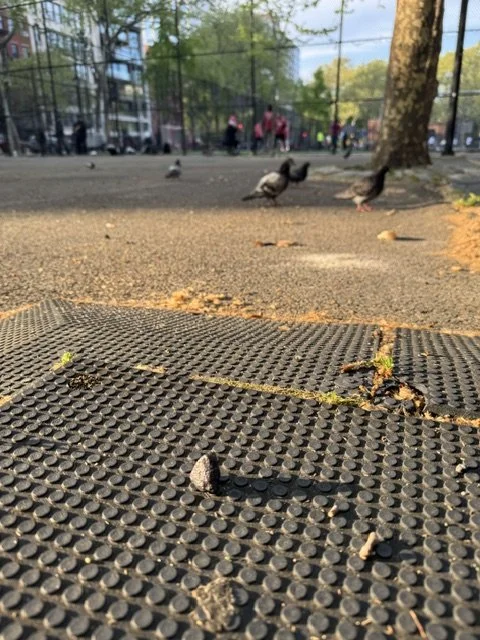
Stone approached things I was too afraid to get close to.
I'd rather not meet the owner of that tossed-away dirty jersey, if I can help it.
What was actually there, right in front of me, began striking against the deceitful eye of my mind.
They might be things I'd rather not see — and yet Stone turned even them into a playground.
Human traces, however shabby or dirty, still have something surprising hidden in them.
This park, like the bare skin of this city, might be covered in scratches and wounds — but perhaps that is exactly why I wanted to introduce it to Stone.
When my friend arrived, wiping sweat from her face, Stone and I were still in the middle of our game.
Oh — you're already here?
We smiled at her with that kind of face.
And naturally, I introduced Stone to my friend.
また人形劇祭りに行くことにした。この前楽しかったし。今日は友達も誘って行くことにした。
久しぶりに会う友達と、ちょっと早めに会って、ご飯を食べて、それから人形劇を一緒に観る。
なんて完璧な宵なんだろう。
待ち合わせの場所に向かおうとすると、携帯が振動する。
ごめん、ちょっと遅れそう。
心配しないで!
と返す。
少しするとまた携帯が振動する。
うーん、急いでもたぶん開演ギリギリになるかも。
軽い食事をしてから劇場に行くという完璧な計画は脆くも崩れた。
ゆっくり来ていいよ!
と返す。しかし内心、「あーあ」と思う。
お腹が少し空いているが、一人で食べに行く気にもなれない。ちょっとむくれている。
あれこれしているうちに、ご飯を食べるにはちょっと時間が窮屈で、
でも、何もしないで待っているにはそれなりに長い時間が目の前に突然現れていた。
劇場の前には公園があるが、どちらかというとあまりそこで過ごしたくない感じの公園だ。
食べ残しのゴミは散乱しているし、椅子は気をつけないとベタベタしていそうだ。
あーあ。
もう一度ため息をついて、携帯を見る。
特に見たくもないけれど、この長方形の中に浮かぶ文字や画像を目で追っていれば、すぐに二、三十分くらいを潰すことができる。
いつの頃からか、人類は自分の貴重な一生のうちの、かなりの時間を、この長方形を見つめることによる暇つぶしに使うようになった。
指を縦横に滑らせる。特に興味のない投稿を見る。さっき開けたメールの受信箱をまた開けて見る。
誰かが美味しいものを食べている。誰かが完璧なお化粧をしている。
かつてそういう場所は、誰か実際の人間が呟いたりして寂しさを紛らわす場所だったのだが、今ではAIに書かせた文や画などを載せて、何やら商売のようなことをしている人(もしかしたら人ではなくて機械)ばかりになった。
それでも人間は、生きていることが余りに退屈だったり、寂しかったり、イライラしたりするので、長方形の向こうに救いを求める。
そこにあるのは、「今」だ、ということになっている。
まさにこの瞬間に、世界と繋がっているという感覚。
…のはずだった。
いくつかのSNSをスクロールして、またメールに戻ったり、どうでもいい検索をしたり、
また同じスレッドをスクロールする。引っ掻く。もっと引っ掻く。壊れたレコード。
もっと引っ掻け。更に引っ掻け。
そうすれば、本物が現れるかもしれない。本物なんて、最初からそこにはないということを思い出すのさえ苦痛だ。
あーあ。
もういちどため息をついて、心の中のイガイガに気づいて、
そのザラザラとした手触りにうんざりしそうになった刹那、
思い出した。私は一人ではなかったことを。
石と遊ぼう!
「石」は、いつもの調子で、すぐにこの公園を把握した。
数秒前までは、私の目には見えていなかったものが、次々と現れた。
ラクダ! 目の前に、こんなに巨大なものがあったのに、私にはそれがさっきまで本当に見えなかったのだ。
目は、大抵は何も見ていないということに気づいて、笑ってしまう。
石は、危険と思われるような場所にも躊躇なく乗っかった。
あ、気をつけて! そこにはガムがひっついているかも!
石は私が恐れて近づかないものに近づいた。
打ち捨てられたような汚れたジャージの持ち主に
できれば私は会いたくない。
欺瞞に満ちた心の眼に、本当に目の前にいまあるものが打ち付けられていく。
それは、できれば見たくないものかもしれないが、
それすら、石は遊び場に変えた。
人間の痕跡は、それがどんなにうらぶれた汚れを伴っていても
そこには何か驚きのようなものが隠れている。
この街の、剥き出しの肌のようなこの公園は、傷だらけかもしれないが、
たぶん、それを石に紹介したかったのかもしれない。
友達が汗を拭き拭き到着した時、
私と石とはまだ遊びの途中で、
え、もうついたの?
という顔で友達に微笑んだ。
当然のように、私は友達に石を紹介した。
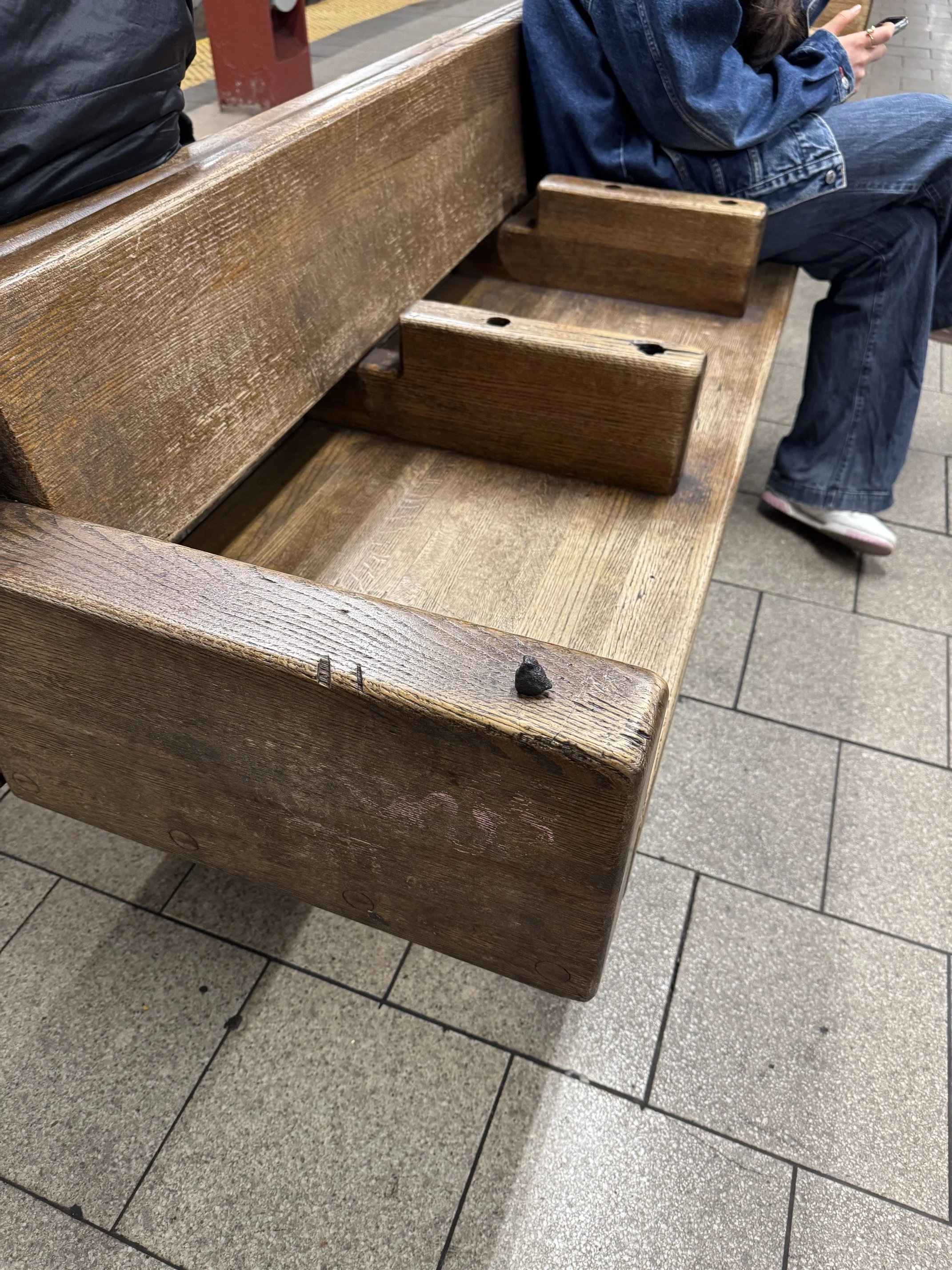
04.24.2026 - Dissection 解剖 (New York City, USA)
The only thing open at that hour was a plain, no-frills Chinese noodle shop. It was close to Chinatown, so perhaps it was more authentic than it looked. We studied the menu taped to the window outside.
This place okay?
Yeah, why not?
And in we went.
It was cheap for this neighborhood. We ordered, and almost before we had time to wait, the food arrived. It looked somewhat different from the photos on the menu, but it wasn't exactly bad.
In truth, whether the food was good or not didn't matter very much to us.
Because we had a mission: "dissection."
We had to dissect the performance we'd just seen, impression by impression, carefully and thoroughly. This friend of mine belongs to the tribe called "director." (As it happens, I too possess the eyes of this particular tribe.)
Today's show was made up of several short pieces, so the dissection was going to take a while.
We straightened our backs and mentally put on our surgical gowns. If she was the chief surgeon, I was the assistant.
Scalpel.
I handed it to her, and the chief surgeon made the first incision with one bold, clean stroke.
Its colorful guts spilled into view.
This part is really good.
Agreed!
But this part is a shame.
Exactly.
Soon I got carried away myself, snatched the scalpel from the chief surgeon, and began cutting into the details.
That music there was... hmm.
I know. They could've done so much more with it.
Sometimes we disagree.
That moment really got me.
Really? It didn't do much for me.
And yet we never lose respect for each other over it. After all, we are conducting this dissection as professionals.
From the outside, we must look terribly condescending, terribly harsh. Someone might reasonably wonder whether a performance really needs to be dissected with quite this much precision, down to the tiniest detail.
Normally, you might come out of a performance with a handful of positive reactions:
Good!
Fun!
Interesting!
Exciting!
Exhilarating!
Inspiring!
—and leave it at that.
Meanwhile, under the dim lights of a late-night Chinese noodle shop, slurping salty noodles now and then, the two of us had been holding a splatter-theatre dissection festival, blood spraying everywhere.
Talking at breakneck speed, we must have dissected for about an hour.
The chief surgeon checked.
Anything we missed?
No. Dissection complete. We covered everything.
At last, we relaxed our faces, took off our surgical gowns (in our minds), and left the noodle shop.
Whenever I meet this friend, we watch a performance together, and then head for the dissection room.
You could say it's simply the nature of the tribe called "director."
Or perhaps, for some reason, we believe that this is the greatest love and respect we can offer to what has just happened onstage.
And so, sometimes with almost merciless coolness, we dissect the thing in front of us and never allow ourselves to end with:
I don't know. It was kind of fun, I guess!
Mission complete.
Luckily, the subway in this city runs all day and all night.
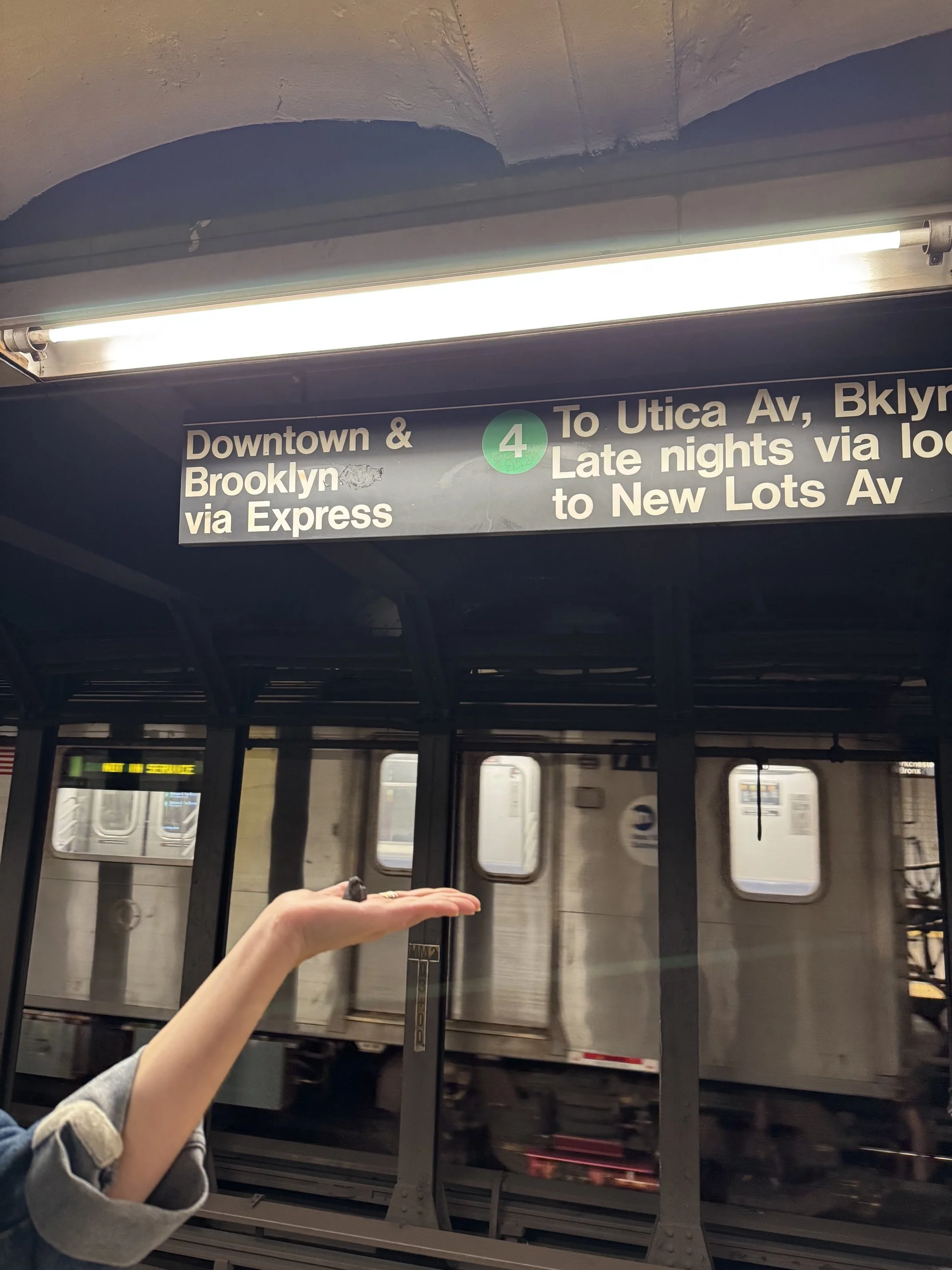
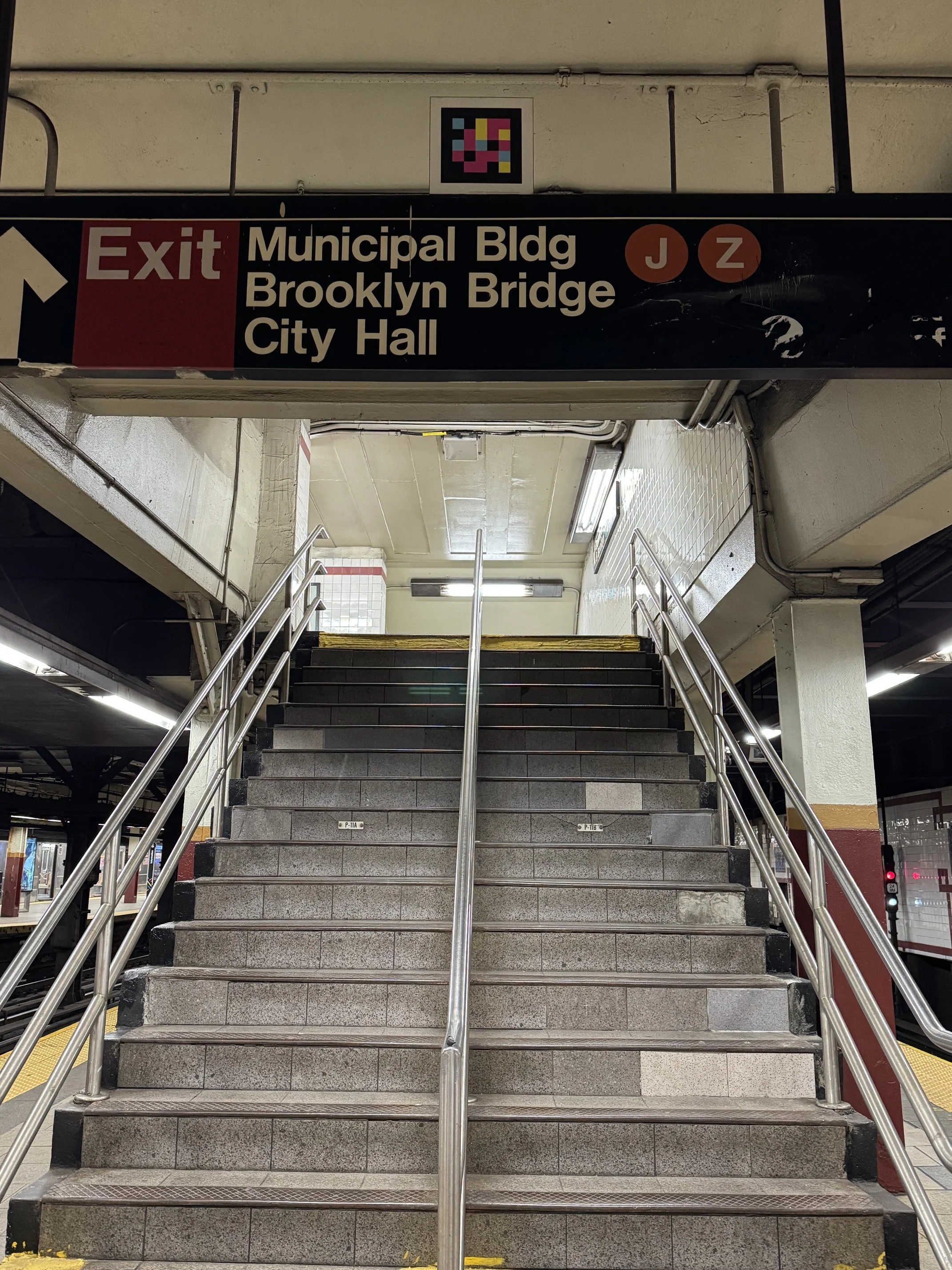
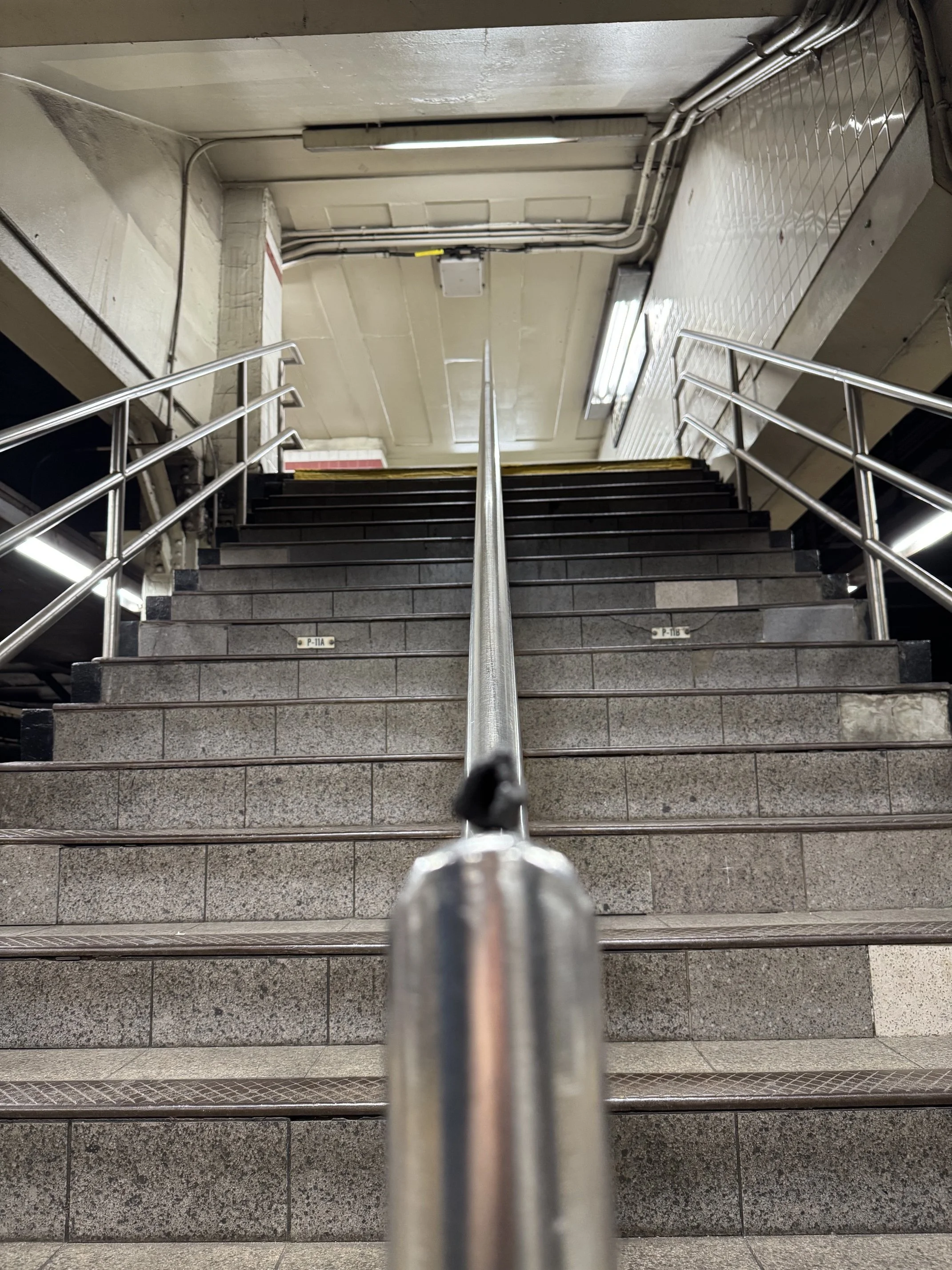
Oh, we should show Stone this city's famous — infamous! — subway!
And so we fooled around a little at the subway station.
For a moment, we shed that useless little tendency called "being a director."
And yet, it seemed to live so deep beneath her skin that it could never really be taken off.
その時間に開いているのは、飾り気のないチャイニーズのヌードルショップくらいだった。中華街に近いから案外本格的なのかもしれない。外に貼ってあるメニューを眺めてから、ここでいい? いいよね? と私たちは入店した。
この界隈にしては安い。注文して、待つまでもなく即座に運ばれてきたのは、メニューの写真とは違っているような気もするが、不味いわけでもない。
実際、我々にとっては、それが旨いかどうかはそれほど重要ではなかった。なぜなら我々には「解剖」というミッションがあったから。さっき見てきた舞台の印象を、ひとつずつ、丁寧に、解剖していく。この友人は「演出家」という種族なのだ。(実は、私もまたその種族の眼を持ち合わせている)今日のショーは、いくつもの短い作品の集まりだったから、解剖作業には時間がかかる。
我々は心の中で背筋を伸ばして手術着を着る。彼女がオペ長なら、私が助手だ。メス、と言われて、私がメスを渡すと、オペ長は大胆な手つきでスパっと一刀目を入れた。色とりどりの臓物が顕になる。
ここは、すごくいい。
同感!
でも、ここが惜しい。
その通り。
私も、つい夢中になって、オペ長からメスを奪い取って、細部を切り取ってゆく。
あそこで、あの音楽は、うーん。
わかる。もっと生かせたはず。
時には、我々の見解が異なることもある。
あそこ、すごくグっときた。
え、そうなの? あまりピンと来なかったけど。
それでもお互いを軽蔑したりしないのは、もちろん我々がプロとして解剖を取り行っているからだ。側から見れば、ずいぶんと上から目線で、ずいぶんと手厳しくて、そこまで厳密に解剖する必要などあるのか、と思われる程に、我々の解剖は微に入り細に入る。
普通ならば
よかった!
楽しかった!
面白かった!
ワクワクした!
興奮した!
刺激された!
くらいの、ポジティブな感想で観劇を済ませるところを。
さっきから我々二人は、夜更けのチャイニーズヌードルショップの薄暗い電灯の下で
時々塩辛いヌードルをすすり上げながら、
血飛沫が飛び交う、スプラッター演劇解剖祭りをやっている。
すごい早口で、まあ、1時間くらいは解剖しただろうか。
オペ長が、確認する。
やり残したとこはないか。
はい、隈なく解剖終了しました。
我々はようやく頬を緩め、(心の中で)手術着を脱ぎ、ヌードル店を後にした。
この友人と会う時には、いつも一緒に舞台を見て、そして解剖室に向かう。
それは、「演出家」という種族の性であるとも言えるし、
それが舞台で起こったことへの最大限の愛であり、リスペクトである、となぜか我々は信じている。だから、時には冷徹なまでに、対象を解剖し、決して
なんかわかんないけど、まあ、楽しかったよね!
なんてことでは終わらせないのだ。
ミッション完了。幸い、この街は一昼夜いつでも地下鉄が走っている。
「石」に、この街の有名な(悪名高き!)地下鉄を見せてあげないとね!
そんな具合で、我々は地下鉄の駅で少しふざけた。
演出家などという、どうでもいい性癖はひとたび脱ぎ捨てて。
とはいえ、どうやらそれは、脱ぎ捨てられないくらい
彼女の肌の奥に息づいているのだった。
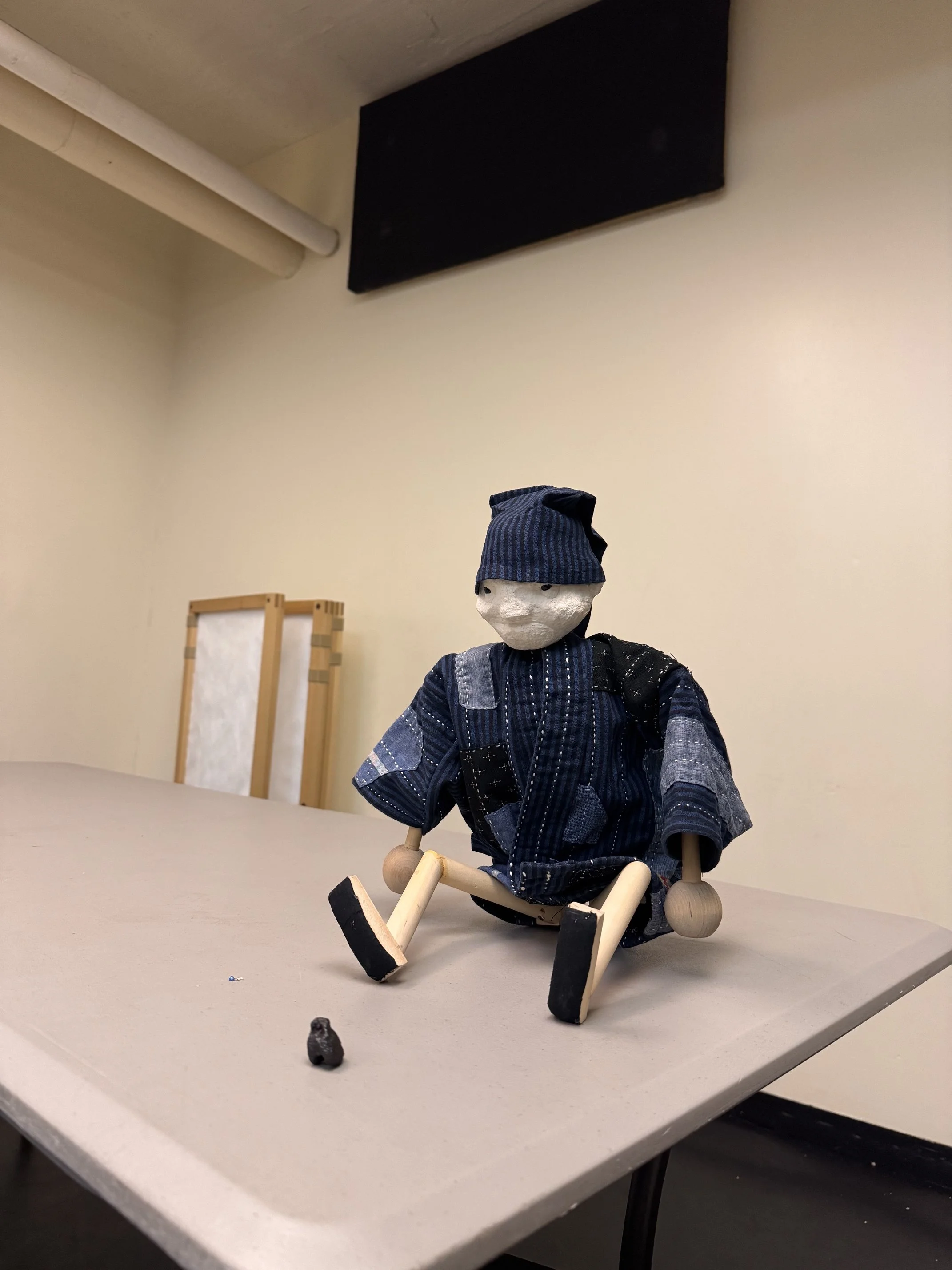
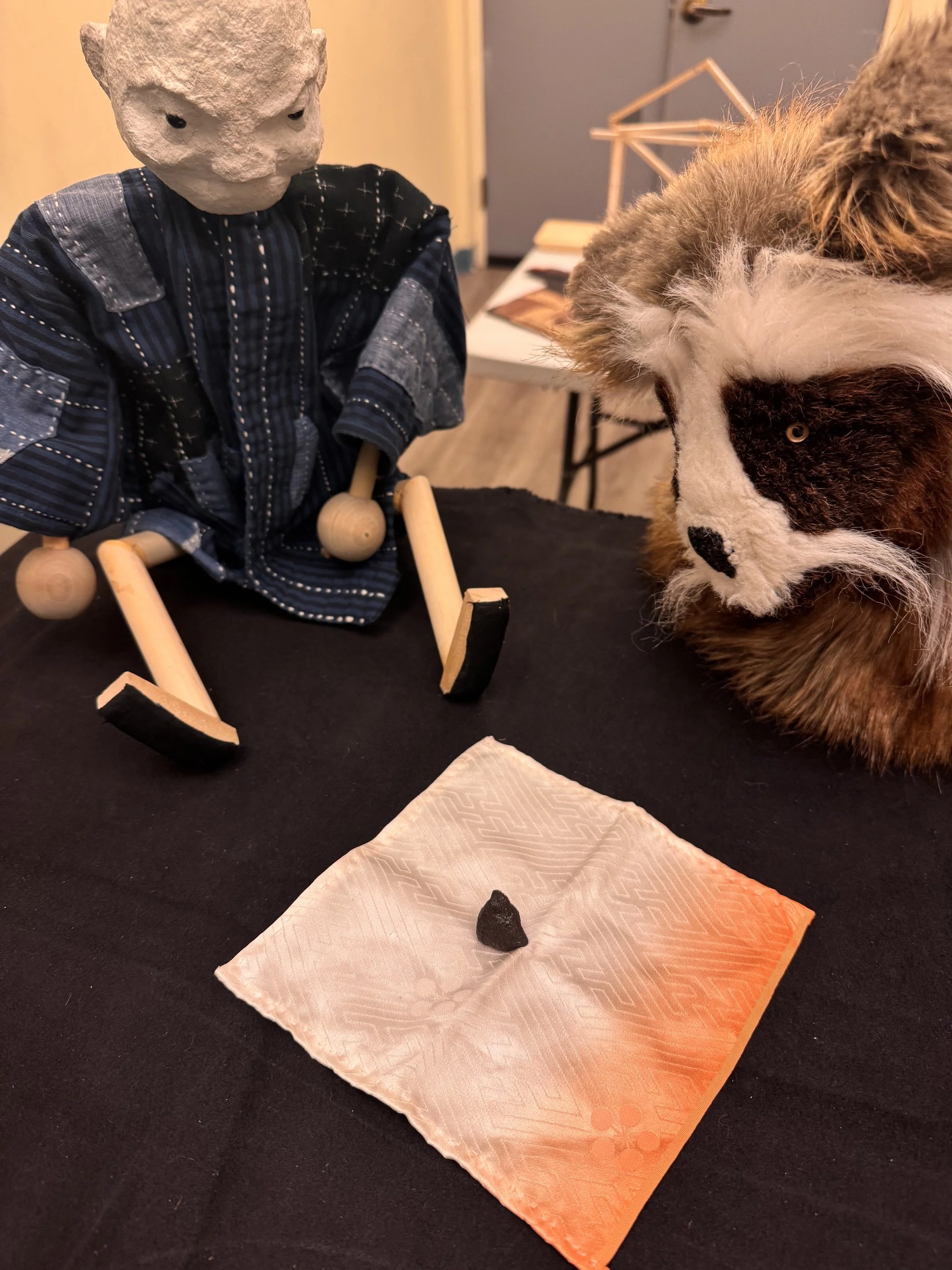
04.30.2026 - The Third Category 三つ目のカテゴリー (New York City, USA)
There are three groups within humanity:
A. People I could never talk to about Stone.
B. People who would understand Stone.
C. People who live from the same perspective as Stone.
Today, I brought Stone to rehearsal and introduced it to them.
Actually, I brought Stone with me today.
Oh, really?
(I take out Stone and show it to them.)
Oh, it has a hole in it.
They peered into Stone's hole, smiled a little, and then went straight back to what they were doing.
Amazingly, to them, Stone was something perfectly ordinary. Me carrying a stone around was also a perfectly ordinary sight, and Stone joining our rehearsal as an observer was, likewise, nothing unusual at all.
And so, Stone became one of us almost too easily.
Perhaps there are other stones in their pockets. And even if there aren't, there are probably always a few screws, scraps of paper, bits of string, or pieces of cloth in there.
They go through their days communicating with these "objects" in a way quite different from the humans in group A. The people in group A, for example, may "use" objects, but they live in a world where it would never occur to them that objects might be alive, or that life might be breathed into them.
The people in group C, on the other hand — whether they were born this way or became this way somehow, I don't know — think of objects as companions. Naturally, these things are alive. If you speak to them, they answer. You can breathe further life into them, join with them, and together do something you could never have done alone. They are partners.
They encounter objects the way they encounter friends. When they have lived with an object for a long time, their affection for it grows deeper, and the object, too, seems to deepen its existence alongside them.
Among the people in category C are those whose profession is puppeteering. Today's rehearsal is a puppet theatre rehearsal.
But is puppeteering really a profession?
Or, if humanity were roughly divided into three categories according to how people relate to objects, is "puppeteer" simply the name we give to the most representative members of category C?
Stone said hello to the puppets, too.
They have shapes that look a little more like "living creatures" than Stone does — something like humans, something like animals — but they are made of wood, clay, cloth, and a few screws.
Stone watched as the puppets, together with the puppeteers, came to life.
It seemed as though a spark deep within the puppeteers could reveal itself as pure light only by passing through these objects called puppets.
Or perhaps it was something that could barely come into being except at the place where puppet and human became impossible to separate: an infinitely small gaze, a heartfelt conversation filled with compassion, the emergence of an almost unimaginable tenderness.
Stone did not move or dance the way the puppets did.
And yet, it seemed perfectly clear that Stone was in complete resonance with the rehearsal.
Stone did not appear to move.
But somehow, unmistakably — and quite a lot, in fact — it seemed to have moved.
人類には三つのグループがある。
A. 「石」のことなど絶対に話せないグループ。
B. 「石」のことを分かってくれるグループ。
C. 「石」と同じ目線で生きているグループ。
今日、稽古に「石」を連れて行って、彼らに紹介した。
実は、今日は「石」を連れてきたんだよね。
え、そうなんだ。
(石を取り出して、見せる)
ほお、穴が空いてるんだね。
中を覗き込んで、少し微笑むと、
すぐに彼らは作業に戻る。
驚くべきことに、彼らにとって「石」はごく普通のことであって
石を帯同している私もまた、ごく普通の風景であり
石が我々の稽古に見学者として参加することもまた、ごく普通のことなのだ。
そんなわけで、石はあまりにも簡単に我々の一員になった。
彼らのポケットには、もしかしたら別の石が入っているのかもしれない。
石が入っていないとしても、たぶんネジや紙切れ、紐、布切れなどはいつも少し入っている。彼らはこうした「もの」たちと、Aのグループの人類とは別のやり方で対話しながら日々を暮らしている。例えば、Aのひとびとはものを「利用する」かもしれないが、ものに生命が宿っていたり、あるいは、ものに生命を宿らせたりする、などということは全く考えないところで暮らしている。一方、Cである彼らは、生まれつきなのか、後天的な何かなのは分からぬが、ものを仲間だと思っている。当然、それらは生きているし、話しかければ答えが返ってきたり、それに更なる生命を吹き込んで、一体化して一人ではできなかったことをやったりする「相棒」だと感じている。友達に出逢うように、ものとも出逢う。ずっと一緒にものと住んでいたら、愛着もひとしおだし、ものも彼らと一緒に存在を深めてゆく。
このCの中には、人形師という職業の人たちがいて、今日の稽古は人形劇の稽古である。人形師というのは、本当に職業なのだろうか。それとも、ものとの関係をざっくりと三つに分けた時の人類のカテゴリーのCの代表選手のような人たちのことを指すのだろうか。
「石」は人形たちにもあいさつした。
彼らは石よりはもう少し「生き物」らしい形、人間のような、動物のような形を持っているけれど、素材は木だったり、粘土や布、それに何本かのネジくらいでできている。石は彼らが人形師と一緒になって、生命を吹き込まれているところを見た。それは、人形師という人たちの生命の奥にある火花が、人形という物体を通すことで、純粋な輝きとして発現したもののようでもあり、また、人形と人間が分け難く結びついたところでかろうじて生まれる、限りなく小さな眼差し、一種の慈愛に満ちた心からの対話、あり得ないほどの優しさの発現のようにも思われた。
石は、人形たちのようには動いたり、踊ったりはしなかった。
それでも、石がこのリハーサルと完全に共振していることは、どうやら明らかだった。
石は動いたようには見えない。でも、確かに、(しかも、結構大きく)動いていたようでもある。
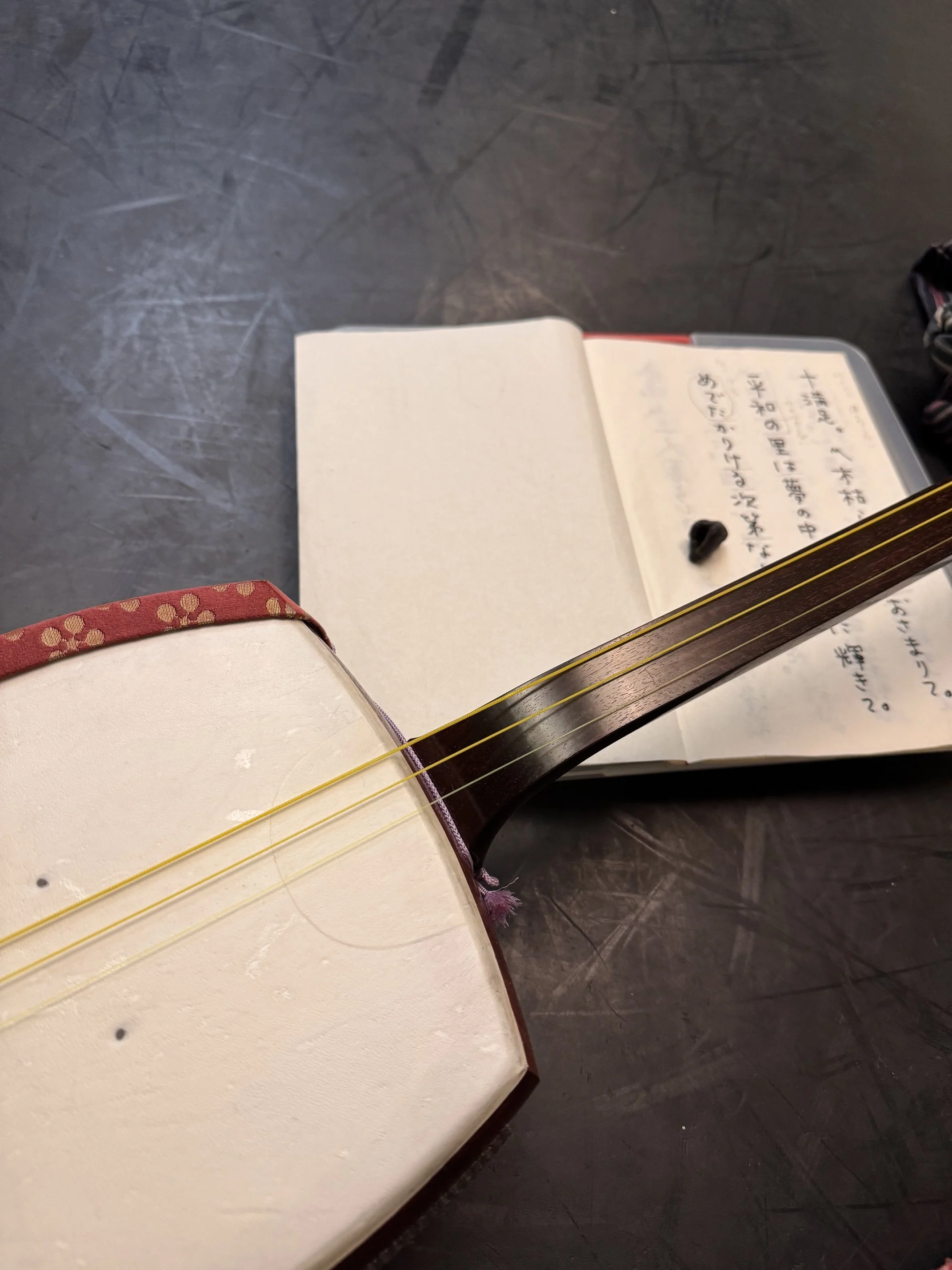
05.08.2026 - Floor Matters 床事情 (New York City, USA)
In this town, it is not easy to find a space where I can make noise. But even more difficult is finding a space where I can sit on the floor.
The practice rooms at the conservatory are made for all kinds of instruments to make sound. But since you're expected to play either sitting in a chair or standing, the rooms are meant to be used with your shoes on. Even if there's a carpet, the thought of sitting directly on it is terrifying.
And a room designed for people sitting in chairs is naturally arranged around the height of a chair — the proportions of the room, the furniture, everything. So if I insist on sitting on the floor in a room like that, I never quite sit right. Literally.
Every time I feel this awkwardness, this sense of not quite having a place for myself, I quietly think: ah, I come from a different culture.
Even now that chairs, sofas, and beds have become common for us too, we — the people of the floor/tatami tribe — want to sit on the floor whenever we get the chance.
But in this city, I rarely encounter a floor I actually want to sit on — that bottom surface of a room.
The floor tribe casts an extraordinarily critical eye on floors. To sit directly on the floor means allowing our bodies — parts other than the feet, our usual points of contact with the ground — to touch it completely. The standard of cleanliness we demand from a floor is something the chair tribe simply cannot understand.
The chair tribe does not seem to possess that bodily instinct with which we "judge" a floor: that small wave of disgust rising from somewhere deep inside the body as we think,
Oh. I can't sit here.
Even when they do possess some version of this instinct, their range of tolerance is so much wider that the floor tribe is left bewildered.
*Wait. You're sitting there? Right there, where you were just walking around in your shoes?*
A beautifully polished floor you can step onto after taking off your shoes — or, better still, a spotlessly swept tatami room — is almost impossible to find in this town.
After a long struggle, I finally realized that there was such a thing as a dance floor. Dancers lie down and somersault on it, so at least it is a floor designed with the understanding that parts of the body other than the feet will come into contact with it.
So today, I'm practicing alone in a small room with a dance floor.
Even though it's a dance floor, I'm still slightly suspicious of how "clean" it really is. I spread out a thin blanket and sit on top of it. The whole setup looks rather pathetic, but what else can I do? I have to live in this town, after all.
I hesitate to put the shamisen directly on the floor, so I spread out a tenugui beneath it. I make sure the shamisen's skin never touches the floor, keeping the tenjin — the head of the instrument — raised.
I even feel a little sorry for Stone, who has come along to my practice, at the thought of placing it directly on the floor.
The traditional art I'm about to practice was never, it seems, an especially high-class form of entertainment. It passed through places of entertainment, moved through the clamor of the streets, and must have survived all this time mingling with its share of the world's dust and grime.
And yet, somehow, I feel that this art, when it truly blooms, blooms on a beautifully ordered, spotless tatami floor, or on a floor polished clean.
If there is one particularly curious thing about the country I grew up in, it may be this almost alien sense of floor-consciousness, floor-hygiene, floor-aesthetics — a bodily sensibility that is remarkably difficult to explain to someone who grew up somewhere else.
These days, this floor-aesthetic, this kind of traditional sense of space, continues to fade even in the place where I grew up.
Will it eventually disappear?
And yet, perhaps preserving and passing on this sensibility is the same thing as preserving and passing on this art.
Don't you think?
I said this to Stone.
And then I noticed how well Stone suits a place like that.
Of course, Stone can just as easily mingle with the muddy current of the streets and become part of it in an instant.
But at the same time, Stone suits a neat, orderly place.
Or rather, simply by being there, Stone seemed to fill this worn-out underground room with the still, purified air of a Zen meditation room.
Feeling this, I straightened my back once more in seiza.
この街では音を出せる場所を探すのも一苦労だけれど、それにも増して、地面に座ることのできる場所を探すのは至難の業だ。音楽院の練習室はいろんな楽器が音を出して良いようになっているが、椅子に座るか、立って演奏することが想定されているから、床は靴のまま入るようにできていて、カーペットが敷いてあったとしても、とても恐ろしくて直に座ることなどできない。しかも、椅子に座るために作られた部屋というのは、当然部屋のバランスや調度が椅子に座った高さに合わせて作られているから、そんな部屋で無理無理に床に座ると、どうも座りが悪い(文字通り)。この座りの悪さ、居場所のない感じを覚えるたびに、ああ、私は別の文化圏からやってきたのだなあ、とそっと思う。
椅子やソファー、ベッドが普通になった今でも、床/畳部族出身の我々は、隙を見ては床に座りたい。しかし、この街では座りたいと思えるような床、つまり部屋の下面の部分に出会うことは、滅多にない。
床族の床に対する視線の厳しさは、タダモノではない。そこに直に座る、ということは、直に自分の体(足という接地面以外の)がもろに触れるということで、そこにわれわれが求める清潔さの尺度は、椅子族のひとびとには全く理解されないものの一つだ。椅子族には、その「あ、ここは座れないな」と、我々が体の奥底から登る一種の嫌悪と共に床を「判断」する、その感覚そのものが、ない。あったとしても、許容範囲が逆に広すぎて、床族は面食らう。「え? そこに座るの? さっきまで靴で歩いていた、そこに?」
靴を脱いで上がれる磨き上げられた床や、ましてや、掃き清められた畳の部屋など、この街で見つけることはできない。長い間苦悩した挙句、かろうじてダンスフロアというのがあることに気づいた。ここはダンサーが寝転んだり、でんぐり返ったりするため、足以外の体が接地する目的で作られている。
今日は一人で、小さなダンスフロアの部屋で稽古というわけだ。ダンスフロアとはいえ、本当に「きれい」なのかはやや不安だ。薄いブランケットを敷いて、その上に座ってみる。なんだかとてもみすぼらしい形になるが、背に腹は変えられず。私はともあれ、この街で生きていくしかない。三味線を直に置くのはなんとなく躊躇われて、手ぬぐいをひく。皮は決して下につかないように天神を高くして。稽古のお供についてきた「石」すら、フロアに直に置いてはかわいそうな気がした。
私がこれから稽古しようという芸能は、もともとそれほど高尚なものではなかったようだし、遊興の場を流したり、巷の喧騒に揉まれたり、それなりに世の中の塵芥とまみれながら続いてきたものだっただろう。それでもなお、美しく整った、塵ひとつない畳の上や、清く磨き上げられた床の上に、この芸は咲くように思う。私が育った国に何かひとつ面白い部分があるとしたら、この宇宙人的な床感覚、床衛生、床美学、とでもいうもので、この体感はなかなか他のところで育った人には伝えられない。昨今、この床美学や、一種の伝統的な空間美意識のようなものは、私が育ったところでも、薄まり続けている。やがて、それは、消えてしまうのだろうか。
どうやら、しかし、そこを守ったり、伝えようとすることと、この芸を守ったり、伝えようとすることは同じなのかもしれないね。そんなことを「石」に話しかけながら、「石」はそういう場所がよく似合うことに気づく。いや、もちろん、石は巷の濁流にもすぐに交わり、その一部となれる。同時に、石は端正な場所も似合う、というか、そこにそれがいるだけで、使い古されたダンスフロアの地下の部屋が、清浄な禅室の空気に満たされていくような、不思議な感覚を覚えて、もう一度、正座の背筋を伸ばしてみた。
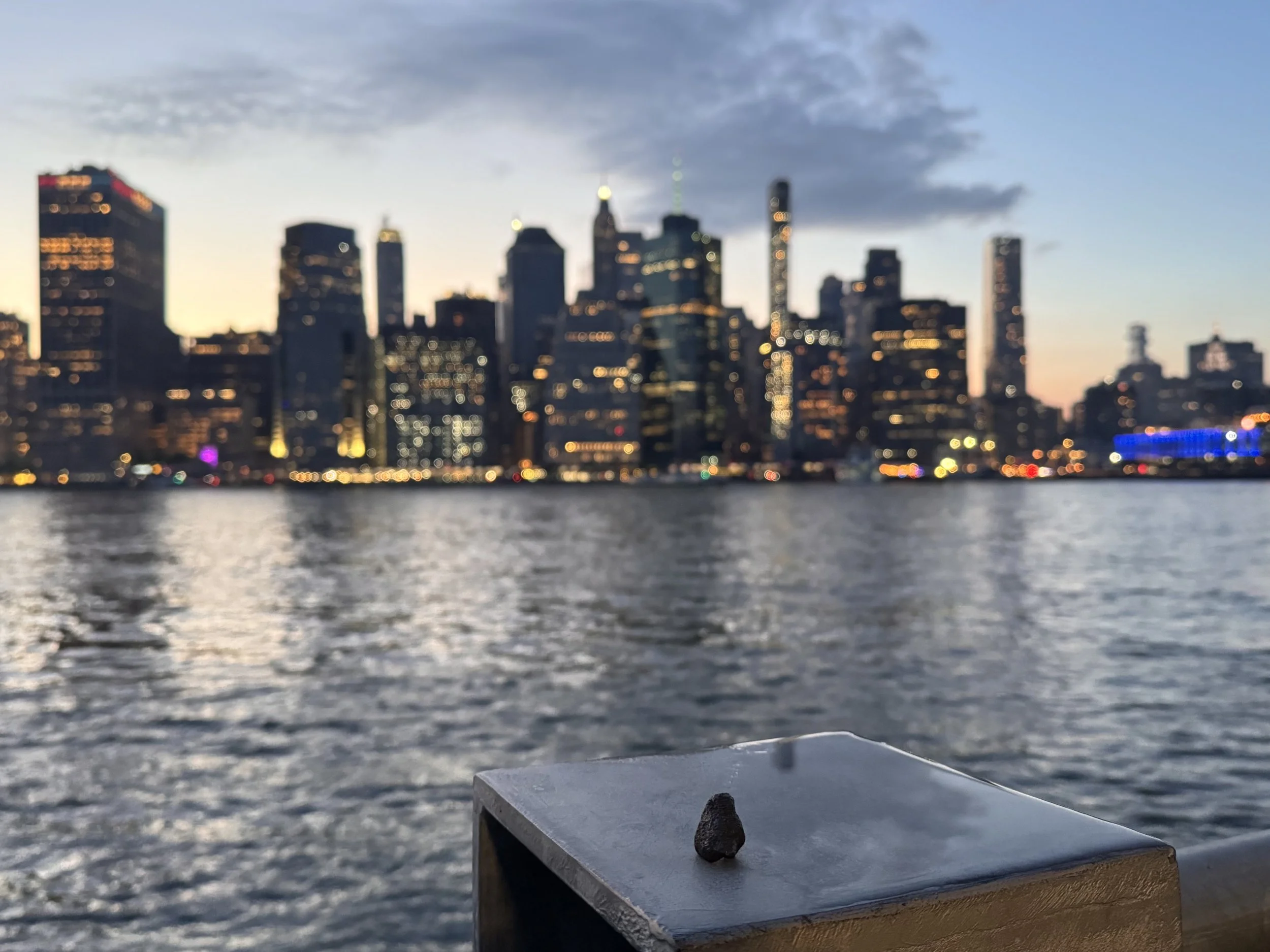
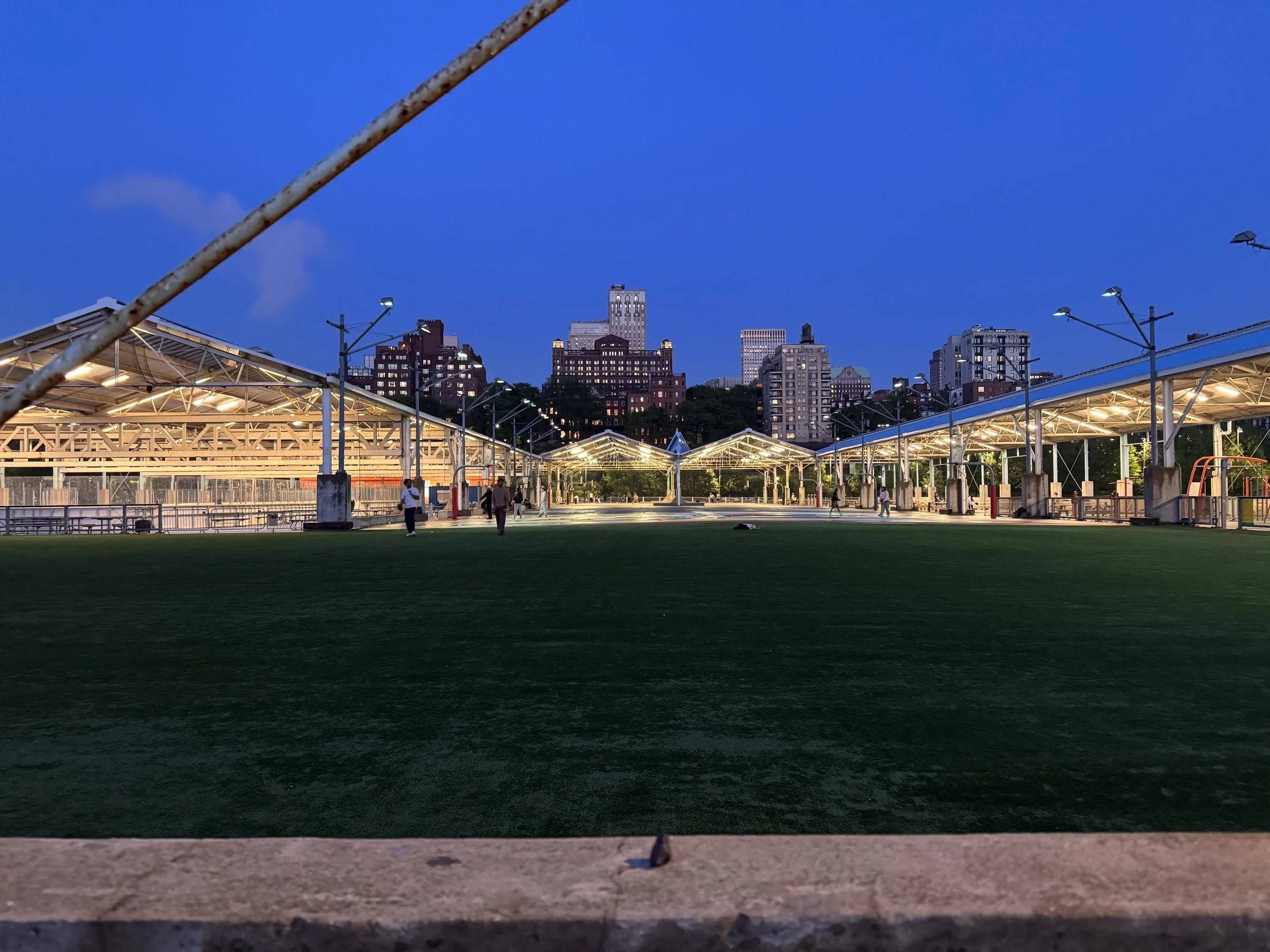
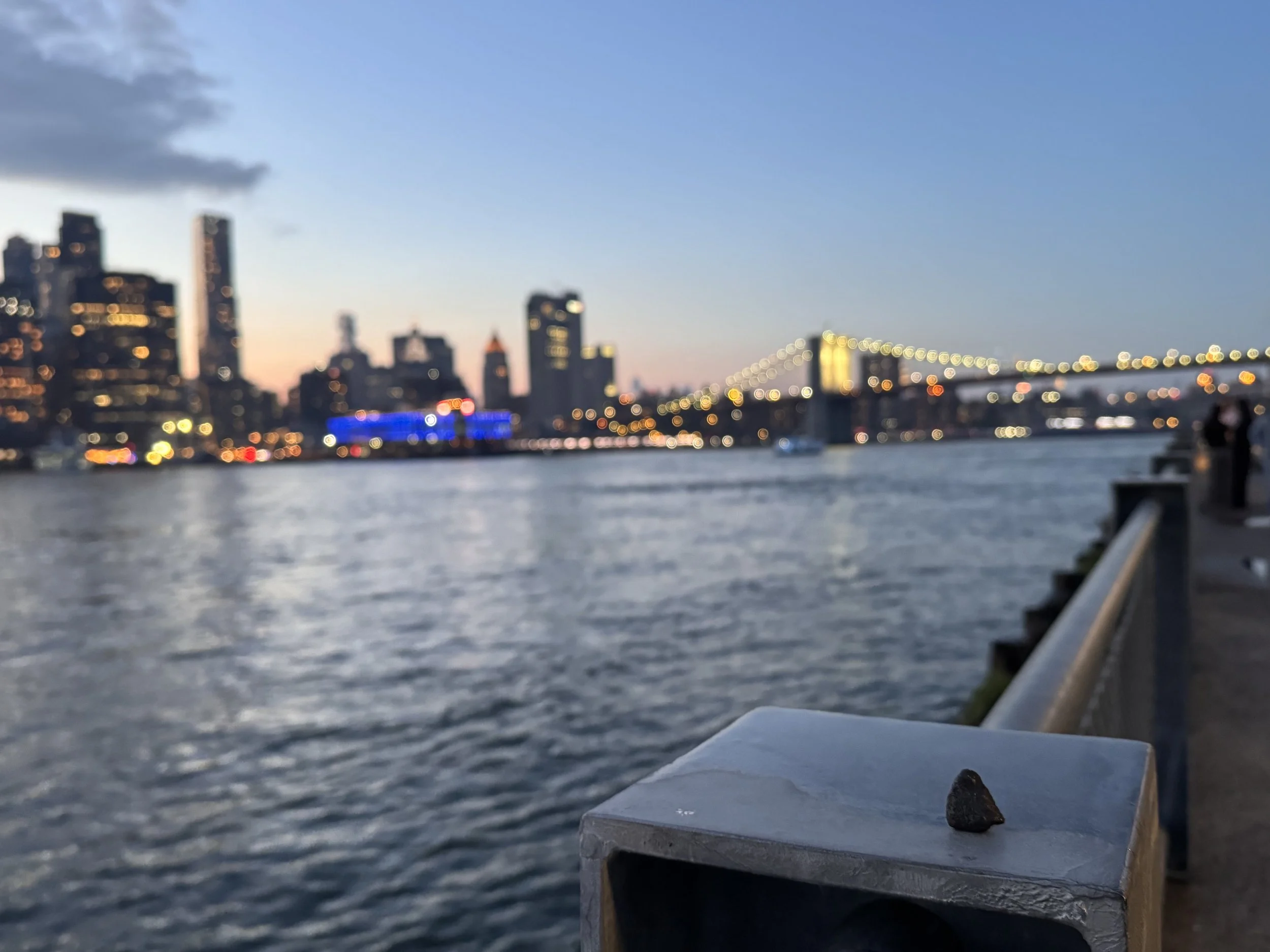
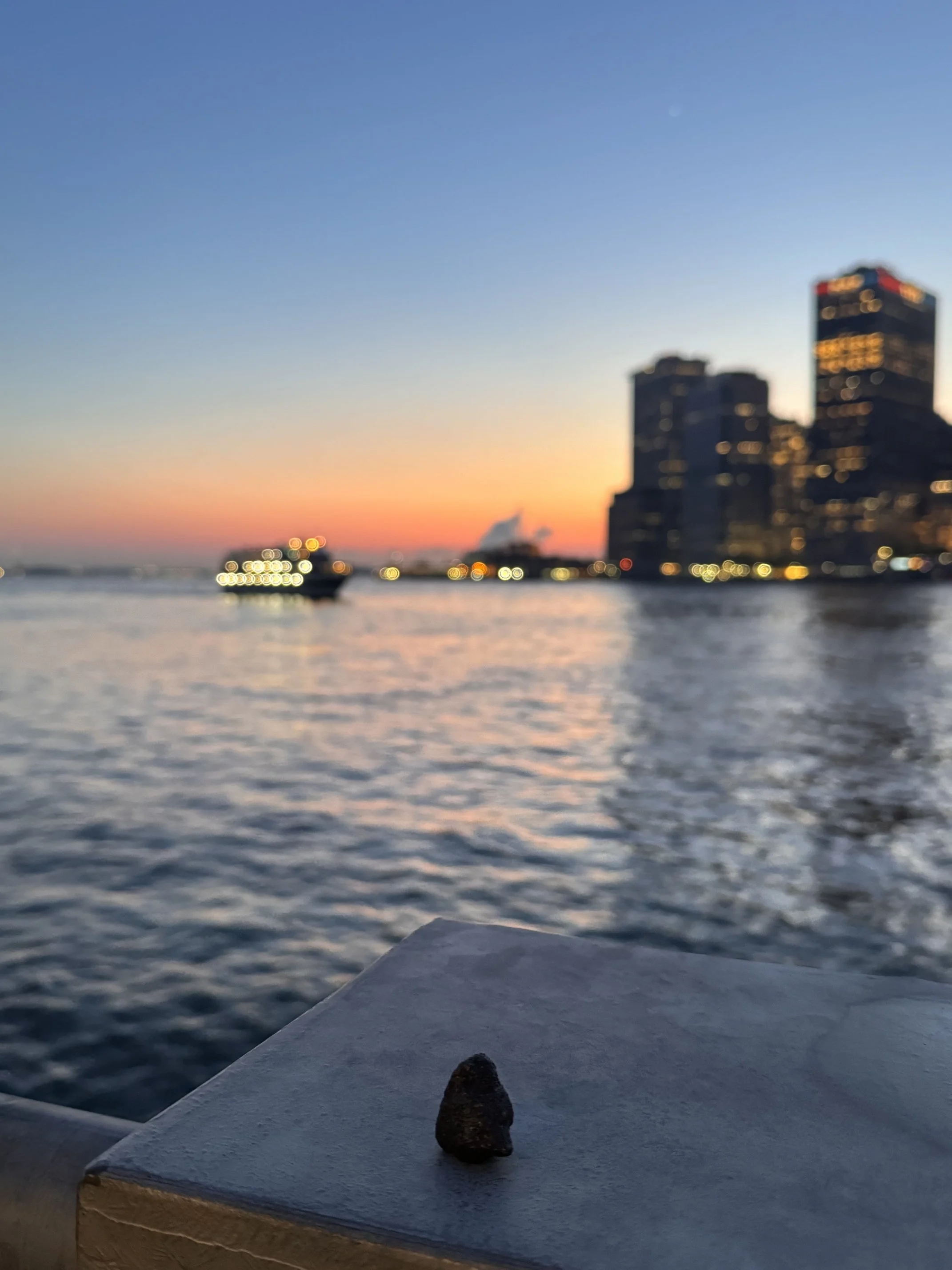
05.09.2026 - Take a walk 散歩 (New York City, USA)
Suddenly, I realized I hadn't done anything. I'd meant to show Stone the city after it arrived in this town. In this town there's a huge statue representing "liberty," a skyscraper with a lookout deck, the square where the countdown happens at the end of the year — famous places like these are always in the guidebook. We should have taken "souvenir photos" at these places. And while we were at it, posted them instantly on one of those "boards" everyone looks at, so people could see them right away. Wait, though — would that really be proof that Stone had truly "been" here?
I might have been a failed city guide from the very beginning. Thinking back, the friend who came all the way to visit me in Antwerp, where I used to live, screamed, "Feed me meat!" after I served her nothing but vegetable soup with no meat in it. Another friend said, "I really want to see the statue from A Dog of Flanders," and I talked her out of it, telling her it wasn't worth the trip, a waste of time. (In the end, we went all the way out to the suburbs to see it anyway. Back then, the statue of Nello and Patrasche was very, very small, and a little sad.)
When a visitor said, "I want to eat something this place is famous for," I could have just taken them to a popular steakhouse, a burger joint, or a hot dog stand. Instead, I'd tell them that some strange, mysterious little restaurant down a side alley was more interesting, and drag them along on a long, wandering walk. (In fact, I wouldn't even remember exactly where the restaurant was myself. A failed city guide also tends to have a terrible sense of direction.) And when we finally arrived, it would be closed — or, worse, no longer there.
My friends, who'd traveled all this way to visit my town, walked until their legs turned to sticks, missed the famous sights, missed out on the famous food, and ended up settling for some perfectly ordinary meal we found nearby, all while listening to long, useless interpretations of the city that existed nowhere but inside their guide's head — and then they had to leave town.
Even though, for them, this may have been a once-in-a-lifetime visit.
With a tour guide like me, Stone probably never expected the usual kind of sightseeing to begin with. Or rather, Stone probably didn't expect anything at all.
But strangely enough, knowing the day will soon come when Stone leaves this town, I feel a small ache in my chest — something between regret and self-reproach, the kind even a failed city guide feels in her own way. I could, starting today, throw myself into it and do a tour-bus version of sightseeing, cramming it all in at once — but I really couldn't do that to Stone.
Stone, for its part, seemed perfectly content to laze around the apartment, with no particular need to see anything famous in this town or take selfies.
Okay. Then, let's take a walk.
The usual way. Nothing special.
Well — actually, this path isn't so bad.
This waterfront park has a full view of the city. Tourists from all over the world come here just to photograph this view. They take souvenir photos. They strike stylish poses. Because everyone wants to announce that they're standing right here, in this exact spot that people all over the world would instantly recognize — Oh, you went there! Reaching this place is probably something to feel quite proud of.
The city, seen from here, really is interesting.
But it's also a bit like a pile of toy blocks, quickly stacked together after being dumped out of the toy box. If this is a place that symbolizes one of the peaks of human civilization, then, surprisingly, it's not all that surprising.
Human beings tried, and tried so hard — agonized, struggled, fought — and then said, Here you are. This is something like the leader of the world.
And this is it?
What counts as "advanced" turns out to be something measured in money. It's far from any utopia where everyone is happy. Beauty itself winks at wads of cash, while fat rats chase one another along the subway tracks. Shouting fills the air, fear still hasn't gone away, and a slow, grinding friction wears people down, day after day.
But the sunset over this waterfront is truly beautiful.
A day with clouds, a day without them, a hot day, a freezing winter day — every one of them, in its own way, surprisingly beautiful.
The park is full of people playing soccer, people simply gathered together and lying around, children playing some game I couldn't even name, people with dogs, people running.
Seen like this, humans aren't so bad after all.
Humanity tried, and tried, and this is as far as it got. As its representative (hey, when did I become the representative?), I felt a little sorry for Stone.
But still — taking a walk together like this, one evening at sunset, isn't so bad, is it?
Maybe this town has some good in it too.
Let's watch that sunset together.
Walking together through this town, watching today's sun go down together — maybe it doesn't mean anything at all.
But wasn't it, somehow, a nice thing for the soul?
Naturally, I got a little sentimental.
Stone might not remember that we watched the sunset together in this town.
But I remember.
I'll remember, until I'm gone.
At the threshold of night, as everything fell into blue, Stone let the evening wind touch it, saying nothing.
Perhaps it was gazing into the distance.
急に、何もしていないことに気づいた。「石」がこの街に来てから、いろんな場所を見せてあげるつもりだった。この街には、大きな「自由」の銅像や、展望台のある摩天楼や、年末にカウントダウンが行われる広場など、ガイドブックには必ず載っている名所がいくつもある。そうした場所で「記念写真」を撮ればよかった。ついでに、そいつをみんながすぐに見るような「板」に、即座に投稿すらすればよかった。いやまて、本当にそれが石がここに「いた」ことの印になるのだろうか。
観光案内人としては、私は元来失格者なのかもしれない。思い起こしてみると、かつて住んでいたアントワープを訪ねてくれた友人には肉の入っていない野菜スープばかりを供して「肉を食べさせろ!」と叫ばせたし、また別の友人が「ぜひ、フランダースの犬の像が見たい」というのを、そんなのはくだらないからやめておいた方がよいと説得したり(結局、われわれは町外れまでそれを見に行った。その当時のネロとパトラッシュの像は、とても、とても小さく寂しいものだった)、来訪者が「この街で有名な食べ物を食べたい」という時に、人気のステーキ店やハンバーガー、ホットドックくらいを勧めておけばよいものを、いや、それよりも、こっちの脇道を入ったところにある、一風変わった謎の店の方が、、、などと友人をぐるぐると長時間歩かせやっと辿り着くと(じつは自分でも、その場所をよく覚えていなかったりもする。街案内失格者は、方向音痴でもある)、その店が定休日だったり、さらには、もうその店がそこになかったりする。遠くからわざわざ私の街にやってきた友人たちは、足だけは棒になるほど歩かされ、名所は見損ね、名物は食べ損ね、しょうがないので近場で探した店のごく普通の食事に甘んじ、案内人の主観でしかないどうでもいい解釈を長々と聞かされて、この街を去ることになる。それが、彼らにとっては、一生に一度の、この街への訪問だったかもしれないのに。
こんな調子なので、「石」も普通の観光などは、はじめから期待していなかったかもしれない。というか、石はたぶん、何も期待などしていなかった。それでも不思議なもので、もう少しでこの街を去る時がくるとなると、ああ、どこにも連れていってあげられなかった、この街を見せてあげられなかったという、失格者には失格者なりの、後悔とも自責ともつかぬ何かで、チリチリと心が痛む。ならば、今日から発奮して、ツアーバスのように、あちこち連れ回して観光を消化すればよいようなものを、やはり、そんなことを「石」にすることはできなかった。「石」もまた、別にこの街の有名な何かを見る必要もないし、セルフィーを撮る必要もない、という具合で、アパートでごろごろを決め込んでいるようだった。
それならば。散歩に行こう。いつも行く道。全然特別じゃないけれど。いやまて、この道も結構いけるじゃないか。この水辺の公園からは、この街が一望できる。この風景をカメラに収めようと、世界中から観光客が集まる。記念写真を撮る。洒落たポーズで映る。世界中の誰もが、ああ、あそこにいったのか! と分かるような場所に自分がいることを、みんなに宣伝したいから。そこに到達したことが、たぶん、何かすごく誇れることだから。
確かに、ここから見る街は、面白い。でも、それは、おもちゃ箱をひっくり返して、ちょっと整えて積み上げたブロック遊びの一片のようでもあって、ここが人類の文明の一つの頂点を象徴するような場所であるとしたら、意外と驚くほどのものではなかったりもする。人類が、頑張って、頑張って、いろいろ苦悩して、闘って、はい、ここが世界のリーダー的な何かですよ、と出してきたものがこれだとすると、ちょっと驚く。先端だというものは、金銭に換算される何かだったり、みんなが幸せなどというユートピアからは程遠く、美さえも札束と目配せして、線路には丸々と肥えたドブネズミが追いかけっこ。怒号は飛び交い、未だ恐怖は消えず、ジリジリとした摩擦がひとびとを日々摩耗させている。
この水辺の夕焼けは、しかし本当に美しい。雲のある日、ない日、暑い日、冬の凍るような日、そのどれもが、それなりに、驚くほどに、美しい。公園ではサッカーをしている人や、単に集まって寝転んでいる人、なんの遊びか分からない遊びをしている子どもたち、犬を連れている人や、走っている人。こうしてみると、人間もそれほど悪くない。
頑張って、頑張って、この程度であるという人類の代表として(おい、いつから代表になったんだい)、石には申し訳ないような気持ちにもなるが、それでも、こうやってある日の夕暮れに、一緒に散歩するのは悪くないんじゃない。この街にも、何か良さってものがあるんじゃない。あの夕暮れを一緒に見ようか。こうやって、一緒にこの街で散歩したり、落ちていく今日の陽を一緒に見たことは、別に意味がないとしても、それは魂にとっては、ステキなことだったんじゃない?
もちろん、私は少しセンチメンタルな気持ちになった。石は私と一緒にこの街で夕陽を見たことを覚えていてくれないかもしれない。でも、私は覚えている。私がいなくなるまでは、そのことを覚えているだろう。
石は、蒼に落ちていく夜の入り口で、何も言わずに風に吹かれていた。
遠くを、見つめていたかもしれない。
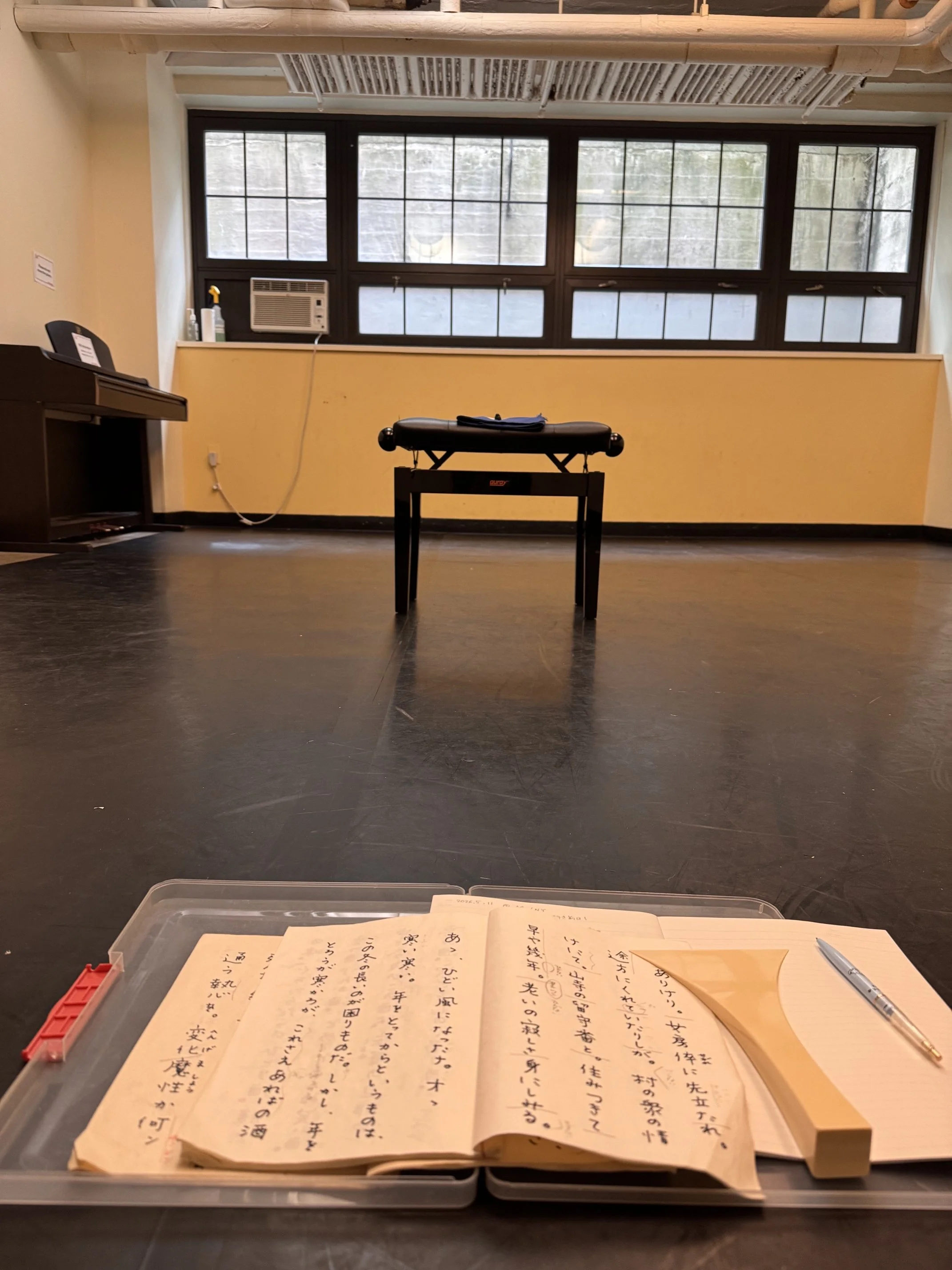
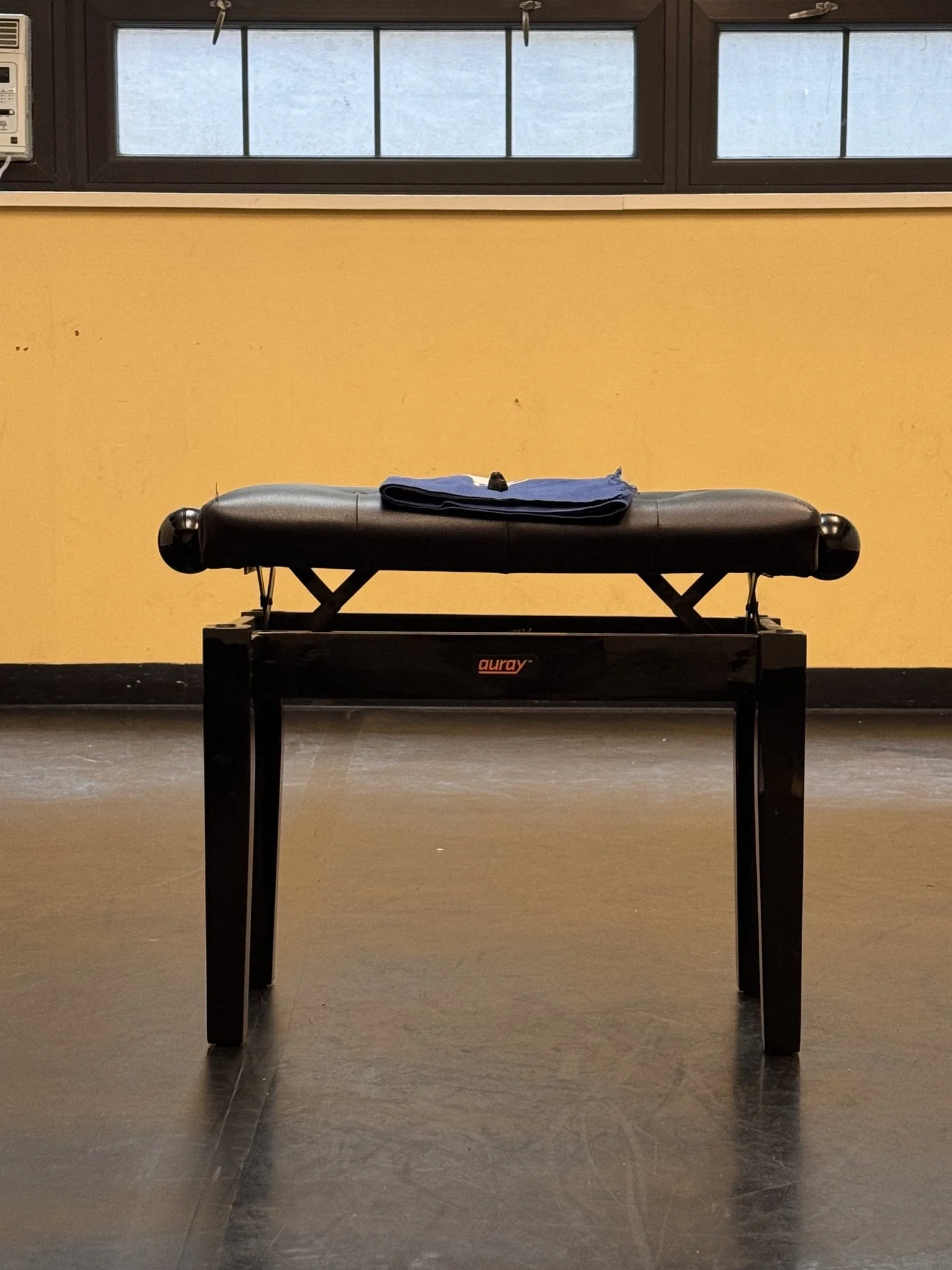
05.11.2026 - Master 師匠 (New York City, USA)
I have met many “Masters” in my life. In reality, some of them were people called “teachers,” others “professors.” My Master in composition was a Belgian woman, and I can’t forget the moment she turned from an ordinary professor into a Master.
I was staying overnight at school — though “school” was really the professor’s home and studio — wrestling with composition software as I rushed to finish my graduation project. It must have been sometime past 2 AM. Suddenly, the professor appeared in the studio.
“Let me hear it.”
I nervously played the piece I was working on.
“Not bad. But there’s a mistake, right here.”
She pointed to one spot in the waveform on the screen.
I listened to that spot again and again.
Sure enough, I began to hear a tiny gap, barely audible — about 0.01 seconds.
“I’ll fix it.”
Hearing that, she smiled and disappeared into her own composition studio.
To work on her own piece.
Past 2 AM!
I was floored. Even for someone as young as I was then, staying up past 2 AM was hard enough. What kind of passion for sound must have been running through her veins!
Perhaps that was the moment she became my eternal Master.
Even now, decades later, I still recall that moment from time to time. Or rather, that moment is still alive within me.
Whether you line up your shoes neatly when no one is watching. Whether you rest your elbows on the table when you eat alone. In gei — one's art — even the parts of everyday life that never appear onstage show through. Isn't that terrifying?
I met my current Master more than a decade ago. He is a master of a traditional performing art, so he probably fits the ordinary image of a Master better than anyone else I’ve met. His studio is in an old house, something like a traditional nagaya, and sometimes when I go for a lesson, he is dressed casually in kimono.
A shisho is different from a teacher or an instructor.
What’s the difference?
A shisho shows no mercy.
A Master is something to be grateful for. The only person who still scolds you once you’re an adult is probably your Master. (Of course, being scolded still gets me down, and sometimes leaves me a little resentful.)
A Master also proposes a roundabout journey — the kind of detour I could never manage on my own. If you’re the type who wants a more rational, quicker solution, a creature called Master might not be the right fit for you.
You follow the Master’s back, silently.
A journey of patience.
When I’m about to give up, a sharp word of encouragement comes flying at me. And from time to time, the Master suddenly opens a door in some unexpected place and shows me an astonishing landscape.
The view you get from a shortcut may look a lot like the view that appears only after a long detour.
But apparently, they’re not quite the same.
Practicing alone in this town is, I think, a little lonelier than practicing alone back in that town. Things like tatami, shoji, and zabuton — things that naturally support the atmosphere of traditional practice back home — are hardly to be found within a hundred-kilometer radius here. People who would hear my instrument and say, "Ah, of course — the old sounds really do touch the heart," are rare in this city.
The theatre group rehearsing in the next room might well be frowning, thinking some foreign music — or perhaps just some strange noise — is coming through the wall.
Feeling my resolve start to falter, I asked Stone for help.
Will you watch my rehearsal?
No — would you, please?
Stone became my audience and stayed with me through an hour-long run-through.
Okay. Today, I’m serious. Today’s practice will be just like the real thing. I’ll take the proper pauses, go through the whole hour-long piece, and not stop halfway.
The place was the same as before — the semi-basement dance floor under dim fluorescent lights.
But today, something was different.
There was an audience.
I calmed my mind and stepped onto the “stage.”
If this were the real performance, this would be the moment when my heartbeat grew loud enough for me to hear it.
And it’s always the moment when I want to ask myself:
Ugh. Why am I putting myself through something this hard?
My palms weren’t sweaty the way they would be in a real performance. But this was also different from my usual loose, half-hearted solo practice.
I was being watched.
The whole time.
By something breathing there.
Someone who wasn’t me.
From the heart, using the fullest voice I could manage, I told the story and played the instrument.
Partway through, my voice started to go hoarse. I began to falter.
Should I take a break?
No. I couldn’t.
I had an audience now.
Sweat beaded on my forehead, and my cheeks flushed.
With everything I had, I tried to bring the time of the story into being.
Feeling the presence of the “audience.”
Reaching toward its “soul.”
Stone sat a little apart, watching me from a slightly higher spot the whole time.
Stone was just one small black dot.
But something other than me seemed to be tightly concentrated there — perhaps the audience, perhaps some second presence in this world.
It watched my every small movement with an unusually stern bearing, almost like my Master.
As if all the time I had spent walking behind my Master had been concentrated into that single black point.
I played the last note and slowly lowered the bachi.
The performance wasn’t perfect.
Still, guided by the feeling that Stone was there, watching me, I somehow made it through the whole hour.
Then I realized that whenever I perform, even when it isn’t as clear as it was today, I always carry this feeling of someone there, watching me.
So that’s what a Master has always been.
Relieved to have made it through, I looked at Stone.
And I heard my Master’s voice from the last time we met.
“Off you go — just go for it!”
At that moment, an idea suddenly came to me.
これまで私は、何人もの「師匠」に出会った。実際にはそれは「先生」と呼ばれる人だったり「教授」と呼ばれるような人だったりもした。作曲を習った「師匠」はベルギー人の女性だったが、この人が単なる教授ではなくて「師匠」に変わった瞬間は忘れられない。学校(といっても、それは教授の自宅兼スタジオだったが)に泊まり込み、作曲ソフトと睨めっこをして卒業制作の追い込みをしていた時、深夜2時過ぎくらいだっただろうか。突然、教授がスタジオにやってきて、
聴かせてちょうだい。
と言った。
私がおずおずと、作業中の曲を再生して聞かせると
なかなかいいわよ。でも、ここのところに、間違いがある。
そういって、楽曲デザインソフトの波形の一箇所を指差した。
何度も、そこを繰り返して聴く。
確かに、ほんの0.01秒くらいの、ギャップがかろうじて聴こえてきた。
はい、直します。
それをきいた教授は微笑んで、自分の作曲スタジオに消えていった。これから作曲するために。深夜の2時過ぎに!
私は度肝を抜かれてしまった。若者の私すら、深夜の2時はきついのに。音へのいかなるパッションが彼女の血管に流れているのだろう!
たぶん、その時、彼女は私の中で永遠の師匠になった。
何十年も経った今でも、時折、その瞬間のことを思い出す。というか、その時間は私の中で生きている。
誰も見ていないところで、履物を揃えるかどうか。または、一人きりでご飯を食べている時にも、肘をついたりしないか。「芸」というものには、そういう舞台からは見えない日常の暮らしまでが出てしまう、というのだから恐ろしい。
今の師匠に出会ったのは、もう十数年前のことだ。伝統芸能の師匠で、今まで会ったどの「師匠」よりも、一番普通の意味で師匠っぽいかもしれない。昔風の長屋のような古い家屋を稽古所にしていて、時々、稽古に行くと着流し姿だったりする。師匠というのは、先生とも、インストラクターとも違う。何が違う? 容赦がない。
師匠、というものは、ありがたい。大人になって叱ってくれるのなんて師匠くらいだし(もちろん、叱られたら凹むし、恨めしく思ったりもする)、一人だったら、とってもできないような遠回りの旅路を提案してくれる。もっと合理的で、手っ取り早い方法はないんですか、という人には「師匠」という生物との付き合いは向かないかもしれない。背中を追って、黙々とついてゆく。辛抱強い旅。挫けそうになると、檄が飛ぶ。そして時々、師匠は思わぬ場所で突如扉を開けて、驚くような風景を見せてくれる。近道して見る景色は、遠回りしてようやく到達した時に出現する景色とは似ているようで実は違うらしい。
この街での一人稽古は、たぶん、あの街での一人稽古よりも、少しだけ孤独だ。稽古の和の風情を当たり前に支えてくれる「畳」「障子」「座布団」などというものは、半径100キロ以内にもあるかなきか。私が奏でる楽器を「やっぱり、昔の音は心に染みる」などと懐かしがる人とて滅多に見当たらない。何か異国の音楽、ひょっとしたら奇妙な雑音が隣室から聞こえてくるな、と、隣の部屋で稽古している劇団員は眉を顰めているかもしれぬ。
挫けそうな心を奮い立たせ、「石」に頼み込んでみる。
そこで、私の稽古を見ていてくれるかな。いや、くださいますか?
石は、私の観客となり、一時間の通し稽古につきあってくれた。
よし。今日は本気だ。今日の稽古は、本番と同じようにやる。ちゃんと間を取って、約一時間の舞台を、途中で止めずにいく。場所はこの前と同じ、薄暗い蛍光灯がついた半地下のダンスフロア。でも、今日は何かが違う。観客がそこにいるからだ。
心を鎮めて、「舞台」へ上がる。本番なら、心臓の鼓動が聞こえるくらい大きくなっているタイミング。そしていつも、
あーあ、なんで私はこんな辛いことを、わざわざしているのかな
と自問自答したくなるタイミングだ。もちろん、本番のように手汗をかいたりはまだしない。でも、気が抜けてしまういつもの一人稽古とも今日は違う。ずっと、みられている。そこに息づいている、私ではない、誰かに。
心をこめ、今自分が出せる限りの声で語り、
楽器を奏でた。
途中で、声が枯れそうになって、ヘタりそうになる。休もうか、いや、それはできない。
私には今、観客がいるのだから。
額には汗が滲み出て、頬は紅潮した。
物語の時間を、必死で立ち上がらせていく。
「観客」の気配を感じながら。
その「心」へ向かって。
石は少し離れた、少し高いところから、私をずっと見下ろしていた。
石はぽつんとした、一つの黒い点ではあったが、
そこには、私ではないもの — それは、観客なのかもしれないし、この世界にいる、二つ目の存在なのかもしれない — がぎゅうっと凝縮されているみたいだった。それはいつになく厳しく、師匠のような居住まいでこちらの一挙一動を凝視しているようだった。
そこに、師匠と歩いてきた時間が全部入っているかのように。
最後の一音を弾いて、ゆっくりと撥をおろした。
完璧な演奏はできなかった。
それでも、石が「そこで見ていてくれる」という感覚に先導されて、なんとか一時間をやりきった。
そういえば、演奏する時には、これほど明確ではないにせよ、いつも「そこで見ていてくれる」という感覚が伴っていたことに気づく。そうか、師匠とは、いつだってそういうものだったのだ。
やり遂げた安堵で石を見ると、
思いきって、やっておいで。
という、この前会った時の師匠の声が聞こえた。
その時、ふと、あることを思いついた。
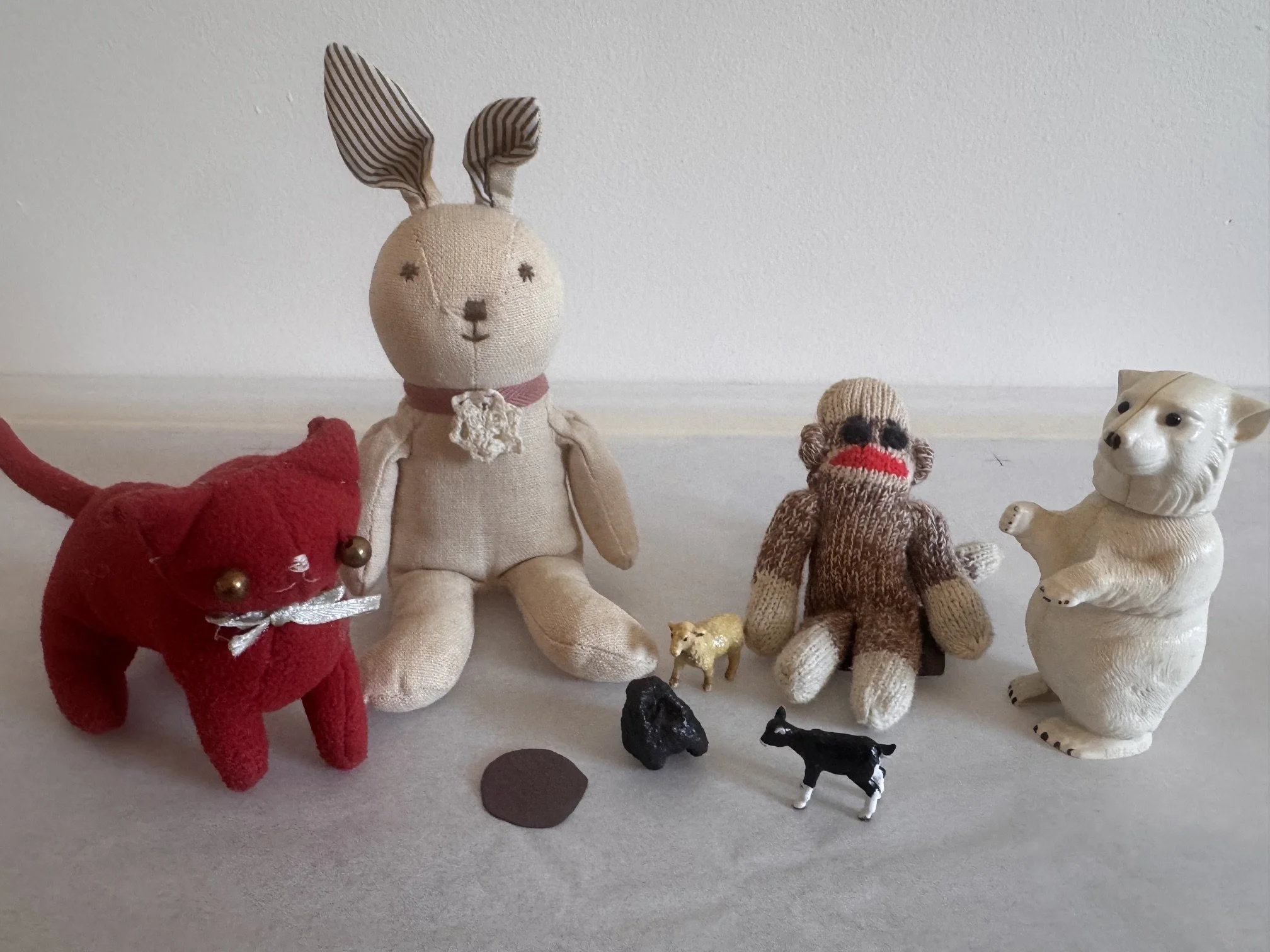
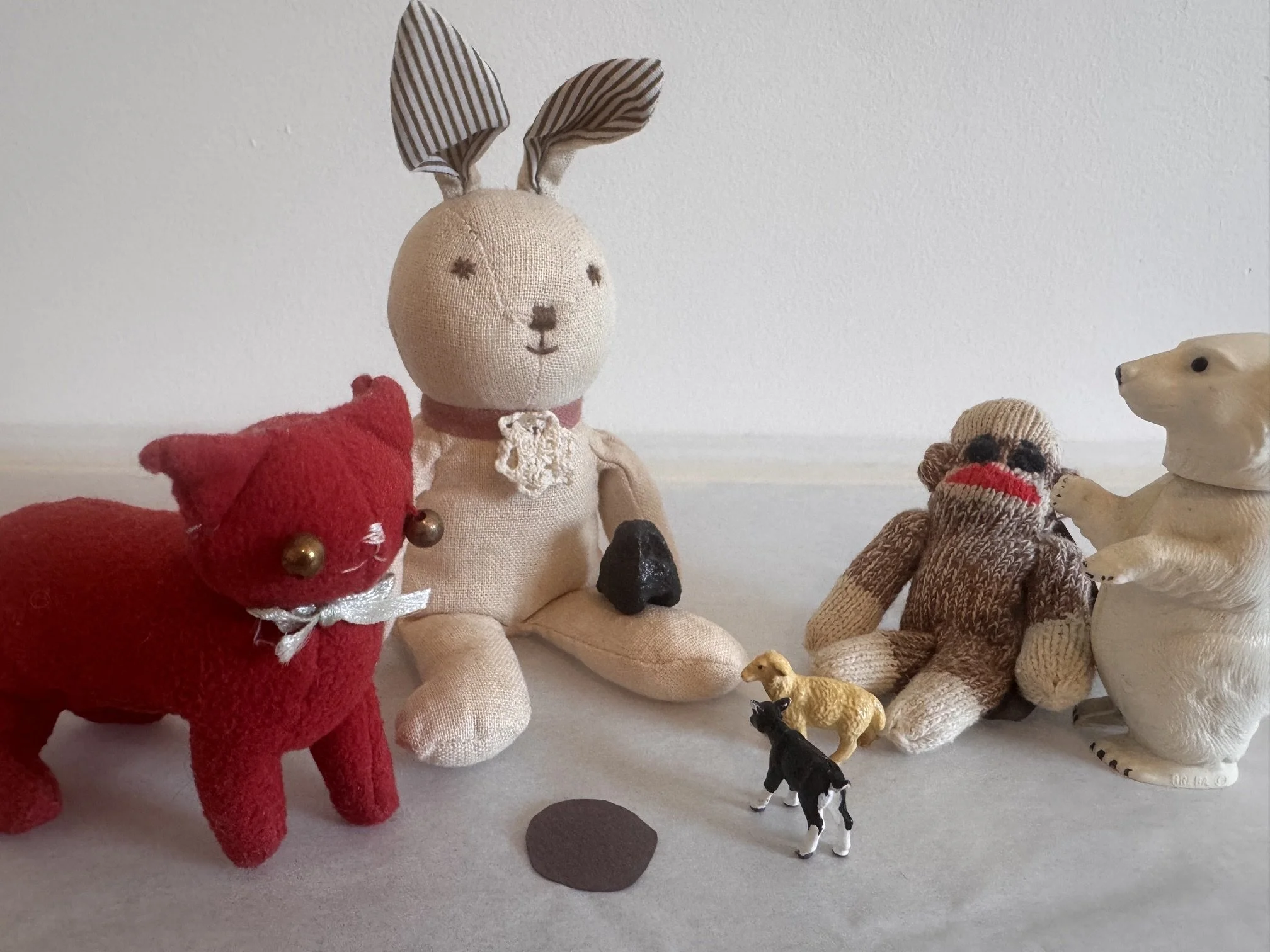
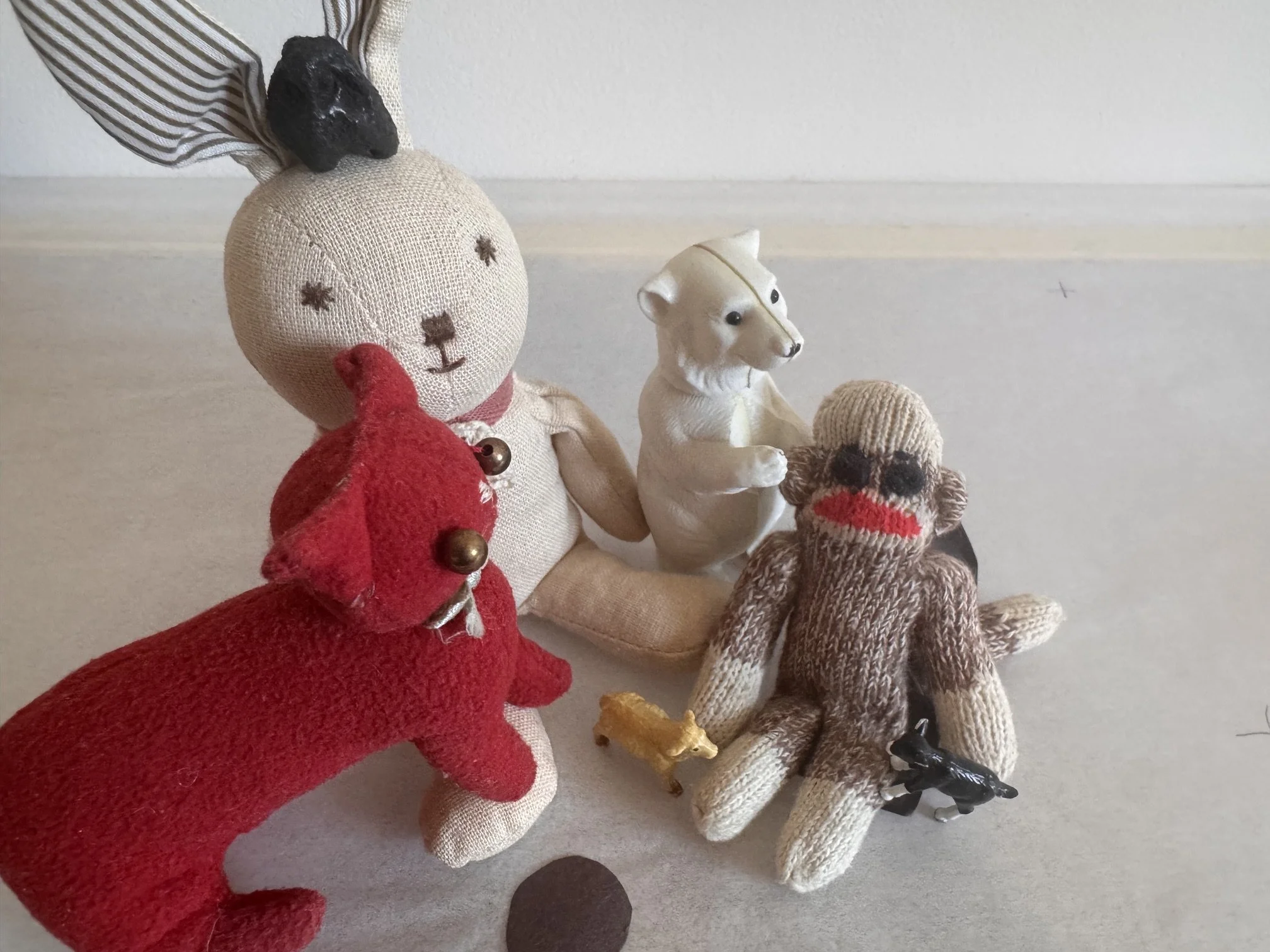
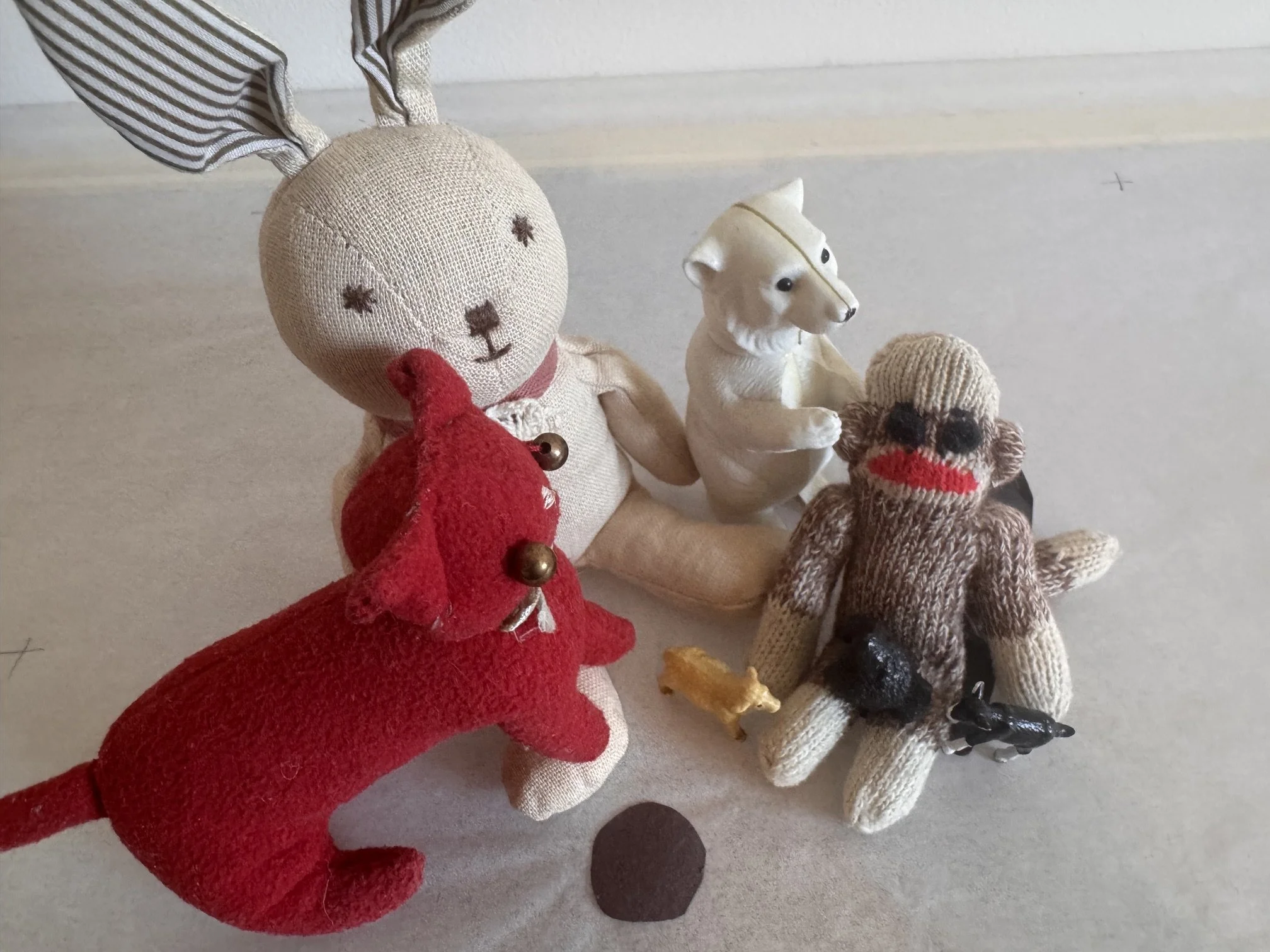
05.12.2026 - One of Us 仲間 (New York City, USA)
I don't belong to a company, and I don't have one of my own either. But I've had a "Lab" — meaning a laboratory — for a long time now.
This Lab wasn't something I decided to create. It simply formed on its own, one day.
Around that time, I was living in a town called Vancouver. There, I'd fallen into a kind of deep valley of life, barely breathing, day after day. While I was struggling to climb back out of that valley, I was given the chance to put on a small performance in a small gallery. The plan was that a girl who'd graduated from art college and I would make something together — something like a combination of images and sound. But partway through, the girl dropped out of the project, and suddenly I had to make something on my own.
I'd meant to climb out of the valley — and now an even deeper one?
Well. Now what?
At that moment, Sheep came to mind.
That very small figurine I'd encountered in a toy shop in Antwerp.
Around that time (and even now), I'd do things like place Sheep in front of a sky-blue Škoda miniature car — a souvenir from Berlin — or, since a large picture was too much trouble, tuck in a postcard instead, and make little "landscapes" like that on top of the bookshelf as a kind of decoration.
There was a very small toy car a friend gave me when I left Japan.
There was also a reptile that glowed in the dark once I turned off the light.
Before I knew it, this procession of things gathered from who-knows-where had grown long, lining up near the entrance of the story.
Because I'd been living a temporary, provisional kind of life for so long, I never had the chance to properly hang pictures on the wall, or gather furniture that matched my taste. I always kept my room minimal, so that I could pack up my things and move to another place easily. The room was more or less empty.
In that faded, slightly too-bare space, the world of these small things might have been the only colorful, heart-lifting place there was.
And if I had to move to another city, these guys could simply slip into my pocket and come along with me.
I've always admired smallness — the lightness of being small.
Sheep, too, came along with me from Antwerp to Vancouver.
That time, out of sheer desperation, I made a show with Sheep as the protagonist.
Or rather — it wasn't me who made that show. Sheep did.
Sheep made the story.
I asked Sheep
where it had come from, and where it wanted to go,
and did my best to convey its voice.
Sheep's journey surprised even me.
The audience applauded, thinking I'd made the story.
But that isn't the truth.
Since then, something changed, and I lost much of my interest in expressing myself directly.
And when I looked back on that first collaboration with Sheep, the Lab was already there.
The Lab is a place where things tell their own stories, in their own way, and I had the honor of becoming one of its members.
For now, I'm the only human in this Lab.
(Other humans sometimes join as guests.)
The members of the Lab are a kind of ensemble cast, and they appear in the works the Lab creates. But it's not like an ordinary theater company, where everyone turns up in every production. It's probably closer to a Robert Altman film — though actually, they appear even less than that.
Still, they live in the Lab, and whenever I'm about to let that particularly human ego of mine flare up, they cheerfully tug at my sleeve and pull me back onto the right path.
In recent years, an abstract member called Dot has joined the Lab too (it can appear anywhere), and the Lab's experiments have expanded further still, from the scale of molecules to the scale of the universe.
Still, only a few people know about this Lab.
The voices of small things don't carry far.
Even a lie, even a bluff, if it's big enough, gets noticed, and people somehow assume it must be impressive. Humans have a weakness for big things.
I don't know where or how he caught wind of such a small, faint voice, but Filip wrote to me a few years ago.
And that's how we became friends.
Stone warmed right up to them, before I'd even introduced it to each member individually.
What a moving Lab visit!
Of course they were curious, and they welcomed this new visitor. Still, they didn't treat Stone as an honored guest, and they didn't indulge in any sentimentality about this being a once-in-a-lifetime encounter.
In the end, Stone instantly became "One of Us."
With Stone on our side, we're as strong as a hundred men.
Even though Stone will leave this city soon, and we might never see each other again — being "one of us" is something else entirely.
Companions transcend space and time.
Here or there, near or far, we're still us.
The Lab lit up with excitement. The Lab was on fire.
There was one more of us!
There is no "goodbye" in our dictionary.
There is only
See you!
カンパニーには所属もしていないし、持ってもいないが、「ラボ」すなわち実験室というものはだいぶ前から持っている。
この「ラボ」は、立ち上げようと息まいてできたものではなく、ある時自然発生したのだった。
その頃はバンクーバーという街に住んでいた。そこで、人生の深い谷間のようなものに落下して、ようよう息をしているような日々を過ごしていた。なんとか谷から這いあがろうともがいている最中に、小さなギャラリーでパフォーマンスをやらせてもらえることになった。美術学校を卒業した女の子との二人で何かをする、という計画だった。絵と音を組み合わせたような、何か。ところが、その女の子は途中で抜けてしまうことになり、突如、何かを一人でやらなければならなくなった。
谷から這い上がるつもりが、更に谷か?
さあ、困った。
その時、「羊」のことを思い出した。
そのとても小さなフィギュアは、アントワープの玩具屋で出会ったもので、
その頃(まあ、今でも)
そうした細々としたもの、例えば、ベルリンのお土産のシュコダの水色のおもちゃの車の前に羊を並べるとか、大きな絵は面倒だから、ポストカードを挟み、そういう小さな「風景」を本棚の上に作って飾りとしていた。
日本を発つ時に友人がくれたとても小さな車のおもちゃもあった。
電気を消すと発光する爬虫類もいた。
いつしか、そうしたどこからか集まったものの行列が長くなって
物語の入り口あたりに並んでいた。
「仮住まい」の生活が続いたから、壁にきちんと絵を飾ったり、
お気に入りの家具を揃えたり、という機会もない、
いつでも、荷物をまとめてその場所を去ることができるよう、
生活に必要な最小限のものしかない、がらんとした部屋に。
その中で、この小さなものたちの世界は、
そういう、少し飾り気がなさすぎる色褪せた空間の中で、
唯一、何かが色付いていた、心躍る場所だったようにも思う。
そして、どこか別の街に行かなければならなくなっても、
こいつらは、簡単にポケットに忍ばせて、一緒についてくることができる。
小さいこと、小さいものの身軽さには、いつも憧れている。
羊もまた、アントワープから、バンクーバーについてきたのだった。
その時、苦肉の策として「羊」が主人公である作品を作った。
というよりも、私が作ったのではなくて、羊が作ったのである。
羊が、物語を、作った。
それが、どこからきて、どこへいきたいのか、
それを、「羊」に聞いて
私はその羊の声をなんとか届けるために、
できる限りの工夫をしたにすぎない。
「羊」の旅は、私を驚かせるものだった。
観客は、私がそれを作ったと思って拍手する。
でも、それは本当は違うのだ。
この時から、何かが変わり、
私は「私」というものを直接表現することにあまり興味がなくなった。
そして、羊との最初の共同作業を振り返った時、
「ラボ」というものがもうそこにできていた。
その「ラボ」はものたちが物語を彼らの方から語る場所で
私は光栄にも、そのラボの一員となった。
今のところ、ラボにいる人類は私一人だけだ。
(他の人類をゲストで呼ぶことはある)
ラボにいるメンバーは、一種のアンサンブルキャストで、ラボが生み出す作品に登場したりするが、巷の「劇団」のように、常に全員が出てくるわけでなくて、むしろアルトマンの映画のような具合だ。いや、むしろ、もっとでてこない。それでも、彼らは「ラボ」で息づいていて、私が人類特有のエゴをうっかり発揚しそうになったりすると、ワイワイとみんなで袖を引き、正しい道へと引き戻してくれる。近年は「点」などという抽象的メンバーも加わったため(それは、ありとあらゆる場所に出現できる)、ラボの実験は分子サイズから宇宙サイズまで、更に広がった。
とはいえ、この「ラボ」を知る人は少ない。小さいものの声は、なかなか届かない。嘘でも、ハッタリでも、大きくすれば人の目に留まり、なんとなくそれが立派なような気がするものだ。人類は大きいものに弱いのだ。そんな弱く小さい声を、どこでどう聞いたのか、数年前にFilipから連絡がきた。そして、それから、友達になったというわけだ。
ラボのメンバーにいちいち紹介、するまでもなく、「石」はすぐに打ち解けた。感動的なラボ訪問! もちろん彼らは興味津々ではあったし、この新しい訪問者を歓迎した。でも、石を特別にお客様扱いすることもなく、一期一会なんだとかいうセンチメンタルを持ち込む風でもない。つまり、石はすぐに「仲間」になったのだ。このメンバーに「石」が加わったら、百人力だ。たとえ、石はもうすぐこの街を去って、もしかすると、もうずっと会えないのかもしれないが、そのことと仲間であることは、全く別のことだ。仲間は時空を超える。ここにいても、あそこにいても、ずっと、いつでも通じ合う、仲間だ。
ラボは盛り上がった。燃えていた。また、仲間が増えた!
われわれの辞書にさよならはない。
あるのは
またね!
だけ。
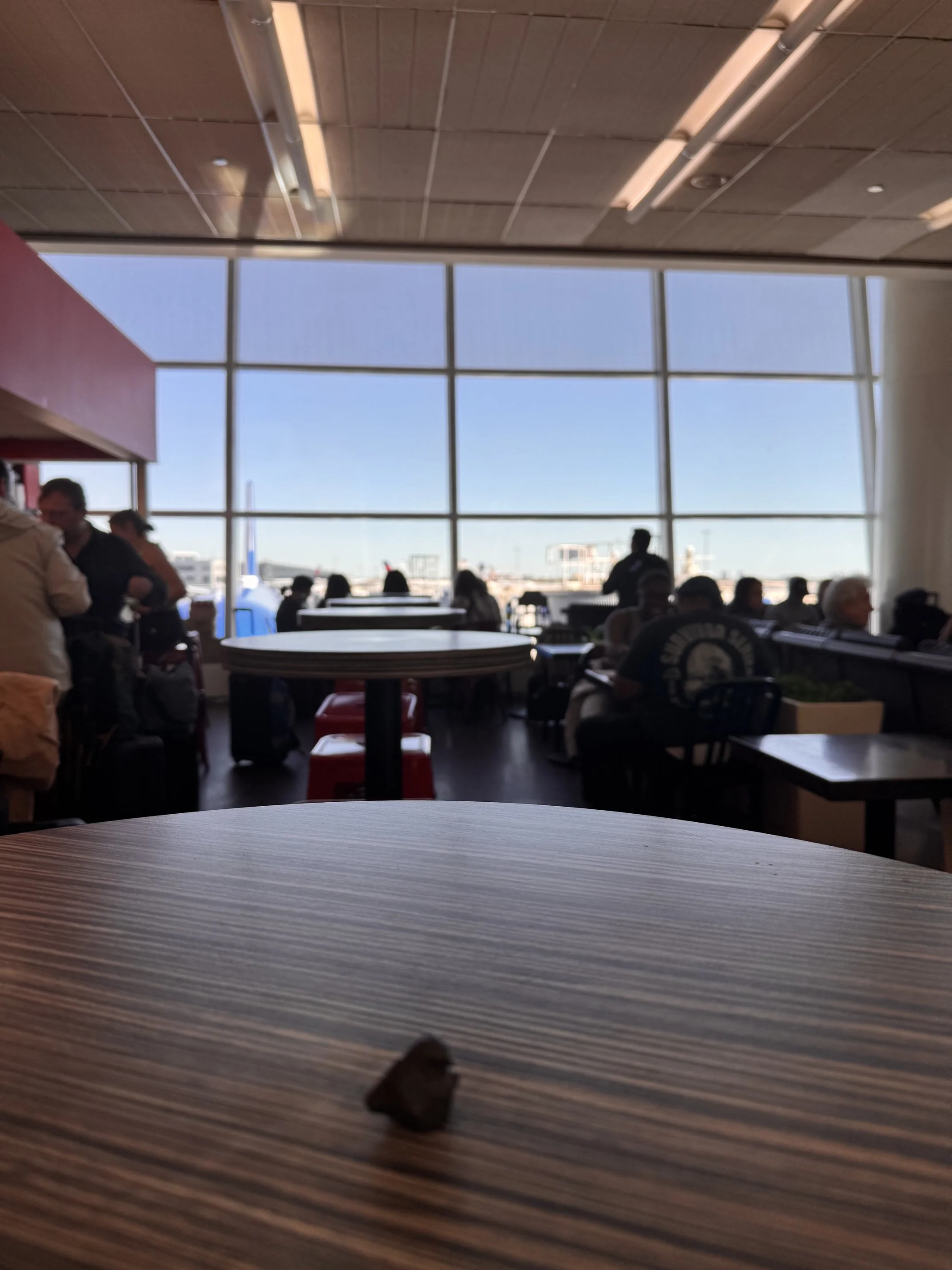
05.12.2026 - Adventure冒険 (New York City, USA)
We gathered at the airport. Like heroes. Dragging our heavy suitcases behind us, we couldn't quite call ourselves dashing, but we felt dashing enough, in our own way.
There were plenty of obstacles before we got to this point. Most of them were so mundane that this kind of backstory doesn't usually make it into the main story. A mysterious, beautiful knight fussing over email exchanges to get things ready; someone waking up in the middle of the night worrying about the status of a flight booking; and even less so, a valiant warrior trying every which way to keep the cost of travel insurance down. These images would shatter the audience's dream. So we keep it a secret. We appear from nowhere, with style, entertain everyone, and leave behind a bit of mystery. Well, that's roughly the kind of trade we're in.
Dashing — but a little, well, actually quite a lot, nervous. Because a journey to an unknown place, an unvisited country, is a kind of adventure, even in an era when we can easily get all the information about a place — maps, photos, video — and crossing continents is something almost anyone can do, as long as they can come up with the airfare.
We don't know what's waiting for us — and so, anxiety rises. Will the language be all right? Will the luggage arrive without a hitch? Will we make it to our destination without a problem? Are the people in that country gentle, or harsh? Obviously, no monster is going to jump out and eat me, but these small worries chain together into a spiral of negative thought, weighing my heart down. On the other hand, curiosity about the unknown, a bit of hope for what's not yet seen and the people I haven't yet met, clear my heart and make it lighter. After these two opposing vectors clash, and the arrow pointing toward the new world just barely pushes past the equilibrium point, we set off on our adventure.
I want to see something new. I want to meet someone I haven't met yet. I want to stay on that scatterbrained side where, somehow, the heart feels lighter — where curiosity triple-jumps across the stepping-stones of anxiety and leaps clean over the fence. Maybe, after all this, it comes down to the fact that I don't hate this earth (so small, compared to the universe), that I have a habit of not believing anything I haven't seen with my own eyes, and that, for a while longer at least, I still want to meet the creatures and the humans who inhabit this earth.
But as an adventurer, I'm rather faint-hearted and nervous. If I look brave, it's only because I'm careless by nature. Still, I have companions for this adventure.
Including me, that's seven — no, wait, five, so we're the "Five Samurai."
We've got quite a lineup of characters.
Someone *hatsume* — a word my grandmother often used for someone full of ideas, always coming up with something new — someone warm, someone level-headed, someone gentle, someone deft, someone always in the know, someone kind, someone confident in their own skill... (There are more good traits listed here than there are actual people, and some overlap.)
They're trustworthy, cautious without being overly so, and every one of them more optimistic than I am.
Companions full of curiosity, who love good food, who love art and friends.
With these companions, I feel like I can get through anything.
This makes my heart, already steering toward adventure, even lighter, and lifts it further still.
Oh — sorry. "Six Samurai."
There's Stone!
We won't know whether Stone is Kanbei Shimada, played by Takashi Shimura, or Kikuchiyo, played by Toshiro Mifune, until the adventure begins.
Because there's no script for this story.
われわれは空港に集結した。勇者のように。重いスーツケースを引きずっているので、颯爽と! とまではいかないが、気分はそれなりに颯爽としている。
ここに辿り着くまで、結構いろいろあった。そのほとんどがあまりにも地味なことなので、物語の本編にはこういう裏話は普通でてこない。謎の美騎士がちまちまとメールで下準備のやりとりをしていたり、チケットの予約状況が心配で夜中にガバっと目を覚ましたり、ましてや、勇猛な騎士が旅行保険をなるべく安く済ませようとやりくりしている図などは観客の夢を破る。だから、そこは内緒にする。どこからともなく格好よく現れて、みんなをワーっと沸かせて、謎を残して去ってゆく。まあ、われわれはそんな感じの稼業についている。
颯爽とはしているが、少し、いや、かなり、緊張している。地図や写真、映像、あらゆる情報が簡単に手に入り、大陸をまたにかけることなど、とりあえず飛行機代だけ準備できれば誰にでもできる時代にあっても、知らない場所、初めての国への旅は、ひとつの冒険だからだ。
何が待ち受けているか分からない、と不安が沸き上がる。言葉は通じるのか。荷物は届くのか。無事目的地まで着けるのか。その国の人は優しいのか厳しいのか。まさか突如モンスターが飛び出して、とって喰われることもあるまいに、そういう細かな不安が不安の連鎖を妄想して心を重くしていく。その一方、未知なるものへの好奇心、まだ見ぬもの、新しい出会いへの希望のようなものが心を澄ませ、軽くしていく。この二つの拮抗するベクトルがせめぎ合い、かろうじて新しき世界へ向かう矢印が平衡地点を突破するとき、私たちは冒険へと出発する。
私は、新しいものが見たい。まだ出会っていない人に出会ってみたい。その先にある、なぜかしら心が軽い場所、好奇心が不安の飛び石を三段跳びして、塀の向こうへ飛び出すおっちょこちょいさの側でいたい。たぶん、私はなんだかんだ言ってこの(宇宙に比べたらとても小さな)地上が嫌いではないし、自分の目で見ないと信用しない性分だし、まだもう少し、この地上に生息するものや人類に出会ってみたいから。
とはいえ、私はどちらかといえば気弱で、神経質な冒険者だ。時に勇敢に見えるのは、単に人間が雑なだけだ。今回の冒険には、しかし、仲間がいる。
私を入れて七人、ではなくて五人なので『五人の侍』ではあるが、
なかなかにいいキャラクターが揃っている。
はつめなやつ、温かいやつ、冷静なやつ、柔らかいやつ、器用なやつ、情報通なやつ、優しいやつ、腕に自信のやつ、、、(人数より長所の数の方が多いし、重なってもいる。「はつめ」というのは、おばあちゃんがよく使っていた方言で、発想力があって、新しいことをあれこれ思いつく人、みたいな意味だ)
信頼できて、適度に注意深く、しかも私よりもみんな楽天的だ。
好奇心がいっぱいあって、美味しいものが好きで、芸術と友達を愛する仲間。
この仲間がいれば、どんな困難も乗り越えられるだろう。
そのことが、冒険へとすでに舵を取った私の心をますます軽く、楽しく押し上げていく。
おっと、失礼。『六人の侍』だった。
石がいるじゃないか。
石が志村喬演じる「島田勘兵衛」なのか、それとも三船敏郎演じる「菊千代」なのか、
それは冒険を始めてみないと分からない。
だって、この物語に脚本などないのだから。